Field Logger Explorer
One Field Logger, one probe, three investigations. Fair, automatic temperature and light readings at any spot.
US$59 · C$79 each
Taking pre-orders now. Pay nothing until it ships.
What's in the box
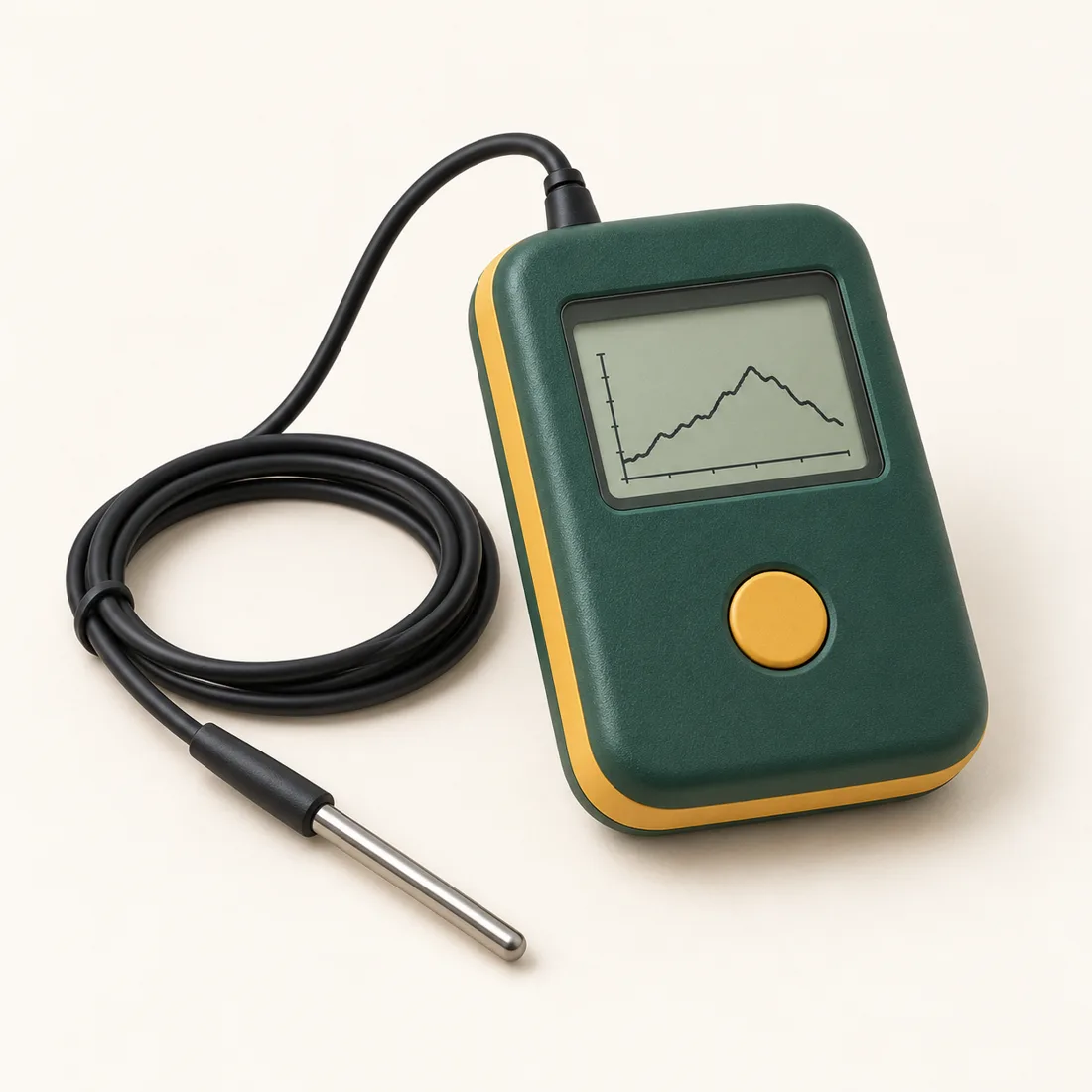
- Field Logger with live-graph screen
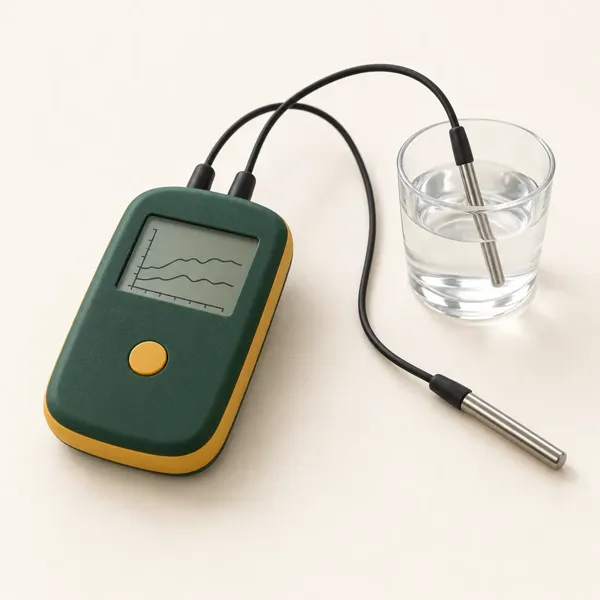
- Stainless temperature probe on a 1 m lead
- Shade cup for fair air readings
- 3 AAA batteries
- Three investigations as PDFs
The Field Logger does one thing honestly: it takes fair, automatic temperature and light readings at a spot and saves them by station. Kids see the number and the graph change live, so the experiment is about the science, not about squinting at a thermometer.
It’s built for the investigations every curriculum asks for: the hottest and coolest places in the schoolyard, sun versus shade, how fast a drink cools, whether a jacket keeps you warm. Plug it into any computer and the readings open as a spreadsheet. Nothing to install and nothing for IT to approve.
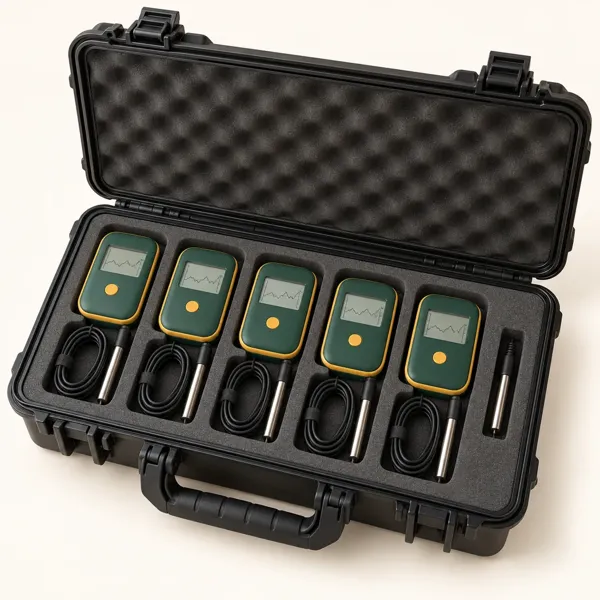
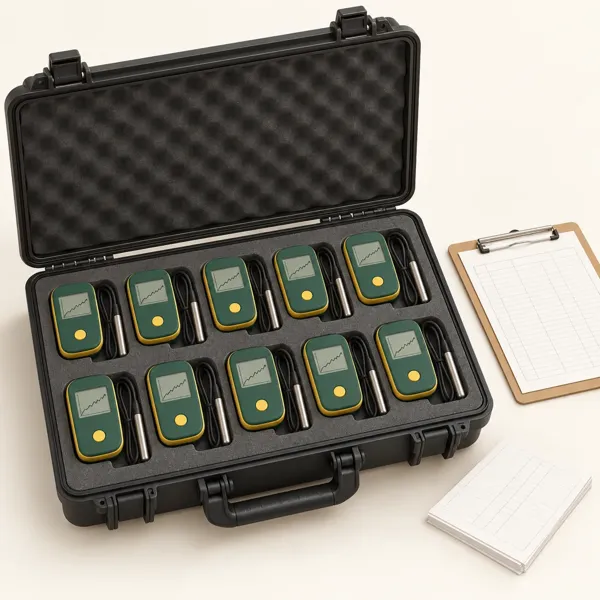
The Explorer is one logger for families, home educators, libraries and makers. For a class, see Classroom 5 and Audit 10.
Specifications
Design specification. Final figures are confirmed in bench testing before the first units ship.
- Temperature sensor
- Digital probe (DS18B20) on a 1 m waterproof lead
- Temperature range
- −55 to +125 °C; accuracy ±0.5 °C from −10 to +85 °C
- Temperature resolution
- 0.1 °C shown (0.0625 °C measured)
- Light
- Relative brightness, 0 to 100 (not lux). Compare readings from the same logger, or loggers checked side by side
- Readings
- One press saves a reading with its station letter
- Screen
- 128 × 64 display with live number and graph
- Data out
- CSV file over USB, opens in any spreadsheet. No app, no account, no wireless
- Power
- 3 AAA batteries. Built for lesson-length use; battery life confirmed in bench testing
- Air temperature
- Use the white shade cup. A bare probe in direct sun reads high, which is itself a good experiment
Lessons that use it
Weather Detectives
Warm winter winds, the hottest spot in the schoolyard and the last frost of spring. Students measure weather fairly and find out why farmers care so much about it.
Climate Clues
Tree rings, old weather records and what your own town's numbers say. Three lessons on how scientists tell climate apart from a cold week.
Hot and Cold: Particles on the Move
Why tires go soft in winter, why sidewalks have gaps, and how a thermometer knows. Five lessons on what heating and cooling do to the particles in everything around us.