Science experiments at home, explained.
The experiments your kids already want to try, with what the internet usually leaves out: a real question to answer, steps that work the first time, and the science explained for you, so you have a good answer when they ask "but why?"
- No science background needed
- Kitchen materials
- About 45 minutes
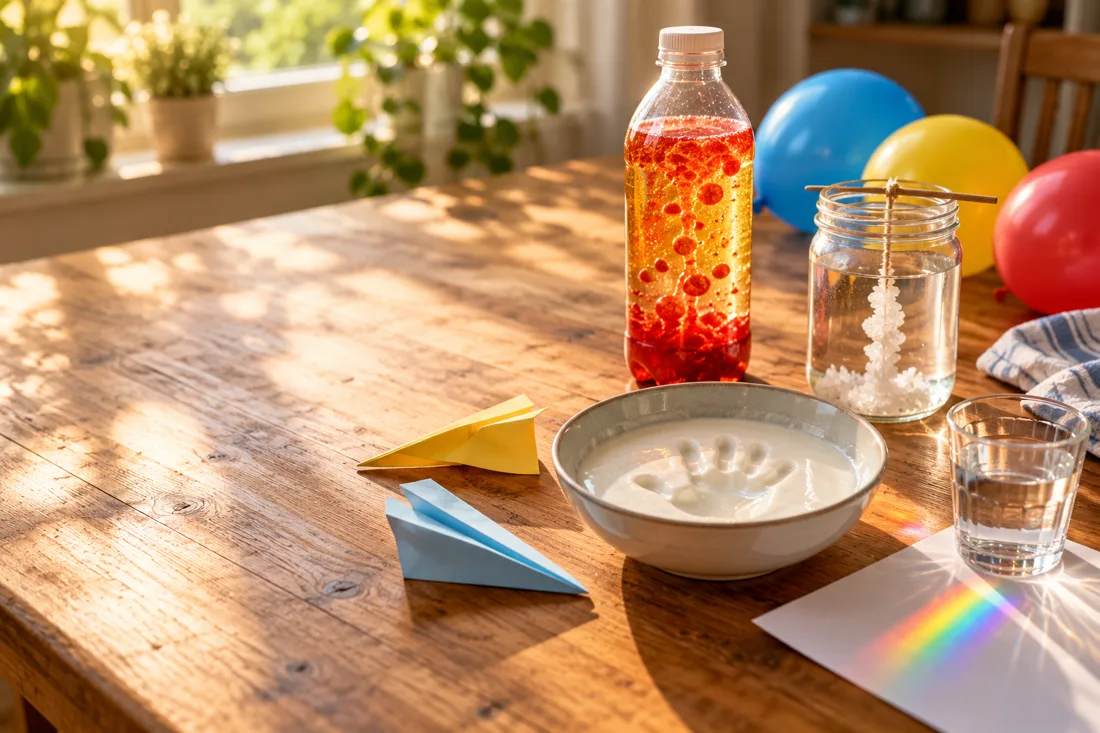
Fun is easy. Understanding is the hard part.
A question, not a trick
Every experiment starts with a question your child gets to bet on. Then they find out if they were right, and why.
The science, for you
Plain-English background for the grown-up, the questions kids always ask, and honest answers, including "scientists are still working on that".
Works for siblings
Easier and harder versions for every experiment, so a 6-year-old and a 10-year-old can do it together.
Pick the one they're asking about.
 Why do the blobs in a lava lamp go up and down?
 Is oobleck a solid or a liquid?
 What makes a volcano erupt?
 How do spies write secret messages?
 Can you drop an egg without breaking it?
 What makes a paper plane fly farthest?
 How does a rocket push itself into space?
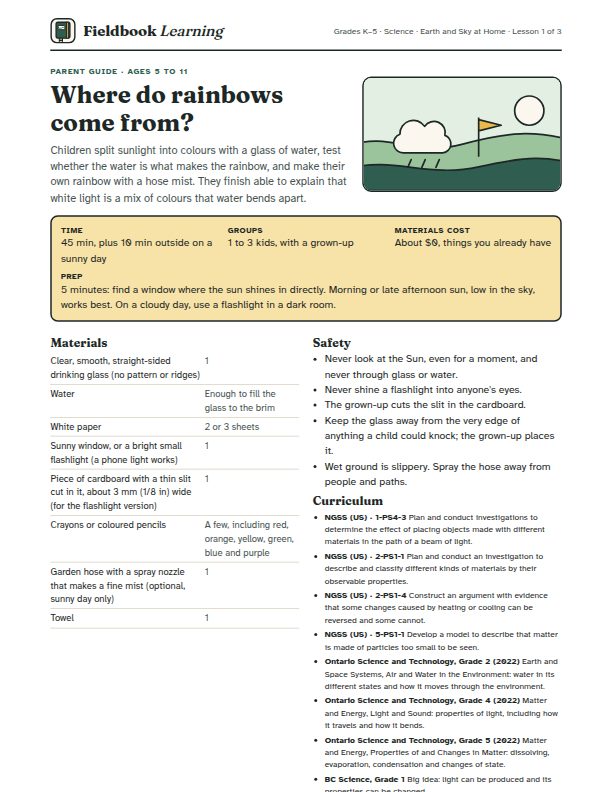 Where do rainbows come from?
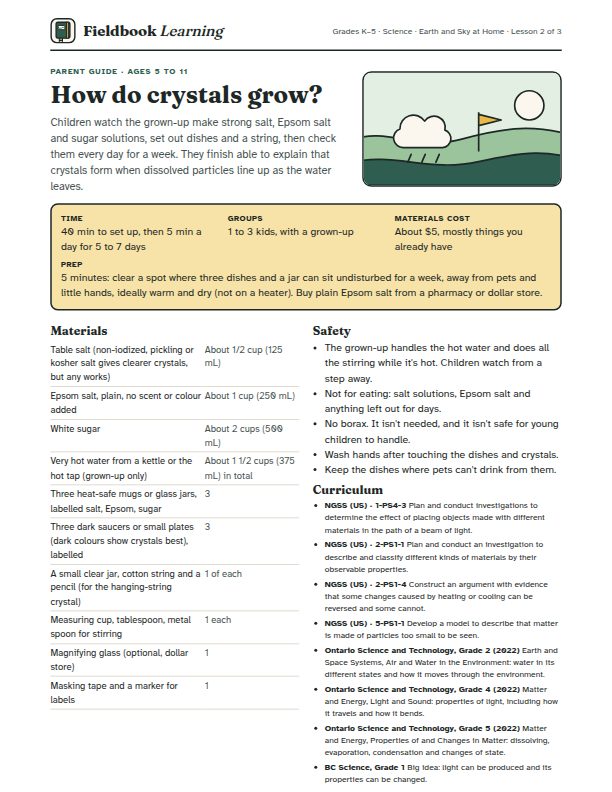 How do crystals grow?
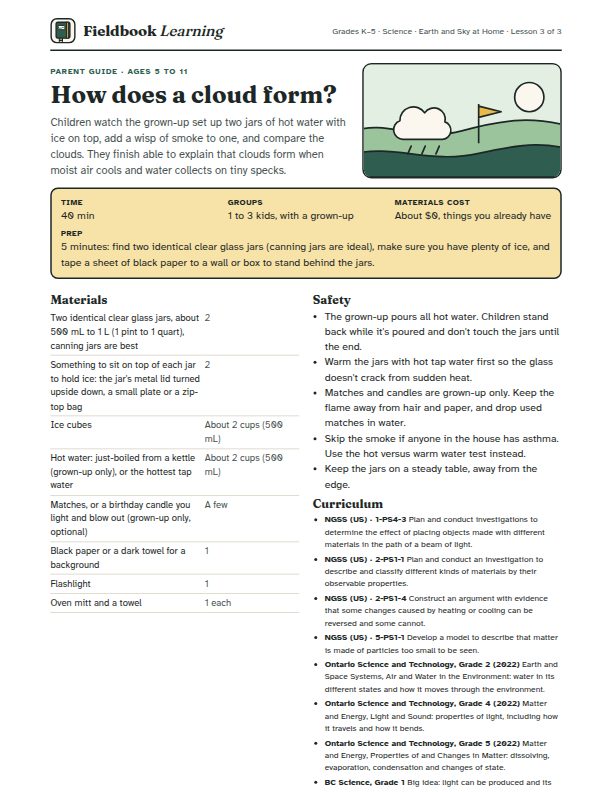 How does a cloud form?
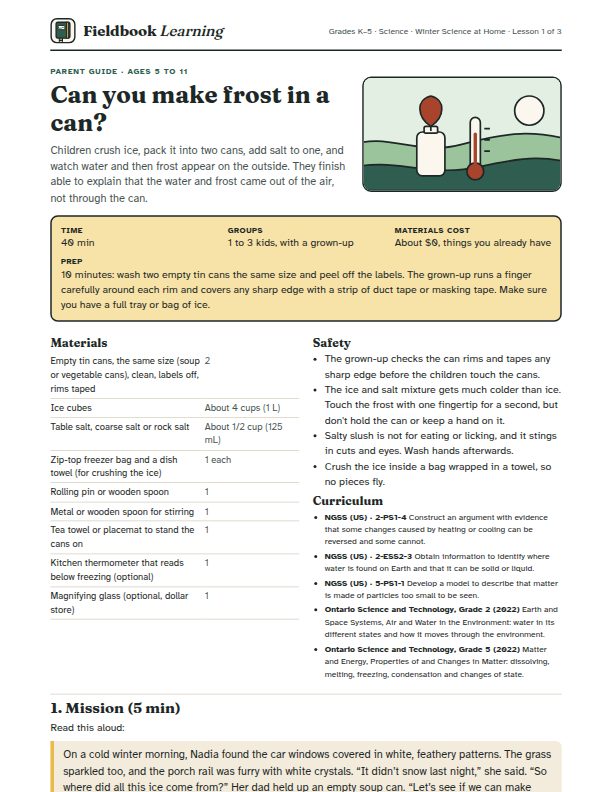 Can you make frost in a can?
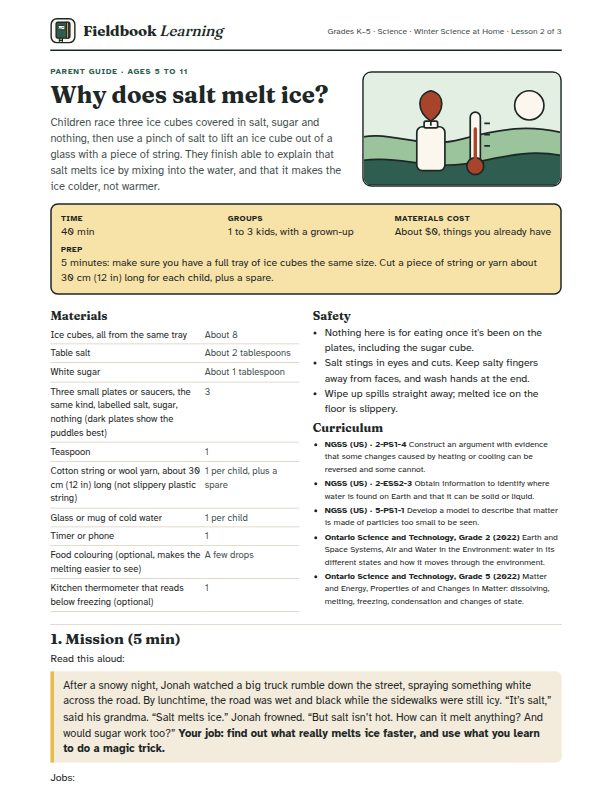 Why does salt melt ice?
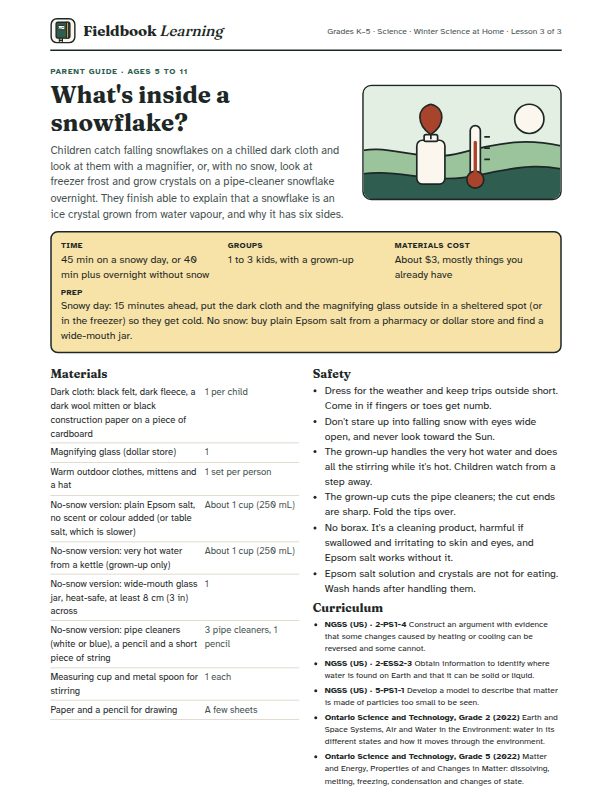 What's inside a snowflake?
Do a whole unit, one weekend at a time.
Kitchen Chemistry for Families
Four famous kitchen experiments, done properly: a homemade lava lamp, oobleck, a baking soda volcano and invisible ink. Each one starts with a real question, works with things from your cupboard, and leaves your child able to explain what happened.
Build It, Launch It
Egg drops, paper planes and balloon rockets, done properly at home. Three engineering challenges where kids build, test, fix and explain the pushes and pulls behind what happened.
Earth and Sky at Home
Make a rainbow on the kitchen floor, grow crystals on a windowsill and build a cloud in a jar. Three classic home experiments that actually work, with the real science explained for grown-ups.
Winter Science at Home
Make frost on the outside of a can, race ice cubes with salt and sugar, lift an ice cube with a piece of string, and look inside a real snowflake. Three kitchen-table winter experiments that actually work, with the real science explained for grown-ups.
Older kids or homeschooling? The full library runs from Kindergarten to Grade 8.
Start free. Keep going if they love it.
- 3 experiments free with an account. No card needed.
- A whole unit, US$14 / C$19, yours to keep.
- Everything, US$79 / C$109 a year, for every child in your family, including new experiments as we add them.
Questions parents ask
Do I need to know any science?
No. Every lesson has a section called "The science, for grown-ups" that explains what is going on in plain words, plus the questions kids usually ask and good answers to them. If you can follow a recipe, you can run these.
What ages are they for?
Mostly 5 to 11. Each lesson says what to change for younger children (5 to 7) and how to stretch older ones (9 to 11), so siblings can do the same experiment together.
What do I need to buy?
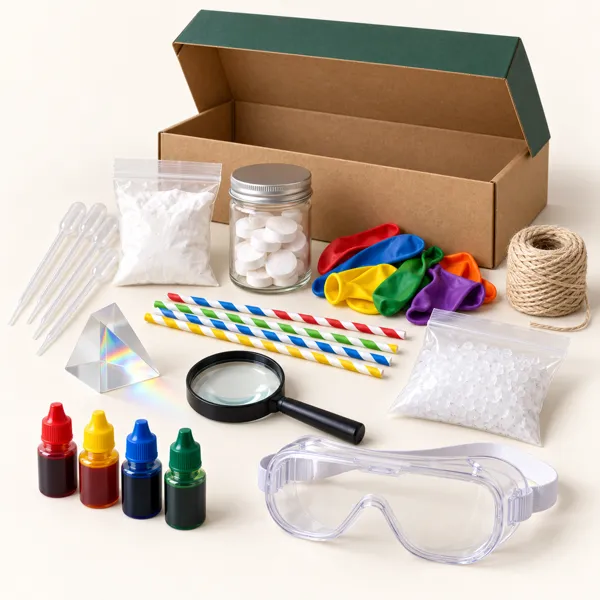
Almost nothing. Each lesson lists its materials, usually things from the kitchen or a dollar store. If you would rather not shop, the Kitchen Table Science box has the harder-to-find bits.
How long does each one take?
About 45 minutes, start to finish. A few, like growing crystals, carry on for a few days with a couple of minutes of checking each day.
Is it safe?
Yes, with a grown-up there. Anything hot is done by the adult, and the steps say so where it happens, not only in a list at the end. Every lesson has its own safety notes.
We homeschool. Does it count?
Yes. Every unit lists what it covers in NGSS and provincial curricula, which helps with planning and reporting. All-access covers every child in your family.
What do I actually get?
A printable PDF for each lesson: a step-by-step guide for you and a sheet for your kids to fill in. Your first 3 lessons are free with an account.