Power Up: Where Electricity Comes From
Where does the electricity in our classroom come from, and why is it made differently in different places? Students trace the wires, build a wind machine that does real work, and weigh up solar power like an energy planner.
Or try any 3 lessons free with an account.
3 lessons in this unit
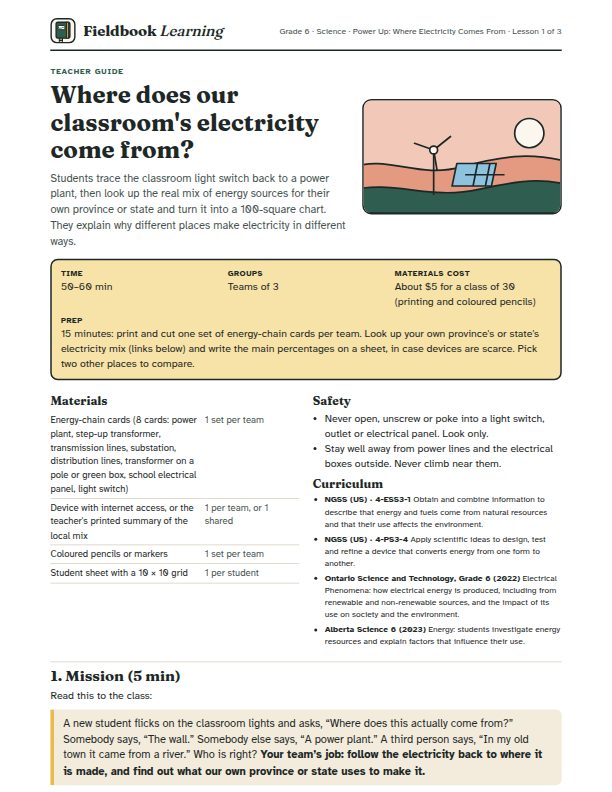 Lesson 1 · 50–60 minWhere does our classroom's electricity come from?Students trace the classroom light switch back to a power plant, then look up the real mix of energy sources for their own province or state and turn it into a 100-square chart. They explain why different places make electricity in different ways.
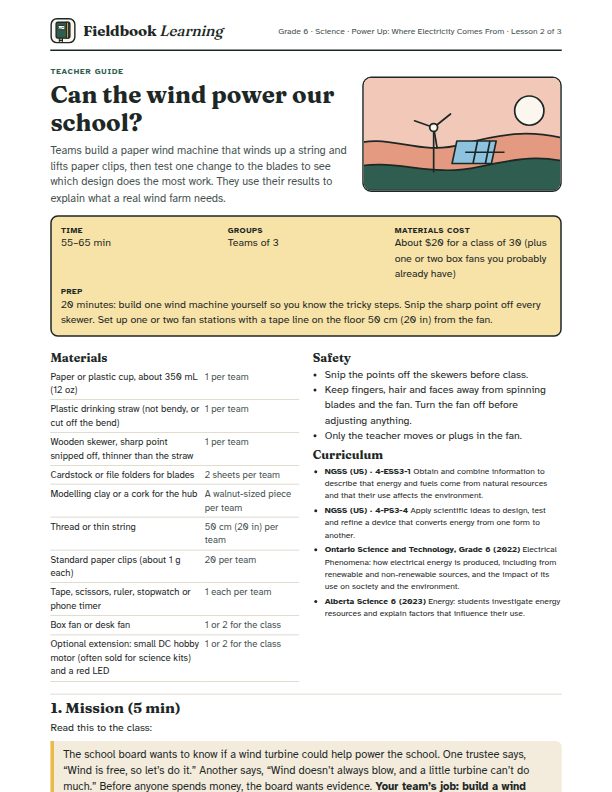 Lesson 2 · 55–65 minCan the wind power our school?Teams build a paper wind machine that winds up a string and lifts paper clips, then test one change to the blades to see which design does the most work. They use their results to explain what a real wind farm needs.
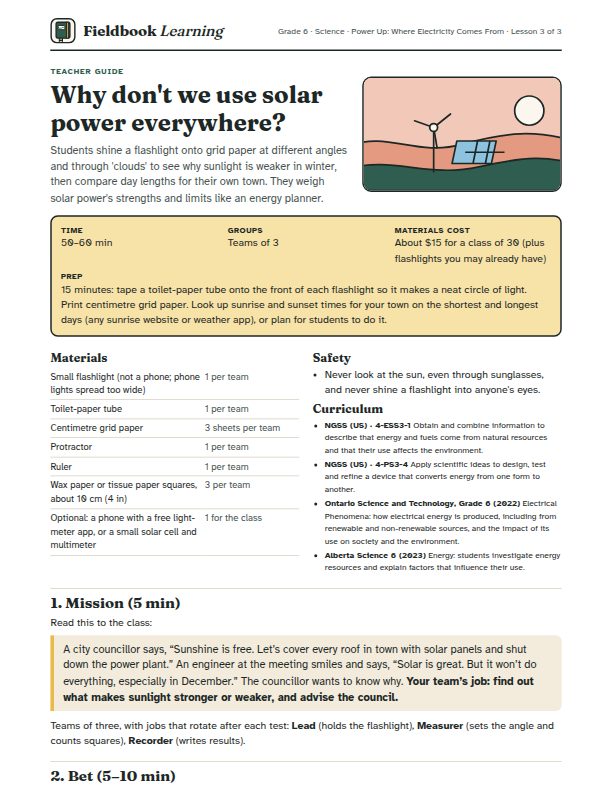 Lesson 3 · 50–60 minWhy don't we use solar power everywhere?Students shine a flashlight onto grid paper at different angles and through 'clouds' to see why sunlight is weaker in winter, then compare day lengths for their own town. They weigh solar power's strengths and limits like an energy planner.
Students start at the light switch and follow the electricity back to where it is made, then look up the real mix of sources for their own province or state and compare it with other places. Next they build a paper wind machine that winds up a string and lifts a load, and measure how much work the wind can do. Finally they test why sunlight is weaker in winter and at high latitudes, and use what they found to argue for a power mix.
By the end, students can explain that electricity is made from other forms of energy, that every place uses a different mix for real reasons (rivers, wind, sunshine, fuels, cost), and that every source has trade-offs.