Years 7–9 in England and Wales · Cambridge Lower Secondary Stages 7–9 · IB MYP 1 to MYP 3, ages 11–14
How Plants Make Food: Photosynthesis and Respiration
Where does a tree's mass come from, what happens to the sugar a plant makes, and how does the Sun's energy run a whole ecosystem? Three no-materials lessons with a 400-year-old willow experiment, printed atom cards and a carbon-atom role-play.
Or try any 3 lessons free with an account. Prices in US dollars.
Already bought it? Download the whole unit as one printable workbook (53 pages): cover, contents, curriculum connections, every lesson, readings, practice pages, a unit test and an answer key, in black and white. Want to change the wording? Get every student page as one editable Word file.
3 lessons in this unit
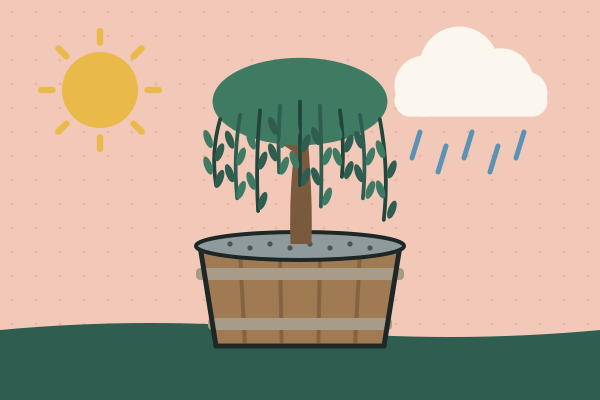 Lesson 1 · 50–60 min · 8 pagesWhere does a tree's mass come from?Teams work through Jan Baptist van Helmont's real willow data and five modern evidence cards to settle where 74 kg of new tree came from. They argue from the numbers to the modern answer, carbon dioxide from the air, and write the word and balanced equations for photosynthesis.
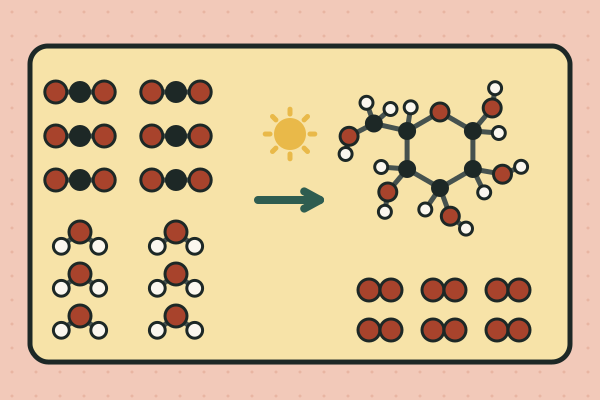 Lesson 2 · 50–60 min · 9 pagesWhat happens to the food a plant makes?Teams rearrange 36 printed atom cards from carbon dioxide and water into glucose and oxygen, then back again, and prove that no atom is made or lost. At four case stations they read data on plants in the dark, sprouting seeds, weight loss and apple stores, and explain that plants and animals both respire.
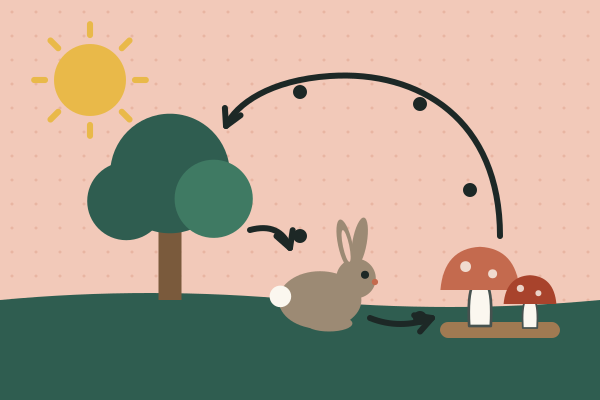 Lesson 3 · 50–60 min · 9 pagesHow does energy from the Sun move through a whole ecosystem?Every student becomes a carbon atom and travels between four stations, air, plants, animals and decomposers, drawing printed cards that say what happens next. The class tallies the journeys, then follows energy through a food chain, and explains why carbon goes round and round while energy passes through once.
Students start with a famous puzzle: a willow grew from 2.3 kg to 76.7 kg in five years, while its soil lost only about 57 g. Working from Jan Baptist van Helmont’s real numbers and five modern clues, they argue their way to the answer most adults get wrong: a tree is built mostly from carbon dioxide out of the air. They then rearrange printed atom cards to show that photosynthesis and respiration only move atoms around, read data on what plants do in the dark, and become carbon atoms themselves, travelling between the air, plants, animals and decomposers in a room-sized role-play.
By the end, students can write the word and balanced equations for photosynthesis and respiration, explain that plants respire day and night just as animals do, say where the oxygen a plant gives off really comes from, and use a model to show that carbon cycles round an ecosystem while energy flows through it once and leaves as heat. Every lesson needs only the printed sheets, so it runs in any classroom, in any country, with no lab.