Forces and Motion: Crash, Push and Stop
Why you lurch forward when the bus brakes, how fast a toy car really goes, why heavier carts hit harder, and how to build a crumple zone that saves an egg. Four lessons on inertia, speed, mass and stopping safely.
Or try any 3 lessons free with an account.
Already bought it? Download the whole unit as one printable workbook: cover, contents, curriculum connections, every lesson, readings, practice pages, a unit test and an answer key, in black and white.
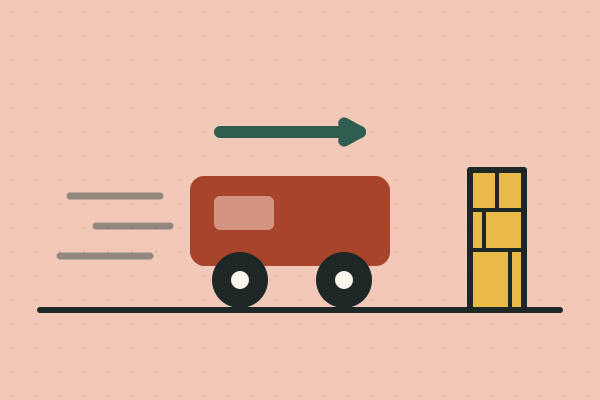
4 lessons in this unit
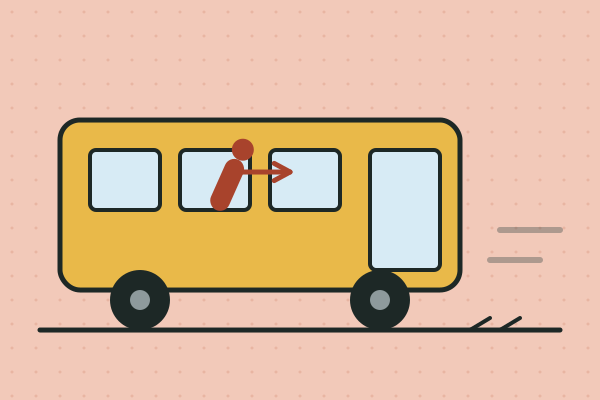 Lesson 1 · 50–60 minWhy do you lurch forward when a bus stops?Students flick a card out from under a coin, then crash toy cars carrying loose clay passengers into a barrier and measure how far the passenger flies. They use their data to explain inertia and to design a better seatbelt.
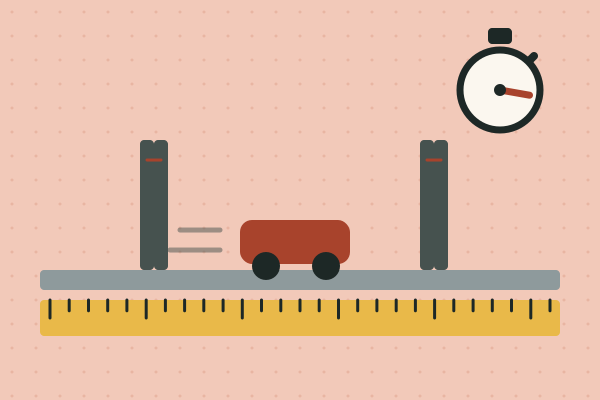 Lesson 2 · 50–60 minHow fast is a toy car really going?Teams time a toy car over measured distances from two ramp heights, calculate its speed and draw distance-time graphs. They use the slope of their graphs to argue which run was faster, and convert a toy car's speed to a real car's.
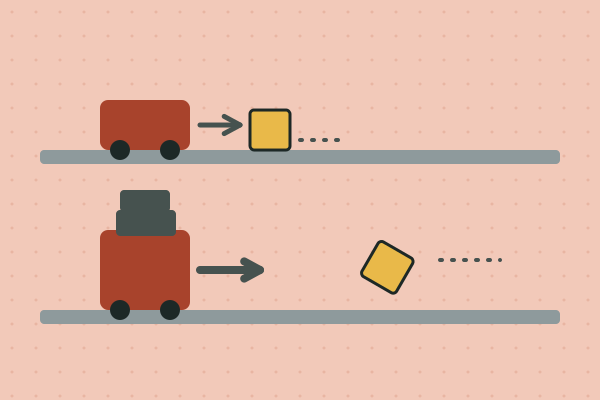 Lesson 3 · 50–60 minWhy does a heavier cart hit harder?Teams load a toy car with coins, roll it down the same ramp into a paper cup and measure how far the cup slides. They graph mass against slide distance and explain, with momentum, why a loaded truck is harder to stop than a small car.
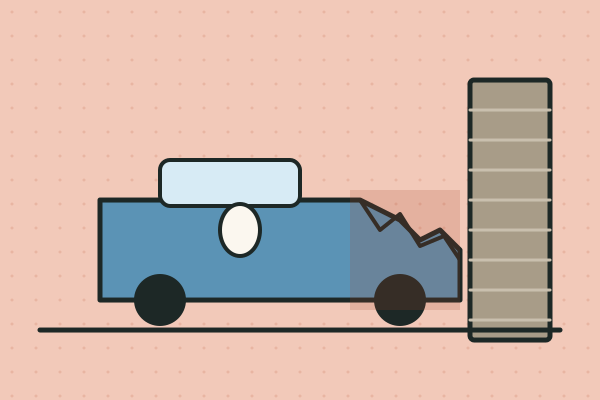 Lesson 4 · Two periods of 45–60 min (or one 75–90 min block)Can you design a crumple zone?Teams design, build and test a crumple zone that lets a raw egg in a zip bag survive a cart crash into a wall, working to a budget and a size limit. They measure how far each design crushed and use class data to explain why a longer stop means a smaller force.
Materials for the whole unit · one list, lesson by lesson
Lesson 1: Why do you lurch forward when a bus stops?
- Index card or playing card1 per team
- Plastic cup or glass1 per team
- Coin (any, a heavier one works best)1 per team
- Toy car or truck with a flat roof or flat bed (dollar-store pickups work well)1 per team
- Modelling clay (non-hardening)A marble-sized ball per team, plus spares
- Board or stiff cardboard, about 1 m (3 ft) long, for a ramp1 per team
- Books for propping the ramp3 to 4 per team
- Low barrier lower than the car's roof: a wooden block, a thin paperback or a few rulers stacked and taped down1 per team
- Metre stick or measuring tape1 per team
- Seatbelt materials: thread or dental floss, strips of paper, masking tape, elastic bandsA small pile per team
About $20 for a class of 30
Lesson 2: How fast is a toy car really going?
- Toy car that rolls straight (test it first)1 per team
- Board or stiff cardboard, about 1 m (3 ft) long, for a ramp1 per team
- Books to prop the ramp3 to 4 per team
- Stopwatch or phone timer1 per team
- Measuring tape or metre stick1 per team
- Masking tape1 roll per 2 teams
- Graph paper and calculator1 each per student
About $15 for a class of 30, if you have the toy cars and ramps from Lesson 1
Lesson 3: Why does a heavier cart hit harder?
- Toy car with a flat roof or bed (the same cars from Lesson 1)1 per team
- Identical coins or metal washers12 per team
- Paper cups, about 250 mL (9 oz)2 per team, plus spares
- Ramp board and books1 set per team
- Masking tape1 roll per 2 teams
- Metre stick or measuring tape1 per team
- Kitchen scale (optional)1 per class
- Graph paper1 per student
About $10 for a class of 30, if you have the toy cars and ramps from Lesson 1
Lesson 4: Can you design a crumple zone?
- Crash cart: a shoebox lid taped across two toy cars, or a skateboard or classroom dynamics cart1 per two teams
- Full can of soup or similar, about 400 g (14 oz), taped in the cart for mass1 per cart
- Raw eggs2 per team, plus 4 spares
- Zip-top sandwich bags4 per team
- Store items: index cards, paper cups, drinking straws, scrap cardboard, paper, masking tapeA class pile
- Ramp board and books1 set per two teams
- Ruler1 per team
- Paper towels, a bin, soap and waterFor cleanup
About $15 for a class of 30 (mostly eggs), using the toy cars and ramps from earlier lessons
Students flick a card out from under a coin, crash toy cars carrying loose clay passengers, time cars down ramps and graph their speed, and send carts of different mass into paper cups to see which hits harder. The unit ends with an engineering challenge: design a crumple zone that lets a raw egg survive a head-on crash into a wall, then test, improve and test again.
By the end, students can explain everyday crashes and stops with a few big ideas: objects keep moving until a force stops them, speed is distance divided by time, a heavier or faster object takes more stopping, and stretching out the stopping time makes the force smaller. Every lesson uses toy cars, coins, paper cups, clay and tape, and students make their case with claim, evidence and reasoning from their own graphs.