Living with Water: Salt, Rice and the Mekong
Science and English together, for English learners (CEFR A2–B1). Three investigations from Vietnam: how salt farmers turn the sea into salt, how rice terraces stop a mountain washing away, and how a house in the Mekong Delta stays dry in the flood season.
Or try any 3 lessons free with an account.
Already bought it? Download the whole unit as one printable workbook: cover, contents, curriculum connections, every lesson, readings, practice pages, a unit test and an answer key, in black and white.
3 lessons in this unit
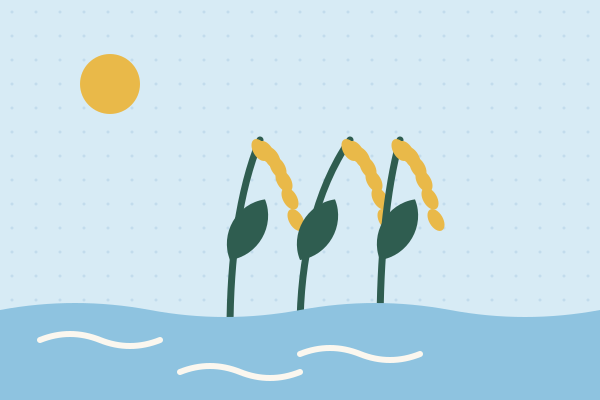
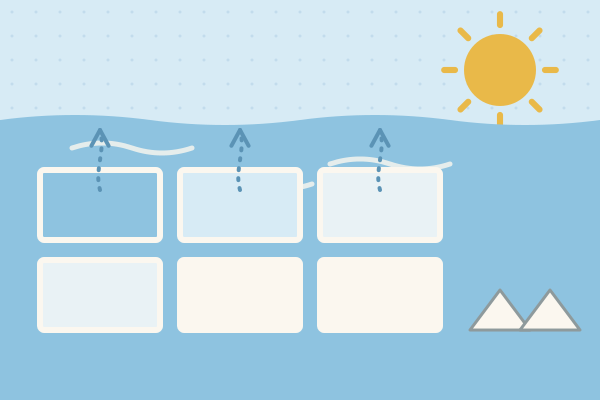 Lesson 1 · 60 min, plus a 10-minute check the next dayHow do salt farmers turn the sea into salt?Science and English together, for English learners at CEFR A2–B1. Teams paint salt water on dark paper to find the salt hiding in sea water, then set out wide and narrow dishes in sun and shade to see what makes water leave fastest. They use the evidence to advise a salt farm in Khánh Hòa.
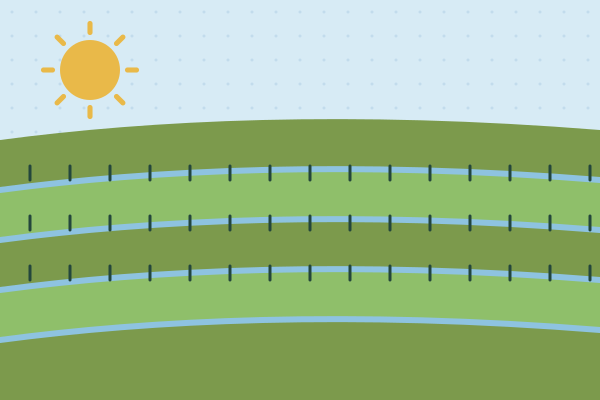 Lesson 2 · 60 min, or two 35-minute periodsHow do rice terraces stop a mountain washing away?Science and English together, for English learners at CEFR A2–B1. Teams make model hillsides from soil in trays: a bare slope, a terraced slope and a slope with plant cover. They pour the same storm of rain on each, measure the muddy water that runs off, and use the evidence to advise a mountain village in northern Vietnam.
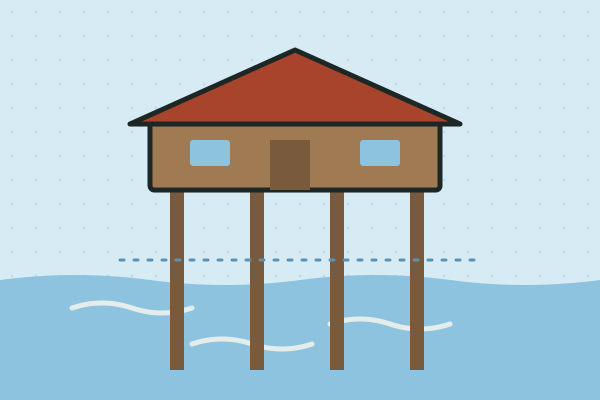 Lesson 3 · 60 min, or two 35-minute periodsHow can a house stay dry when the Mekong floods?Science and English together, for English learners at CEFR A2–B1. Teams design and build a model house on stilts or on a floating base, then test it as the teacher raises the water in a tub and makes waves. They use their results to advise a village in the Mekong Delta.
Materials for the whole unit · one list, lesson by lesson
Lesson 1: How do salt farmers turn the sea into salt?
- Black or dark blue paper, or dark plastic plates2 sheets per team
- Small paintbrushes or cotton buds3 per team
- Small cups for the three liquids (sea water, strong salt water, plain tap water), labelled3 per team
- Wide, shallow dish or plastic lid, about 20 cm across, with a rim1 per team
- Narrow cup, about 6 cm across1 per team
- Measuring cylinder or measuring jug marked in mL (a 10 mL syringe also works)1 per team
- Table saltAbout 150 g for the class
- Magnifying glass1 per team, if you have them
- Desk lamp, if there is no sun today1 or 2 for the class
- Masking tape and a marker for labels1 per team
About $10 for a class of 30
Lesson 2: How do rice terraces stop a mountain washing away?
- Shallow trays, foil roasting pans or 1–2 L milk or juice cartons cut open along one side, with a small spout cut at one end2 per team
- Damp garden soilAbout 1.5 L per tray
- Plastic bottle, 1.5 L, with small holes poked in the cap (the 'rain bottle')1 per team
- Books or wooden blocks to tilt the trays, all the same height (about 8 cm)1 stack per tray
- Clear plastic cups to catch the runoff2 per team
- Measuring jug, 500 mL or bigger1 per team
- Craft sticks or strips of card, for terrace walls10 per team
- A piece of grass turf or moss, or kitchen sponge cut into strips (for the plant-cover slope)1 tray-sized piece per team that needs it
- Ruler1 per team
- Newspaper or a plastic sheet to cover the table1 per team
About $15 for a class of 30, using soil from outside and recycled cartons
Lesson 3: How can a house stay dry when the Mekong floods?
- Large clear plastic tub or storage box, at least 15 cm deep1 for the class (or 1 per 2 teams)
- Small card box (a tea or toothpaste box) or a paper cup, for the house1 per team
- Stilt materials: drinking straws, craft sticks, unsharpened pencils6 of each per team
- Float materials: kitchen sponges, foam food trays, plastic bottle caps, small empty plastic bottles with lids2 of each per team
- Modelling clay or play dough1 ball, about the size of a golf ball, per team
- Masking tape and string50 cm of each per team
- Paper tissues, folded into small squares (the 'family')2 per team
- Ruler, 30 cm1 per team
- Jugs of tap water2 for the class
- Old towels2 for the class
About $10 for a class of 30, mostly recycled materials
Water shapes life in Vietnam. On the central coast, farmers let the sun and wind take the water out of the sea and rake up the salt that stays behind. In the northern mountains, families have cut terraces into the slopes so the summer rain can’t carry the soil away. In the Mekong Delta, the river rises every flood season, and houses stand on tall stilts or float on the water.
Students investigate all three. They dry salt water to find the salt that was hiding in it, pour “rain” on bare, planted and terraced slopes to measure how much soil washes away, and design model houses that stay dry while the water rises. They come away able to explain that dissolved salt is still there even when you can’t see it, that water carries soil away fastest from bare, steep ground, and that engineers compare designs against clear criteria.
Every lesson teaches English alongside the science: key words in English and Vietnamese, sentence frames for predicting, comparing and giving advice, a speaking role-play, and readings at two levels.