Years 1–3 in England and Wales · Cambridge Primary Stages 1–3 · IB PYP, ages 5–8
Who Eats What? Food Chains and Helpers
What does a rabbit need, and what does a sunflower need? Children sort picture cards by what living things need, build food chains on the floor from the sun to a fox, and play bees carrying pollen between paper flowers. Everything prints: no materials to buy.
Or try any 3 lessons free with an account. Prices in US dollars.
Already bought it? Download the whole unit as one printable workbook (46 pages): cover, contents, curriculum connections, every lesson, readings, practice pages, a unit test and an answer key, in black and white. Want to change the wording? Get every student page as one editable Word file.
3 lessons in this unit
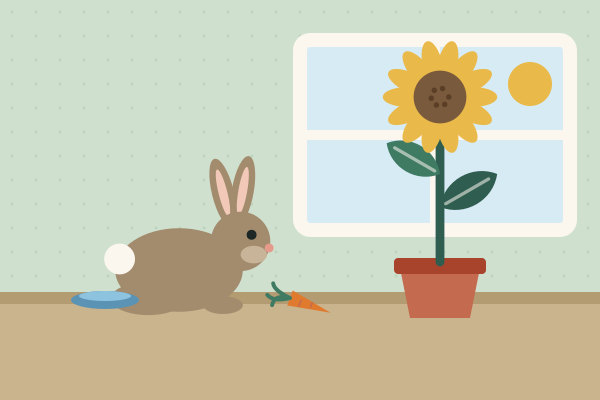 Lesson 1 · 40–50 min · 8 pagesWhat do animals and plants need to live?Children sort eight picture cards of animals and plants by what each one needs, then play a plant-or-animal freeze game. They find the pattern: every animal needs food, water and air, and a plant needs light, water and air because it makes its own food.
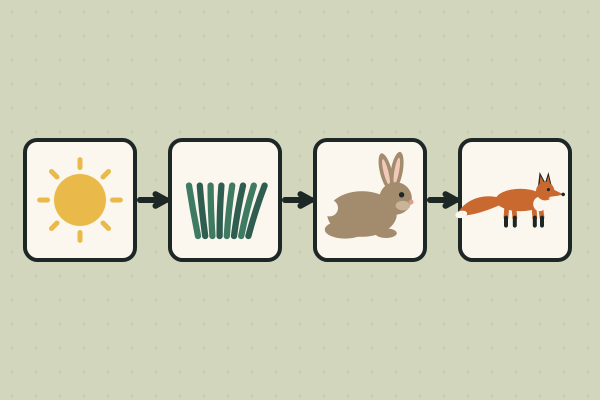 Lesson 2 · 45 min · 9 pagesWho eats who?Children build four food chains on the floor from picture cards, from the sun to a fox, a lion, a bird and a blue whale, then stand in a human food chain and pass the sunshine along. They learn that every food chain starts with the sun and a plant, and that the arrow points to the eater.
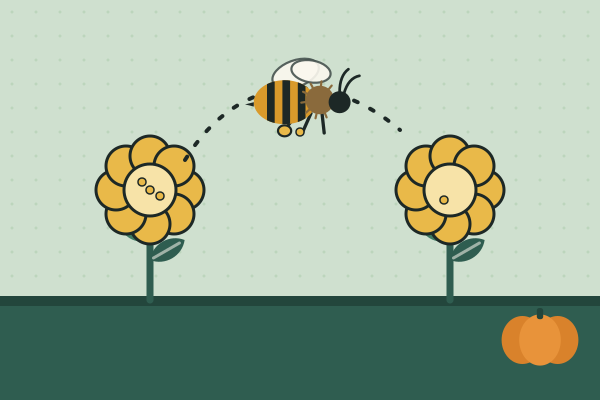 Lesson 3 · 45–55 min · 9 pagesHow do bees help flowers?Children play bees, carrying printed pollen dots from paper flower to paper flower, and find that pollen only helps a flower of the same kind. Then they build a fuzzy paper bee and test it, and meet the birds and squirrels that help plants spread their seeds.
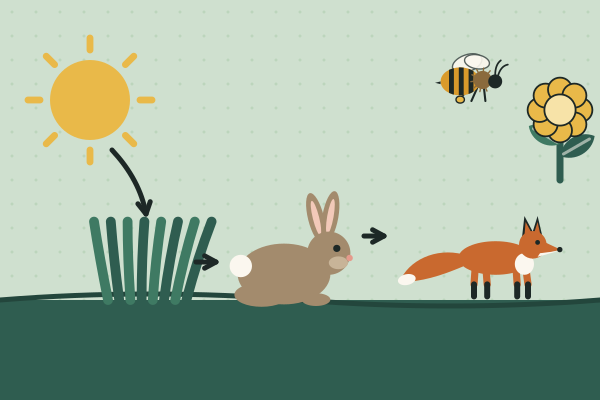
Children sort picture cards of animals and plants by what each one needs to stay alive, and find the big difference: an animal has to eat, but a plant makes its own food from light, air and water. Then they lay food chains out on the floor, from the sun to grass to a rabbit to a fox, and from the sun to tiny sea algae to krill to a blue whale, and pass a paper “sunshine” card along a human chain to see which way the arrows point. Last, they play bees, carrying printed pollen dots from flower to flower, and build a fuzzy paper bee to test.
By the end, children can say what animals and plants need to live, build a simple food chain that starts with the sun and a plant, explain that the arrow points to the eater, and describe how bees help flowers make seeds and how birds and squirrels help plants spread. Every lesson needs only the printed sheets, a pencil and scissors.