Plants and Seeds: What Does a Seed Need?
What's hiding inside a bean, and what does it need to wake up and grow? Young scientists open soaked seeds, sprout beans in bags and watch seedlings bend to find the light.
Or try any 3 lessons free with an account.
Already bought it? Download the whole unit as one printable workbook: cover, contents, curriculum connections, every lesson, readings, practice pages, a unit test and an answer key, in black and white.

3 lessons in this unit
 Lesson 1 · 35–45 minWhat's inside a seed?Children compare a hard dry lima bean with one soaked overnight, then gently peel and open the soaked bean to find the tiny baby plant and its food store. They draw and label what they find and explain it with "I think… because I saw…"
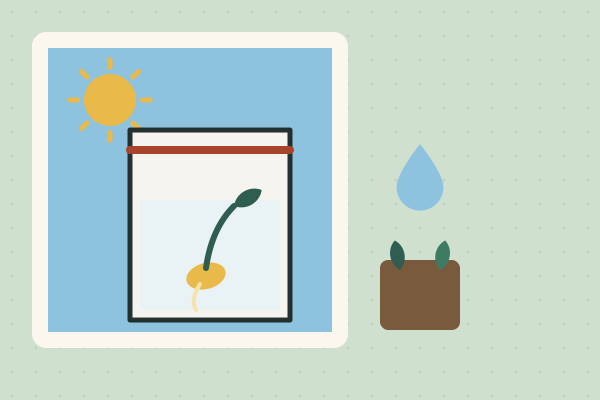 Lesson 2 · Day 1: 40 min. Then 5–10 min check-ins for 7 to 10 days, and a 25 min wrap-upWhat does a seed need to grow?Each team puts beans in three zip bags: wet in the light, wet in a dark cupboard, and dry. Over 7 to 10 days children keep a picture journal and find out that a seed needs water to start growing, and that light matters once the little plant is up.
 Lesson 3 · Day 1: 40 min. Then 5 min check-ins for 1 to 2 weeks, and a 20 min wrap-upWhy do plants grow toward the window?Children turn young bean plants away from a window and watch them bend back toward the light, and they set a seedling inside a shoebox maze to see if it can find its way out. They explain that plants need light and grow toward it.
Materials for the whole unit · one list, lesson by lesson
Lesson 1: What's inside a seed?
- Large dried lima beans (from the grocery store, sold as dried beans)1 bag, about 450 g (1 lb)
- Bowl and water for soaking1
- Paper towels1 per team, plus extras
- Hand lens (magnifying glass)1 per team, if you have them
- Paper plate or tray1 per team
- Crayons or coloured pencils1 set per team
About $8 for a class of 30
Lesson 2: What does a seed need to grow?
- Dried beans: a packet of garden bean seeds sprouts most reliably; grocery-store dried lima or pinto beans also workAbout 12 per team (3 per bag, plus spares)
- Zip-top sandwich bags3 per team
- Paper towels3 per team
- Small jug or cup of water1 per table
- Masking tape and a markerFor labels
- A dark cupboard or a cardboard box with a lid1 for the class
- Crayons or coloured pencils1 set per team
About $10 for a class of 30
Lesson 3: Why do plants grow toward the window?
- Bean seeds (garden packet or grocery dried beans)About 70, planted ahead (2 per cup)
- Clear or paper cups with a small hole poked in the bottom, plus saucers or a tray3 per team
- Potting soil1 small bag, about 5 L
- Shoebox with lid1 per team (ask families to send them in)
- Extra cardboard for shelves, scissors (teacher only) and masking tapeFor the mazes
- Coloured sticker or dot of tape1 per cup
- Small cup for watering1 per team
About $12 for a class of 30, using shoeboxes from home
Children soak dried beans and gently open them to find the tiny baby plant and the food it carries inside. Then they set up beans in wet and dry paper towels, in the light and in a dark cupboard, and keep a picture journal for a week or more. Finally, they watch young bean or pea plants bend toward a window and wind their way through a shoebox maze to reach the light.
By the end of the unit, children can say in their own words that a seed holds a baby plant and its packed lunch, that a seed needs water (and warmth) to start growing, and that a growing plant needs light and will grow toward it. They practise saying “I think… because I saw…” about their own evidence. Every lesson uses grocery-store beans or peas, zip bags, paper towels, cups, a little soil and shoeboxes from home.