Years 4–5 in England and Wales · Cambridge Primary Stages 4–5 · IB PYP, ages 8–10
Fence It, Fill It: Area and Perimeter
Which mat is really the biggest? Does the same fence always hold the same garden? Can the same rug need more edging? Four lessons where students tile, stretch rope and chalk the schoolyard to find out that area and perimeter measure different things.
Or try any 3 lessons free with an account. Prices in US dollars.
Already bought it? Download the whole unit as one printable workbook (57 pages): cover, contents, curriculum connections, every lesson, readings, practice pages, a unit test and an answer key, in black and white. Want to change the wording? Get every student page as one editable Word file.
4 lessons in this unit
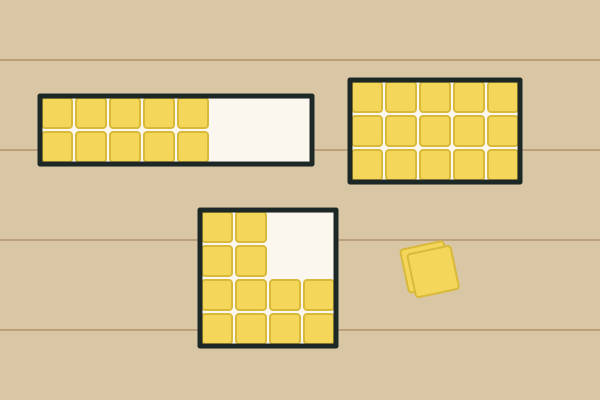 Lesson 1 · 50–60 min · 7 pagesWhich mat is the biggest?Teams cover three taped mats with sticky notes and find that the long, thin mat that looks biggest is the same size as a small square one. Students explain area as the number of unit squares that cover a shape, and find it faster by multiplying rows by columns.
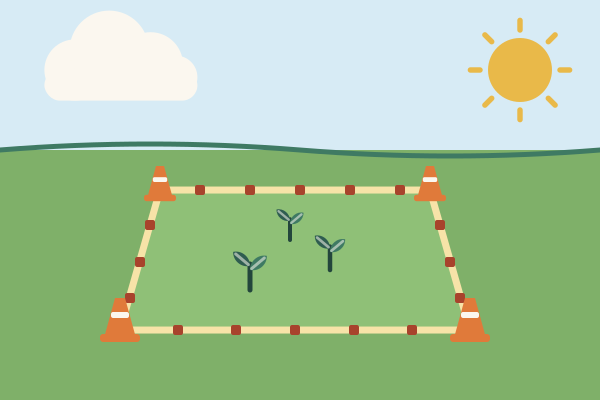 Lesson 2 · 50–60 min · 7 pagesDoes the same fence always hold the same garden?Teams stretch the same 12 m rope loop into different rectangles in the schoolyard and find that a fence of the same length can hold 5, 8 or 9 square metres. Students find perimeter by adding the sides, find area by multiplying, and recommend a shape for a school garden.
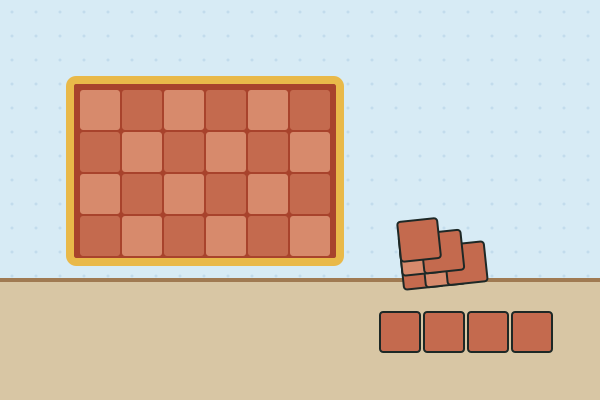 Lesson 3 · 45–60 min · 7 pagesCan the same rug need more edging?Teams build every rectangle they can from the same 24 square tiles and find that the edging around them runs from 20 to 50 tile edges. Students explain that the same area can have different perimeters, and use length × width = area to find a missing side.
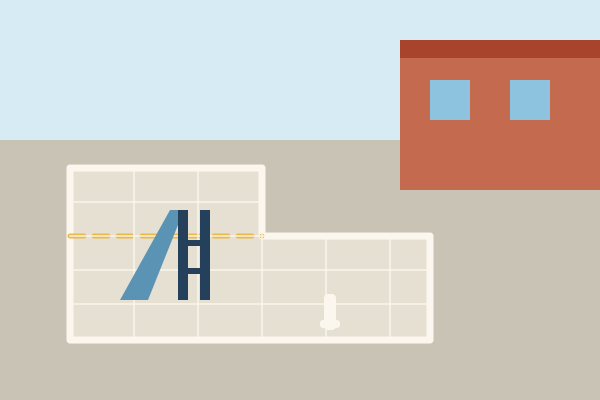 Lesson 4 · 50–60 min · 7 pagesHow much turf for an L-shaped playground?Teams chalk a real L-shaped playground in the schoolyard, split it into rectangles to find its area, and discover that cutting a corner off a rectangle takes away area but leaves the perimeter exactly the same. Then they design their own playground to a set of criteria.
Materials for the whole unit · one list, lesson by lesson
Lesson 1: Which mat is the biggest?
- Square sticky notes, 76 mm (3 in)1 pad of 50 per team
- Masking tape1 roll
- Metre stick1 for the class
- Newspaper sheets4 to 6 for the class
About $10 for sticky notes; tape and newspaper you likely have
Lesson 2: Does the same fence always hold the same garden?
- Rope or strong string, 13 m (43 ft), tied into a 12 m loop1 per team
- Coloured tape to mark each metre on the rope1 roll
- Cones, beanbags or shoes to mark corners4 per team
- Sidewalk chalk1 piece per team
- Metre stick1 per team
About $10 for rope and chalk if you don't have them
Lesson 3: Can the same rug need more edging?
- Square tiles or 5 cm (2 in) card squares, all the same size24 per team
- Grid paper1 sheet per student
- Coloured pencils1 set per team
Free with paper squares; about $15 for a class set of square tiles
Lesson 4: How much turf for an L-shaped playground?
- Sidewalk chalk2 pieces per team
- Metre stick or 10 m measuring tape1 per team
- Grid paper, 1 cm squares1 sheet per student
About $5 for chalk if you don't have it
Students start by covering three taped mats with sticky notes and find that the long, thin mat that looks biggest is no bigger than the square one. That leads straight to rows times columns. Outside, they stretch the same 12 m rope into three gardens of 5, 8 and 9 square metres. Back inside, they build every rug they can from 24 tiles and find edging that runs from 20 to 50 tile edges. They finish by chalking an L-shaped playground at full size, where cutting off a corner takes away area but leaves the fence exactly as long.
By the end of the unit, students can measure area in square units and perimeter in units of length, find both for rectangles by multiplying and adding, find a missing side, split an L-shape into rectangles, and explain with their own data why the same perimeter can hold different areas and the same area can have different perimeters. Most of what you need is already in the school: sticky notes, rope, chalk, metre sticks and paper squares.