Years 7–8 in England and Wales · Cambridge Lower Secondary Stages 7–8 · IB MYP 1 to MYP 2, ages 11–13
Below Zero: Integers in the Real World
How cold can ice get? Is the bottom of the ocean further from sea level than the top of Everest? How did a town warm up 27 degrees in two minutes? Can a lemonade stand that sold $64 end up in the red? Four lessons on integers with real temperatures, elevations and money.
Or try any 3 lessons free with an account. Prices in US dollars.
Already bought it? Download the whole unit as one printable workbook (58 pages): cover, contents, curriculum connections, every lesson, readings, practice pages, a unit test and an answer key, in black and white. Want to change the wording? Get every student page as one editable Word file.
4 lessons in this unit
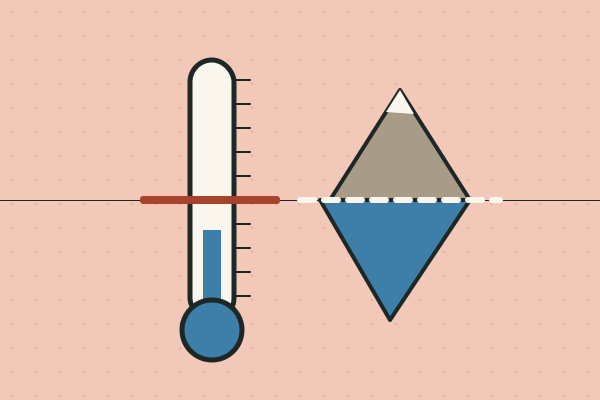
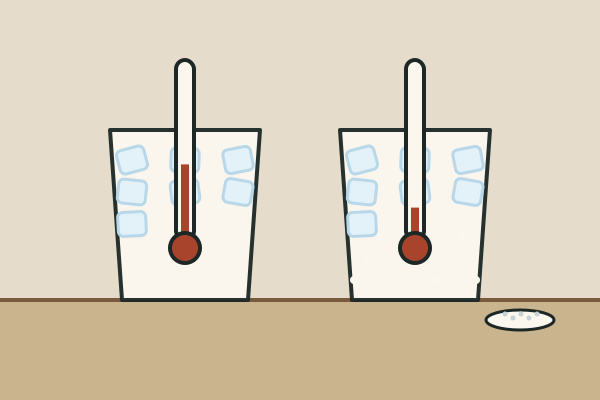 Lesson 1 · 50–60 min · 8 pagesHow cold can ice get?Teams measure the temperature of ice water, then stir salt into crushed ice and watch the thermometer fall well past zero. Students read negative temperatures on a vertical number line, order integers, and explain opposites and how far each temperature is from zero.
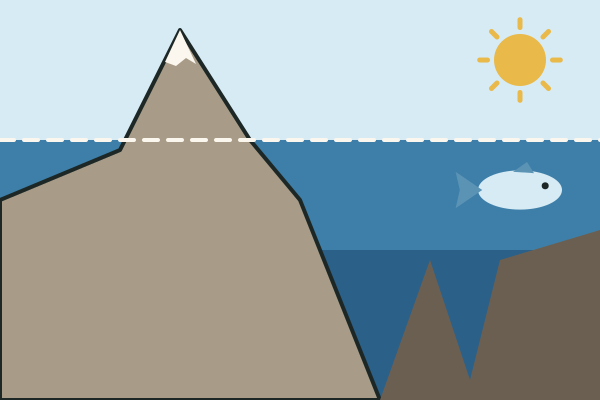 Lesson 2 · 50–60 min · 8 pagesWhich is further from sea level?The class builds a 2 m tall number line on the wall, from the bottom of the deepest ocean trench to the top of Mount Everest, and places real places on it at a scale of 1 cm for every 100 m. Students explain elevation above and below sea level with integers, compare with absolute value, and find that the Challenger Deep is further from sea level than Everest is high.
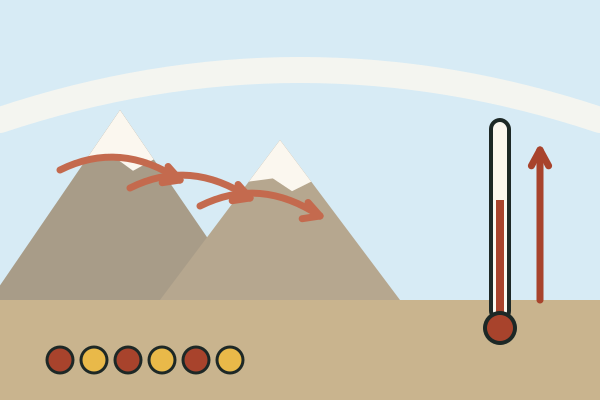 Lesson 3 · 50–60 min · 8 pagesHow much did the temperature change?Teams play a temperature-swing dice game on a thermometer number line and model each move with two-colour counters, then work out real record swings, including a town where the temperature rose 27 degrees in two minutes. Students add and subtract integers, explain zero pairs, and discover why subtracting a negative number makes the answer bigger.
 Lesson 4 · 50–60 min · 8 pagesAre we in the red?Teams keep the books for a class lemonade stand, tracking every purchase, sale, fee and refund as a positive or negative integer. They find that a stand that took in $64 still ended $3 in the red, then plan how to break even. Students add and subtract integers in a real context, including subtracting a negative, and explain a balance with zero pairs.
Materials for the whole unit · one list, lesson by lesson
Lesson 1: How cold can ice get?
- Spirit or digital thermometer reading to −20 °C or lower (not mercury)1 per team
- Clear plastic cups2 per team
- Crushed ice or ice cubes2 cups per team
- Table salt or coarse salt3 tablespoons (45 mL) per team
- Spoon and paper towels1 each per team
About $15 for thermometers if the school has none; ice and salt cost little
Lesson 2: Which is further from sea level?
- Place cards (from the Worksheet)1 set for the class
- Paper strip or taped sheets, 2.1 m tall, and masking tape1 for the class
- Ruler or metre stick1 per team
Free: paper, tape and a metre stick you already have
Lesson 3: How much did the temperature change?
- Two-colour counters, or paper squares in two colours20 of each colour per team
- Dice in two different colours2 per team
Free with counters and dice; or cut paper squares in two colours
Lesson 4: Are we in the red?
- Transaction cards (from the Worksheet)1 set per team
Students start with a cup of ice water and a cup of salted ice, and watch the thermometer fall to about −12 °C: a first look at negative numbers on a vertical number line, opposites and distance from zero. On a 2 m wall number line they place real places from the Challenger Deep to Mount Everest, and settle a quiz-show argument about whether “less than” and “further from zero” mean the same thing. A temperature-swing dice game and two-colour counters turn adding and subtracting integers into moves on a thermometer, including the Chinook that warmed Spearfish, South Dakota, by 27 degrees in two minutes. The unit ends with the books of a class lemonade stand that took in $64 and still finished $3 in the red.
By the end of the unit, students can represent temperature, elevation and money with integers, explain what zero means in each, order integers and find absolute values, add and subtract integers with counters, a number line and equations, and explain why subtracting a negative number makes the result larger. The data on elevations and record temperatures is real and sourced; the lemonade stand and game data are made up and labelled.