Years 6–9 in England and Wales · Cambridge Primary Stage 6 to Lower Secondary Stage 9 · IB PYP to MYP 3, ages 10–14
The Solar System: Gravity, Orbits and Scale
Pace out the whole solar system across the schoolyard from real NASA distances, walk a human orbit held together by an arm of 'gravity', graph real planet years to find the pattern, and plan a mission from planet data cards. Nothing to buy: just the printed sheets and some space.
Or try any 3 lessons free with an account. Prices in US dollars.
Already bought it? Download the whole unit as one printable workbook (51 pages): cover, contents, curriculum connections, every lesson, readings, practice pages, a unit test and an answer key, in black and white. Want to change the wording? Get every student page as one editable Word file.
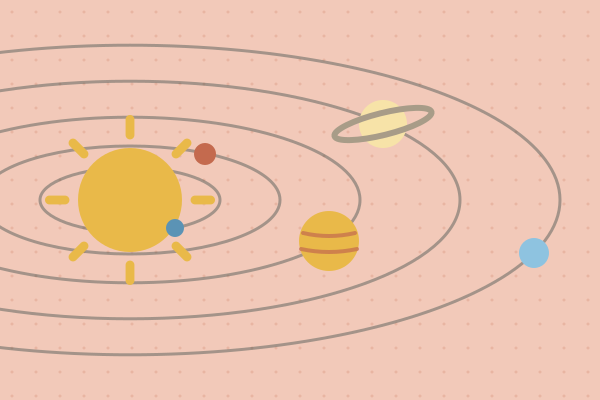
3 lessons in this unit
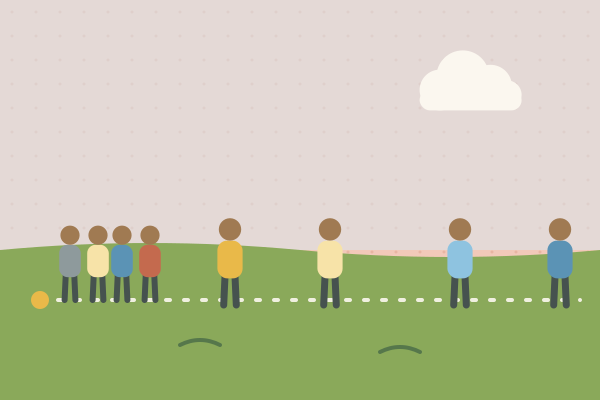 Lesson 1 · 50–60 min · 9 pagesHow big is the solar system, really?Teams turn real NASA planet distances into footsteps and pace out the whole solar system across the schoolyard, then shrink the planets to the same scale. They find out why no poster or textbook picture can show the sizes and the distances at once.
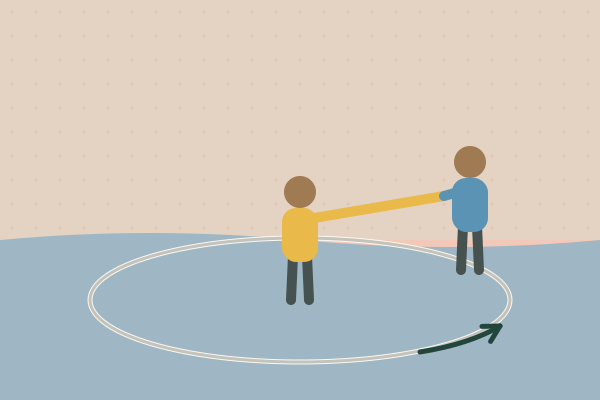 Lesson 2 · 50–60 min · 10 pagesWhy do planets go around the Sun and not fly away?Students make a human orbit held together by a linked arm of 'gravity', let go to see where a planet would go without it, and follow Isaac Newton's cannon on a mountaintop. Then they graph the real length of every planet's year against its distance from the Sun and find the pattern.
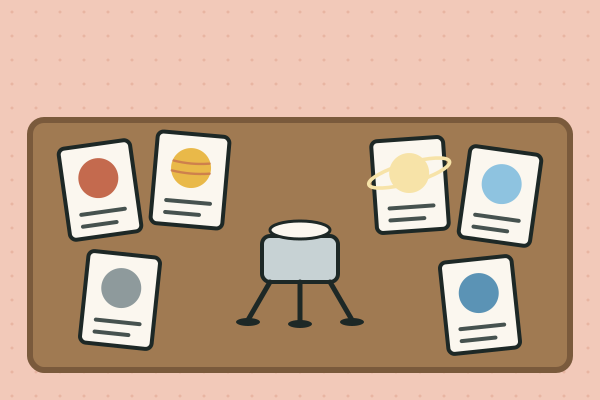 Lesson 3 · 50–60 min · 9 pagesWhat is each world like?Teams read real NASA data cards for the eight planets and the Moon, sort the worlds, work out what a bathroom scale would read on each one, and argue which way 'down' points on another planet. Then they choose a mission destination and justify it with data.
Students turn real NASA distances into footsteps and pace out the whole solar system across the schoolyard, from Mercury just over a pace from the “Sun” to Neptune about ninety paces away, then shrink the planets to the same scale and find that Earth becomes a speck of dust. They link arms to make a human orbit, let go to see why a planet with no gravity would fly off in a straight line, follow Isaac Newton’s cannon on a mountaintop, and graph the real length of every planet’s year against its distance to find the pattern. Last, they read planet data cards, work out what they would weigh on the Moon, Mars and Jupiter, and argue for a mission destination.
By the end, students can explain why no poster can show the solar system to scale; use gravity and sideways speed to explain why planets orbit instead of falling in or flying away; describe how a planet’s year grows with its distance from the Sun; explain why your weight changes from world to world while your mass stays the same; and say why “down” always points to the centre of the world you are standing on. For Earth’s own orbit and the seasons, see The Reason for the Seasons; for the Sun, Earth and Moon up close, see Sun, Earth and Moon; and the free Solar System tool lets students explore the same data on screen.