Solar System Scale
See the planets at true scale for size and distance, find your weight and age on each one, and work out how long light takes to reach them.
True scale for size: if the Sun were a ball 1.7 m across (only its edge fits on the left), Jupiter would be about 17 cm and Earth about 1.6 cm, smaller than a grape. About 109 Earths would fit across the Sun.
1 AU (astronomical unit) is Earth's average distance from the Sun: about 150 million km. Dots are not to scale for size. Click a planet to see how long sunlight takes to reach it.
| World | Scale would read | Your age there | Sunlight takes |
|---|
Your mass (how much of you there is) stays the same everywhere. Your weight changes because each world pulls with a different strength of gravity. For the giant planets, which have no solid ground, gravity is measured at the cloud tops.
Moon counts as of 2025. Astronomers keep finding small moons around the giant planets, so these numbers go up.
How to use it
Sizes draws the Sun and planets at true scale for size. Distances lays them out at their real average distances: scroll right in the true-spacing view to feel how empty space is, or switch to the squeezed view to see them all at once. You on other worlds turns your weight and age into Martian, Jovian and Neptunian ones. Finish with the Quiz.
A good moment: in the true-spacing view, ask students to guess where Neptune will be before you scroll. Most guess far too close.
Size, distance, gravity and time
The Sun holds over 99.8% of the mass in the solar system. The four inner planets are small and rocky; the four outer ones are giants made mostly of gas (Jupiter, Saturn) or ice and gas (Uranus, Neptune). Sizes and distances are so different that no poster can show both at true scale: if Earth were a 1.6 cm grape, the Sun would be about 185 metres away and Neptune about 5.5 km away.
A planet's year is the time it takes to go once around the Sun, and the farther out it is, the longer the trip: Neptune takes almost 165 Earth years. A day is one spin. Your weight depends on the planet's surface gravity, which depends on both its mass and its size. Light travels about 300,000 km every second, yet sunlight still needs about 8 minutes 19 seconds to reach Earth and over 4 hours to reach Neptune.
Data are averages from NASA's planetary fact sheets. Pluto is included in the weight and age table as a dwarf planet.
Free to use, no account needed. It runs in your browser: nothing you type, and no sound from your microphone, is sent to Fieldbook.
Hands-on lessons to pair with Solar System Scale
Ready-to-teach units, each lesson a printable teacher guide and student sheet. Your first three lessons are free.
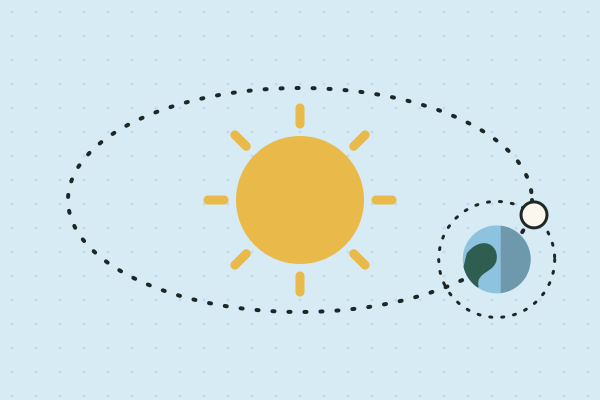
Sun, Earth and Moon
Why it's breakfast time in Calgary and bedtime in Singapore, why your shadow swings round the stick, why the Moon changes shape and why some places barely have seasons. Students build models with balls and lamps, track real shadows and read real sky data from cities around the world.

Earth and Sky at Home
Make a rainbow on the kitchen floor, grow crystals on a windowsill and build a cloud in a jar. Three classic home experiments that actually work, with the real science explained for grown-ups.
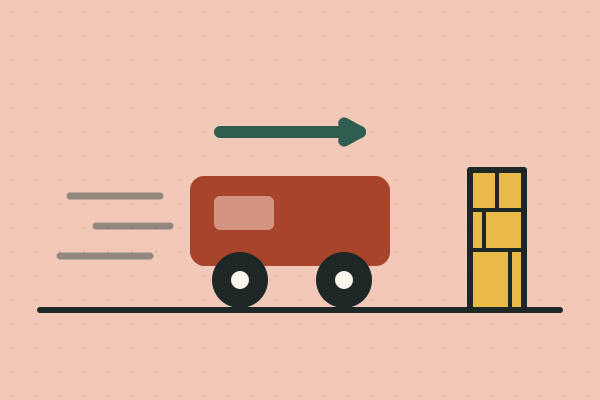
Forces and Motion: Crash, Push and Stop
Why you lurch forward when the bus brakes, how fast a toy car really goes, why heavier carts hit harder, and how to build a crumple zone that saves an egg. Four lessons on inertia, speed, mass and stopping safely.
Three full lessons, free
Make a free account and download any three Fieldbook lessons, from any grade or subject, as printable PDFs. No card needed.
More free classroom tools
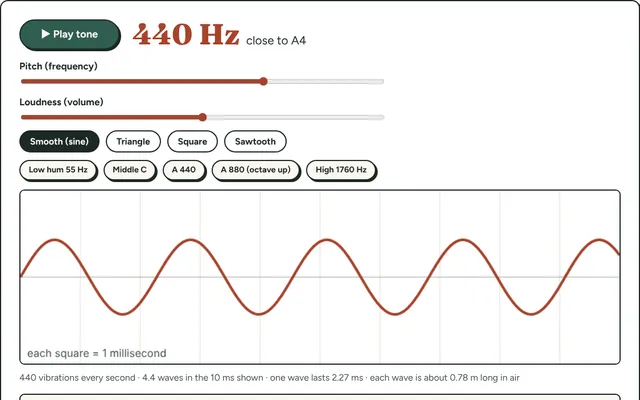
Sound Wave Lab
Play a tone, change its pitch and loudness, and watch the wave change shape. Includes a live microphone wave view to see your own voice.
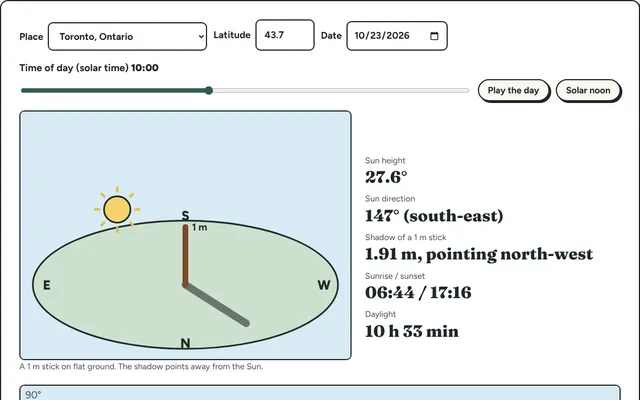
Sun and Shadow
Move through the day and the year to see where the Sun is in the sky, how long a stick's shadow is, and how many hours of daylight any latitude gets.
Sink or Float
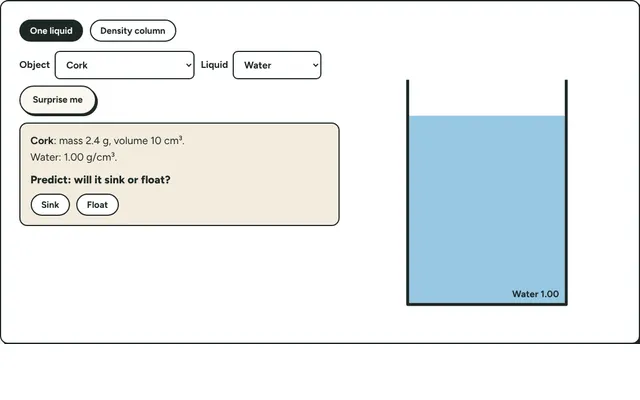
Drop objects into water, oil, salt water or syrup. Predict first, then see what sinks and floats and why, using mass, volume and density.
Lever Lab
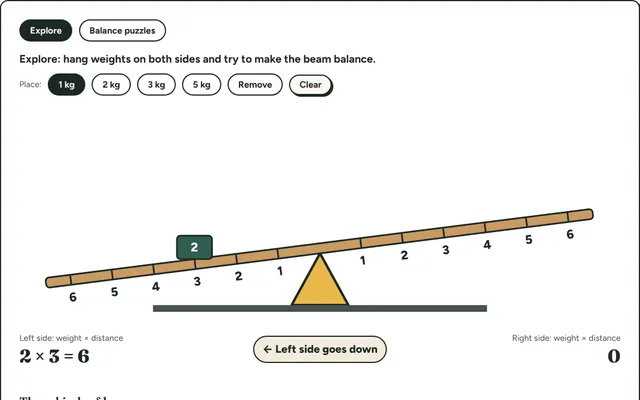
Put weights on a seesaw and balance it. Discover the law of the lever (weight times distance) by experiment, then solve balance puzzles.
Punnett Squares
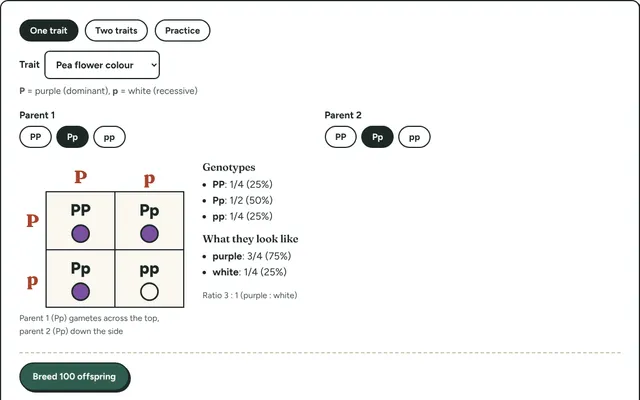
Cross two parents and see every possible offspring, with the ratios of genotypes and traits, plus a breeding simulator to test the prediction.
Cell Explorer
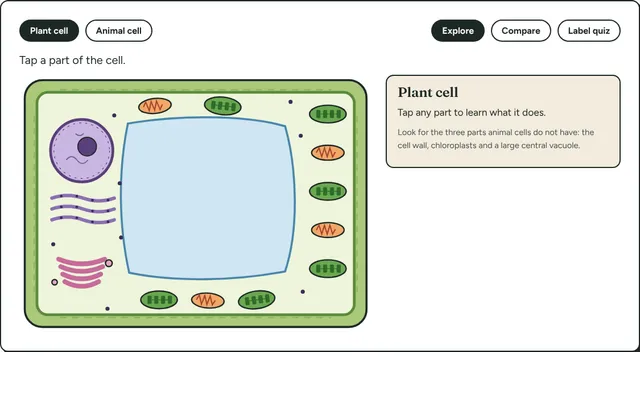
Tap the parts of a plant cell and an animal cell to learn what each one does, then compare the two and quiz yourself.