Cell Explorer
Tap the parts of a plant cell and an animal cell to learn what each one does, then compare the two and quiz yourself.
| Part | Plant cell | Animal cell |
|---|
How to use it
Tap or click any part of the cell (or Tab to it and press Enter) to see what it does, with an everyday comparison. Switch between the plant and animal cell to spot what is different. Compare shows a side-by-side table, and Label quiz names a part for you to find.
These are typical cells drawn in 2D and not to scale. Real cells are 3D, much smaller (most are 10 to 100 micrometres across), and have many more mitochondria, ribosomes and other parts than we can draw.
Cells: the building blocks of living things
Every living thing is made of one or more cells. Plant and animal cells share the same basic kit: a cell membrane that controls what enters and leaves, cytoplasm, a nucleus that holds the DNA, mitochondria that release energy from food, ribosomes that build proteins, and the endoplasmic reticulum and Golgi apparatus that make, pack and ship materials.
Plant cells add three things. A stiff cell wall made of cellulose gives them a boxy shape and holds the plant up. Chloroplasts capture light for photosynthesis, which is why leaves are green. A large central vacuole full of watery sap pushes out on the wall and keeps the plant firm: a wilted plant has vacuoles that have lost water. A common mix-up: plant cells have mitochondria too, because they also need to release energy from the sugar they make.
- Look at onion skin or Elodea leaves under a microscope, then compare with a cheek-cell slide.
- Ask: why don't animal cells need chloroplasts? Why does a celery stick go floppy when it dries out?
Free to use, no account needed. It runs in your browser: nothing you type, and no sound from your microphone, is sent to Fieldbook.
Hands-on lessons to pair with Cell Explorer
Ready-to-teach units, each lesson a printable teacher guide and student sheet. Your first three lessons are free.
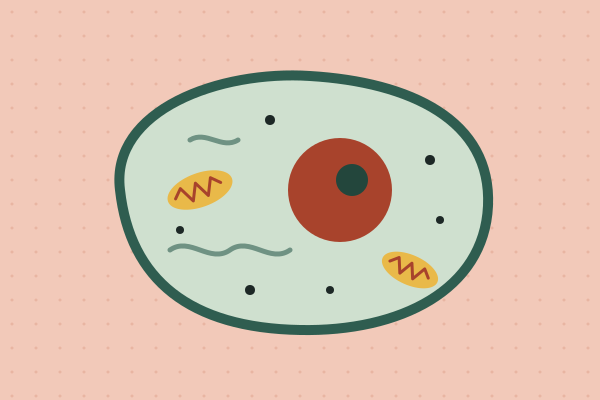
Cells: The Smallest Living Things
How small is a cell, how does water get in, what's inside, and why are cells so tiny? Four lessons with potatoes, strawberries and gelatin that work with a microscope or without one.
Plants and Seeds: What Does a Seed Need?
What's hiding inside a bean, and what does it need to wake up and grow? Young scientists open soaked seeds, sprout beans in bags and watch seedlings bend to find the light.
Our Living Planet
Air, water, land and living things, and how each one depends on the others. Students build a sealed jar ecosystem to keep for a month and catch the water cycle in a bag on the window.
Three full lessons, free
Make a free account and download any three Fieldbook lessons, from any grade or subject, as printable PDFs. No card needed.
More free classroom tools
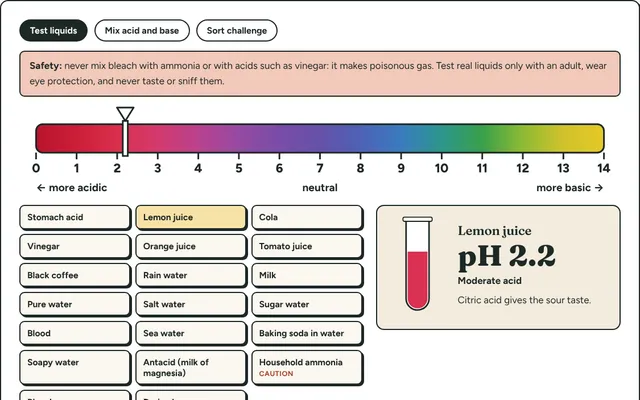
pH Scale Explorer
Test household liquids on a pH scale with a cabbage-juice indicator colour, from lemon juice to bleach, and mix acids and bases to see neutralisation.
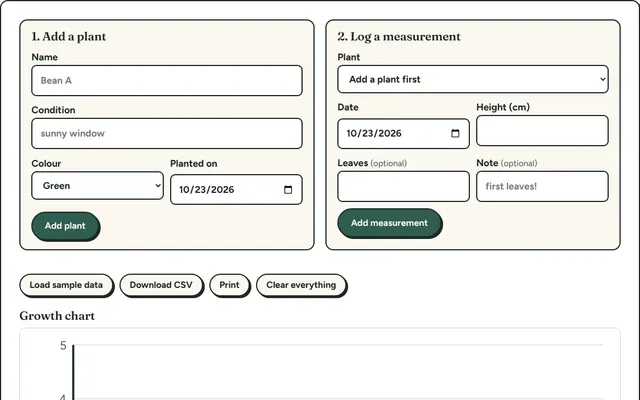
Plant Growth Journal
Log your class plants' height every few days and get a growth chart that compares plants or conditions. Saved on your device, ready to print.
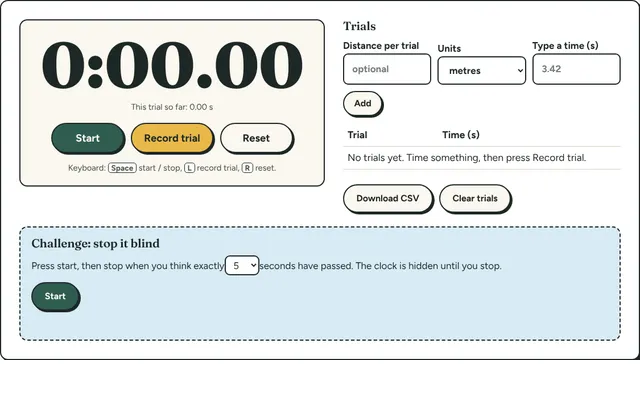
Lab Stopwatch
A big stopwatch with lap times for experiments: time several trials, see the average and spread, and download the results.
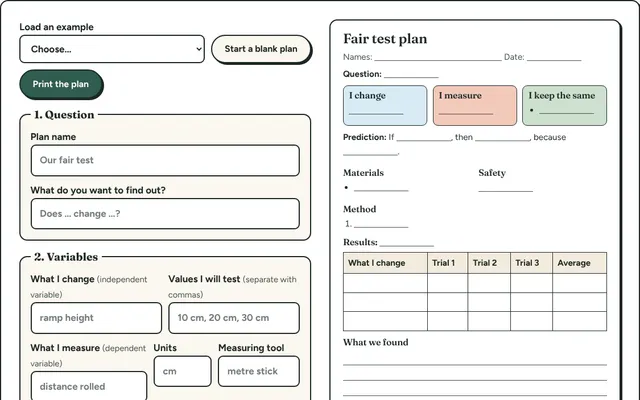
Fair Test Planner
Plan an experiment step by step: question, variables to change, measure and keep the same, prediction and method. Prints as a one-page plan.
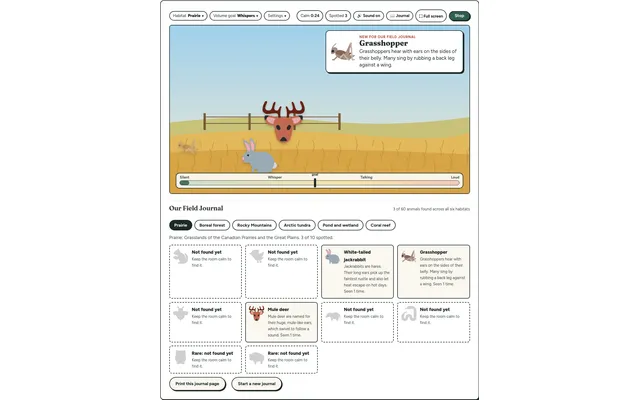
Field Watch
A quiet-room wildlife game for the projector. Keep the room calm and animals visit six real habitats, each with a fact to learn. Every animal spotted goes into your class Field Journal.
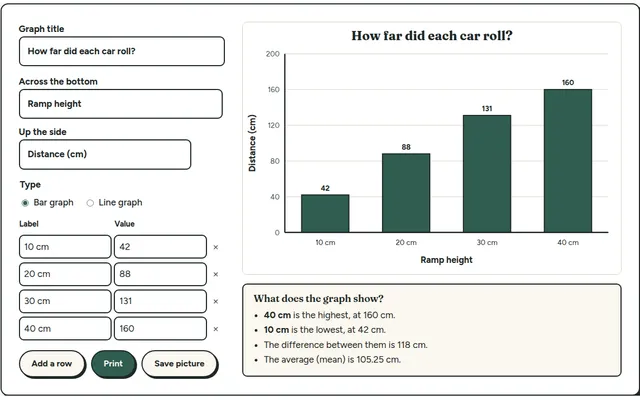
Class Graph Maker
Type in your class's results and get a clean bar or line graph to project or print. Built for the data step of every Fieldbook investigation.