Cells: The Smallest Living Things
How small is a cell, how does water get in, what's inside, and why are cells so tiny? Four lessons with potatoes, strawberries and gelatin that work with a microscope or without one.
Or try any 3 lessons free with an account.
Already bought it? Download the whole unit as one printable workbook: cover, contents, curriculum connections, every lesson, readings, practice pages, a unit test and an answer key, in black and white.
4 lessons in this unit
 Lesson 1 · 50–60 minHow big is a cell?Students measure tiny things they can see, count how many fit across a millimetre, and build a scale ladder from a hand down to a single cell. With a microscope or a phone and a drop of water, they look at real onion cells and estimate their size.
 Lesson 2 · Two sessions: 45 min, then 30 min the next dayHow do things get in and out of a cell?Students weigh potato strips, soak them in plain and salty water, and measure how their mass and stiffness change. They use the results to explain diffusion and osmosis, and why a wilted salad goes limp.
 Lesson 3 · 50–60 minCan you pull DNA out of a strawberry?Students mash strawberries with dish soap and salt, filter the juice, and watch a cloudy white tangle of DNA appear when the teacher layers cold rubbing alcohol on top. They explain what each ingredient did to the cell, and test what happens without soap.
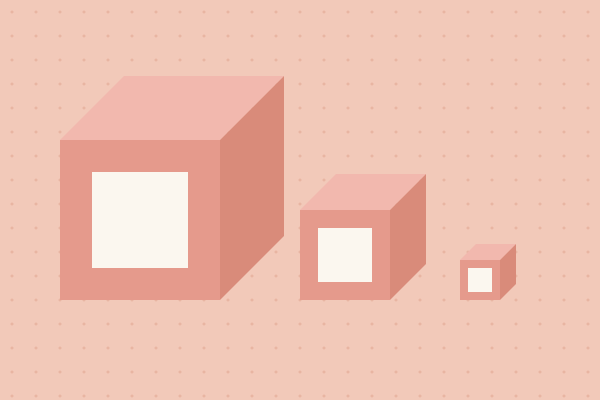 Lesson 4 · 50–60 min, with cubes soaking for at least an hourWhy are you made of many small cells, not one big one?Students soak gelatin cubes of 1, 2 and 3 cm in food colouring, cut them open and measure how far the colour got in. They calculate surface area to volume and explain why cells stay small.
Materials for the whole unit · one list, lesson by lesson
Lesson 1: How big is a cell?
- Ruler with millimetre marks (a clear plastic one if you have microscopes)1 per team
- Magnifying glass or hand lens1 per team
- Table saltA pinch per team
- Sewing thread and a pencil50 cm (20 in) of thread per team
- Onion, cut into layers by the teacher1 for the class
- Index cards for the scale ladder8 per team
- Printed photo of onion skin cells with a scale bar (no-microscope path)1 per team
- Microscope, slides and cover slips (optional)As many as you have
- A phone with a camera (optional, for the water-drop lens)1 per team, if allowed
About $5 for a class of 30
Lesson 2: How do things get in and out of a cell?
- Large potato, cut into strips by the teacher1 per 3 teams
- Clear plastic cups, about 300 mL (10 oz), labelled2 per team
- Table salt1 tablespoon per team
- Kitchen scale that reads to 0.1 g (to 1 g works, less precisely)1 per class or more
- Ruler with millimetre marks1 per team
- Paper towels and plastic wrapA few per team
- Gummy bears (optional demonstration, not for eating)2
- Red onion and a microscope with slides (optional)If you have them
About $10 for a class of 30, plus about $15 for a kitchen scale if you don't have one
Lesson 3: Can you pull DNA out of a strawberry?
- Strawberries, fresh or frozen and thawed2 per team
- Zip-top freezer bag, sandwich size1 per team, plus 1 for the no-soap test
- Clear liquid dish soap40 mL (about 3 tablespoons) for the class
- Table salt2 teaspoons for the class
- Rubbing alcohol (isopropyl, 70% or stronger), ice cold, teacher-handledAbout 250 mL (1 cup) for the class
- Coffee filter and a funnel or cup to hold it1 per team
- Clear narrow cup or test tube1 per team
- Wooden skewer or coffee stir stick1 per team
- Safety goggles1 per student
- Microscope and slides (optional)If you have them
About $20 for a class of 30
Lesson 4: Why are you made of many small cells, not one big one?
- Unflavoured gelatin powder4 envelopes (about 28 g) for the class
- Blue or green liquid food colouring1 teaspoon per team
- Clear plastic cups, about 300 mL (10 oz)1 per team
- Plastic knife1 per team
- Ruler with millimetre marks1 per team
- Plastic spoon, paper plate and paper towels1 each per team
- Calculator1 per team
- Microscope or magnifying glass (optional)If you have them
About $10 for a class of 30
Across four lessons, students work out what cells are by measuring, soaking, mashing and cutting. They build a scale ladder from a hand down to a single cell, watch potato strips go firm or floppy in plain and salty water, pull a white tangle of DNA out of a strawberry with dish soap and salt, and cut open gelatin cubes to see how far colour can soak in.
By the end, students can say how small a cell is in numbers they measured, explain how water and other particles cross a cell membrane, describe where DNA is and how it was released, and argue with evidence why living things are built from many small cells instead of one big one. Every lesson has a microscope path and a no-microscope path, so a school with one microscope, or none, can run the whole unit. Materials come from a grocery store or pharmacy.