pH Scale Explorer
Test household liquids on a pH scale with a cabbage-juice indicator colour, from lemon juice to bleach, and mix acids and bases to see neutralisation.
Safety: never mix bleach with ammonia or with acids such as vinegar: it makes poisonous gas. Test real liquids only with an adult, wear eye protection, and never taste or sniff them.
Start with 100 mL of pure water and a little cabbage indicator. Each drop is 0.05 mL of a dilute lab acid (like hydrochloric acid) or lab base (like sodium hydroxide). Equal drops cancel out.
Sort each liquid: acid, neutral or base?
How to use it
Test liquids: tap a liquid on the shelf to "dip" it in red cabbage juice and see the colour and where it sits on the pH scale. Mix acid and base: add drops to a beaker and watch the pH and colour change. Sort challenge: decide whether each liquid is an acid, neutral or a base, then check.
The pH values are typical; real ones vary with brand and strength. The mixing beaker is a simplified model with a strong acid and a strong base, so the pH jumps quickly near 7. Weak kitchen acids and bases (vinegar and baking soda) change more gradually.
What pH tells us
pH measures how acidic or basic a watery liquid is, on a scale from about 0 to 14. Below 7 is acidic, 7 is neutral (pure water) and above 7 is basic (also called alkaline). Each step is ten times stronger than the last, so lemon juice at pH 2 is about 1000 times more acidic than coffee at pH 5.
Red cabbage contains anthocyanin pigments that change colour with pH: red in strong acids, pink and purple near neutral, blue and green in bases, and yellow in very strong bases. Acids and bases neutralise each other, which is why an antacid (a base) settles an upset stomach and why baking soda fizzes with vinegar.
- Make real cabbage indicator: chop red cabbage, cover it with hot water, let it cool and strain it.
- Ask: why do many cleaners have a high pH while many foods have a low pH?
Free to use, no account needed. It runs in your browser: nothing you type, and no sound from your microphone, is sent to Fieldbook.
Hands-on lessons to pair with pH Scale Explorer
Ready-to-teach units, each lesson a printable teacher guide and student sheet. Your first three lessons are free.
Kitchen Chemistry
Fizzing, curdling and colour changes with things from the grocery store. Students gather evidence of new substances, weigh a reaction in a sealed bottle, and turn red cabbage into an acid detector.
Kitchen Chemistry for Families
Four famous kitchen experiments, done properly: a homemade lava lamp, oobleck, a baking soda volcano and invisible ink. Each one starts with a real question, works with things from your cupboard, and leaves your child able to explain what happened.
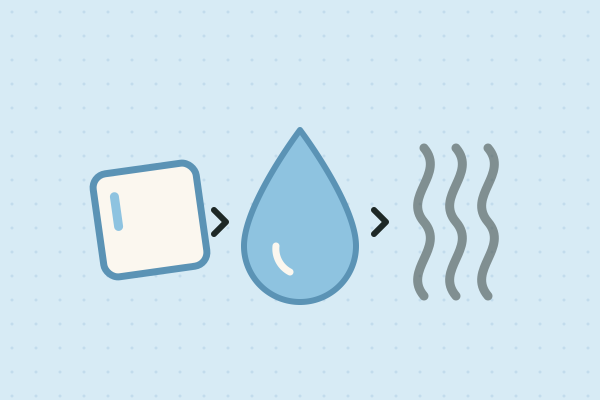
Solids, Liquids and Gases
Where does a puddle go? Why does ice float? A first look at the tiny particles that explain the stuff around us.
Three full lessons, free
Make a free account and download any three Fieldbook lessons, from any grade or subject, as printable PDFs. No card needed.
More free classroom tools
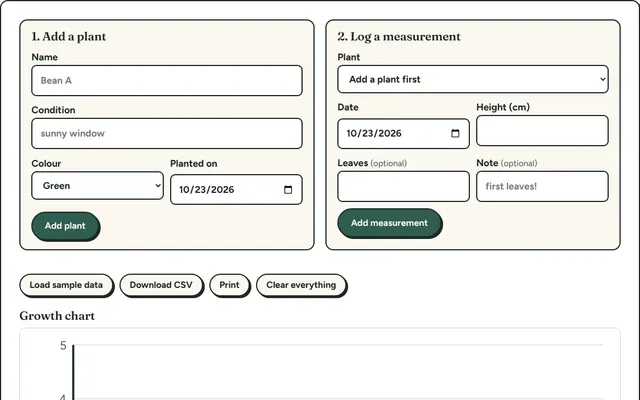
Plant Growth Journal
Log your class plants' height every few days and get a growth chart that compares plants or conditions. Saved on your device, ready to print.
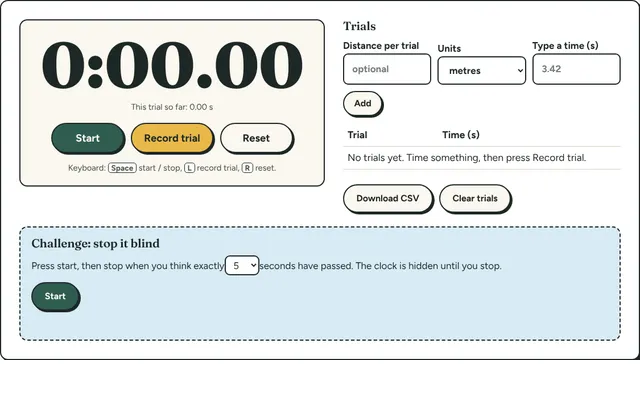
Lab Stopwatch
A big stopwatch with lap times for experiments: time several trials, see the average and spread, and download the results.
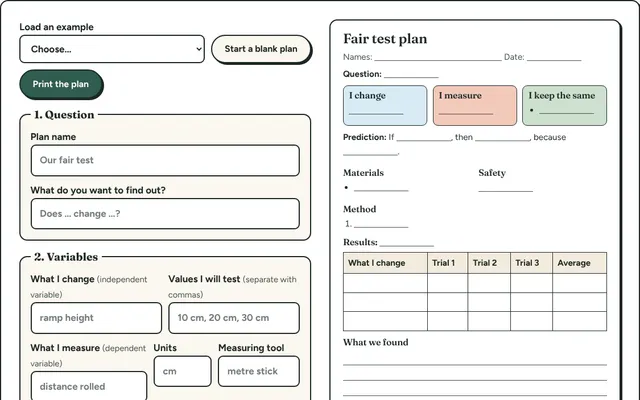
Fair Test Planner
Plan an experiment step by step: question, variables to change, measure and keep the same, prediction and method. Prints as a one-page plan.
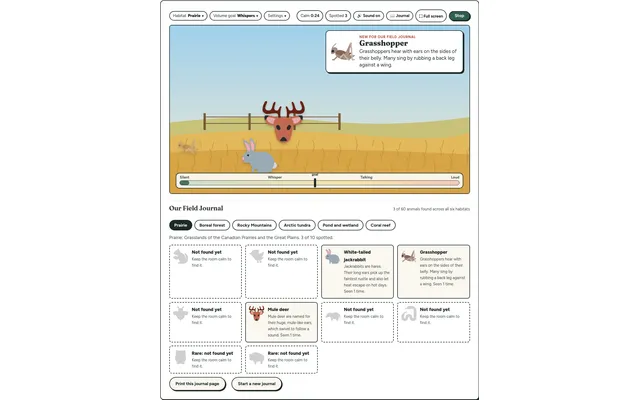
Field Watch
A quiet-room wildlife game for the projector. Keep the room calm and animals visit six real habitats, each with a fact to learn. Every animal spotted goes into your class Field Journal.
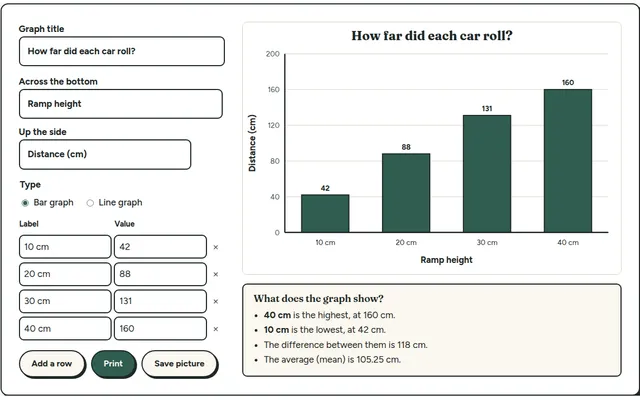
Class Graph Maker
Type in your class's results and get a clean bar or line graph to project or print. Built for the data step of every Fieldbook investigation.
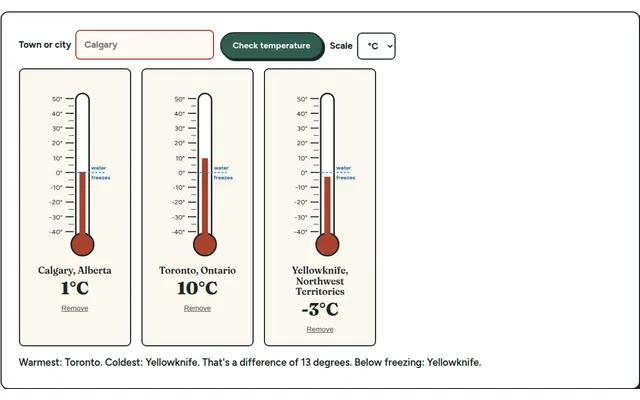
Weather Station
A live thermometer for any town. Read the scale, compare cities, and log the day's temperature for a weather unit.