Lab Stopwatch
A big stopwatch with lap times for experiments: time several trials, see the average and spread, and download the results.
0:00.00
This trial so far: 0.00 s
Trials
How to use it
Press Start (or the space bar) when the test begins and Start again to stop. Press Record trial (L) to save that time as a trial, then Reset (R) and run it again. For repeating events, like the swings of a pendulum, keep the clock running and press L at the end of each one: every press saves the time since the last press. Enter a distance and the table works out the speed for each trial.
Use Full screen so the whole class can see the clock, and download the trials as a CSV to graph them later.
Why scientists repeat trials
Every measurement has some error. A person with a stopwatch reacts a little late, sometimes by a tenth of a second or more, and a toy car never rolls exactly the same way twice. Repeating a trial three or more times and taking the mean (add the times, divide by how many) lets the small errors partly cancel out, so the average is more trustworthy than any one try.
The range (slowest minus fastest) shows how spread out the results are. A small range means the results agree; a big one means something is changing between trials. If one trial is far from the others, the tool flags it as a possible outlier: ask what happened (a late start, a bumped ramp) before deciding whether to repeat it. Scientists report outliers they leave out rather than quietly deleting them.
- Which is easier to time accurately: a 1-second event or a 10-second one? Why?
- Try the blind challenge: how close can you get? How does that compare to the range of your trials?
- Speed = distance ÷ time. If the time doubles over the same distance, what happens to the speed?
Free to use, no account needed. It runs in your browser: nothing you type, and no sound from your microphone, is sent to Fieldbook.
Hands-on lessons to pair with Lab Stopwatch
Ready-to-teach units, each lesson a printable teacher guide and student sheet. Your first three lessons are free.
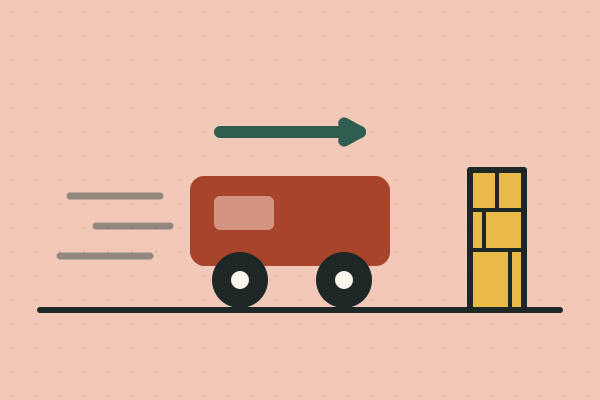
Forces and Motion: Crash, Push and Stop
Why you lurch forward when the bus brakes, how fast a toy car really goes, why heavier carts hit harder, and how to build a crumple zone that saves an egg. Four lessons on inertia, speed, mass and stopping safely.
Evidence Lab
How do you know something is true? Students test a claim with their own measurements, find out why one result is never enough, and learn to tell strong evidence from weak.

Build It, Launch It
Egg drops, paper planes and balloon rockets, done properly at home. Three engineering challenges where kids build, test, fix and explain the pushes and pulls behind what happened.
Three full lessons, free
Make a free account and download any three Fieldbook lessons, from any grade or subject, as printable PDFs. No card needed.
More free classroom tools
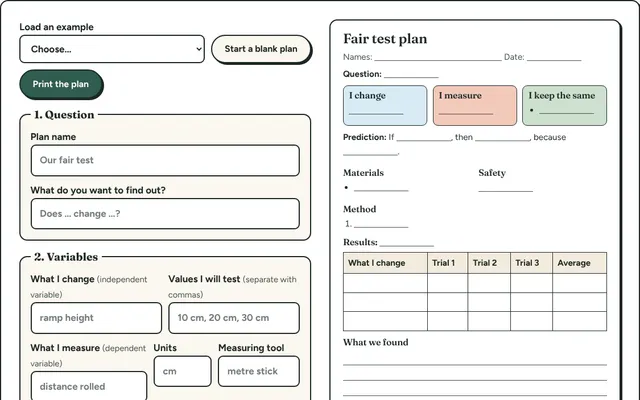
Fair Test Planner
Plan an experiment step by step: question, variables to change, measure and keep the same, prediction and method. Prints as a one-page plan.
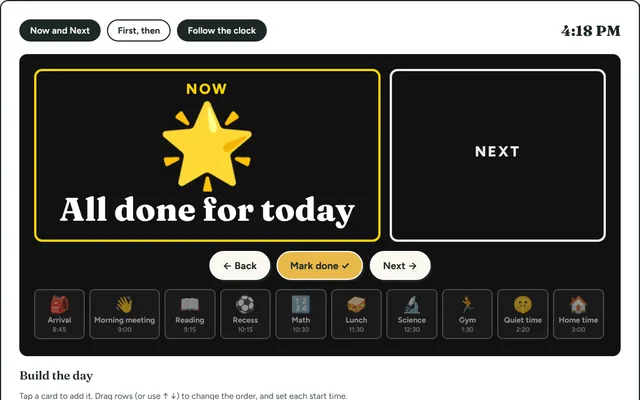
Visual Schedule
Build the day's schedule with picture cards and show Now and Next on the board. Helps every student, and especially those who need predictability.
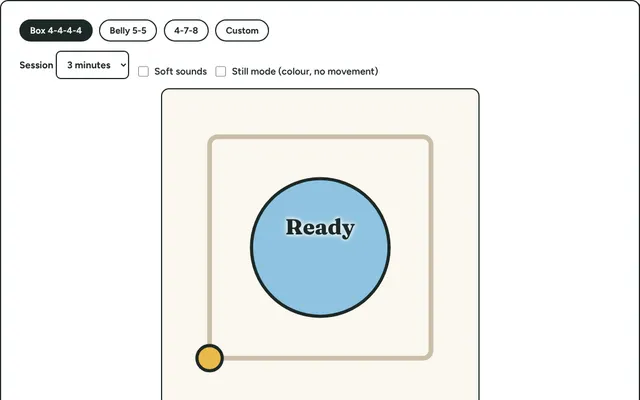
Calm Breathing
A breathing guide for the projector: a shape grows and shrinks to pace box, belly or 4-7-8 breathing, with gentle counting and optional sound.
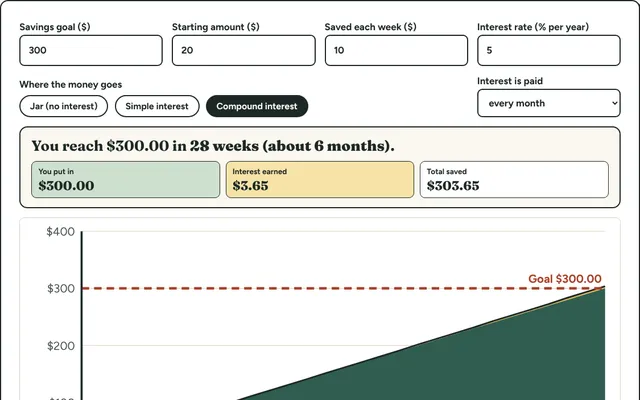
Savings Planner
Set a savings goal and see how long it takes, week by week. Compare saving in a jar with earning simple or compound interest.
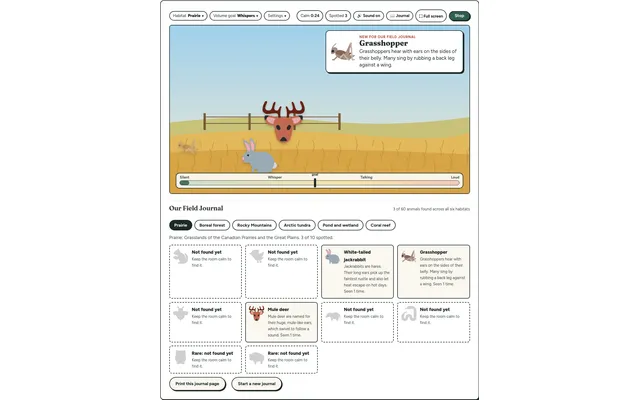
Field Watch
A quiet-room wildlife game for the projector. Keep the room calm and animals visit six real habitats, each with a fact to learn. Every animal spotted goes into your class Field Journal.
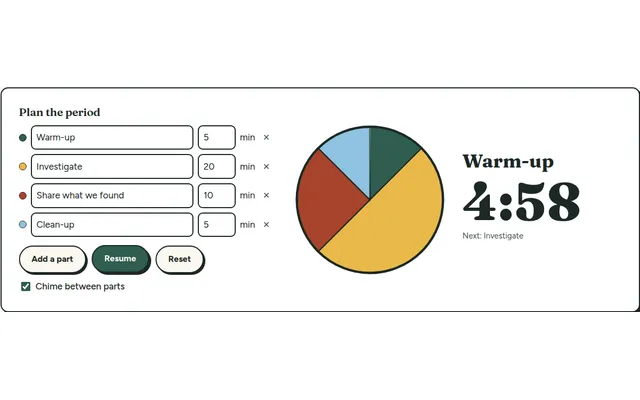
Lesson Timer
A big pie timer that splits a class period into named parts (warm-up, investigate, clean-up) so everyone can see what's next and how long is left.