Calm Breathing
A breathing guide for the projector: a shape grows and shrinks to pace box, belly or 4-7-8 breathing, with gentle counting and optional sound.
Ready
How to use it
Pick a pattern, press Start and go full screen. Breathe in as the circle grows, hold while it stays still, and breathe out as it shrinks. In box breathing a dot also travels around the square: up the side as you breathe in, across the top as you hold, down as you breathe out, and back along the bottom. Sound is off by default; tick Soft sounds for a gentle tone at each change and a chime at the end. If your computer is set to reduce motion, the circle stays still and changes colour instead.
Good moments to use it: coming in from recess, before a test or presentation, after a conflict, or as a quiet start to the afternoon. Keep it invitational: students can join in, watch, or simply sit quietly.
What slow breathing does
When we feel stressed, breathing tends to get faster and shallower. Slowing it down on purpose, especially with a breath out that is as long as or longer than the breath in, helps many people feel calmer and more focused. It is a skill that gets easier with practice, a bit like a muscle. It is not a treatment for anything, and it does not work the same way for everyone.
- Breathe gently through the nose if comfortable, letting the belly rise, not the shoulders.
- Never force a hold. If anyone feels dizzy or uncomfortable, they should stop and breathe normally.
- 4-7-8 has long holds; for younger students, Belly 5-5 or a custom pattern like 3 in, 4 out is easier.
- Math link: the tool shows breaths per minute. A 4-4-4-4 box takes 16 seconds, so that is 60 ÷ 16 = 3.75 breaths a minute.
Free to use, no account needed. It runs in your browser: nothing you type, and no sound from your microphone, is sent to Fieldbook.
Hands-on lessons to pair with Calm Breathing
Ready-to-teach units, each lesson a printable teacher guide and student sheet. Your first three lessons are free.
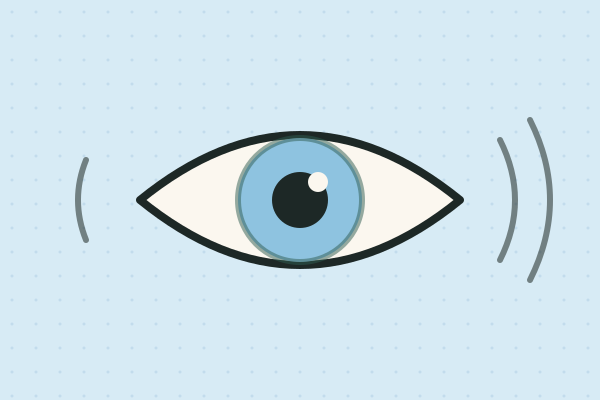
Your Senses: How Does Your Body Know?
Map the most sensitive spots on your skin, find the blind spot in each eye, lose the flavour of a jelly bean by pinching your nose, and build an owl ear. Four lessons on how senses gather information and the brain makes sense of it.
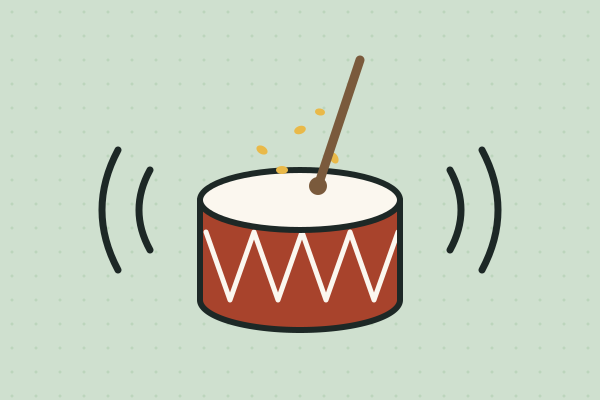
Sound: Can You See a Sound?
Can you see a sound? Young scientists make rice dance on a drum, talk through a string telephone and build a rubber-band guitar to find out that every sound starts with something shaking.
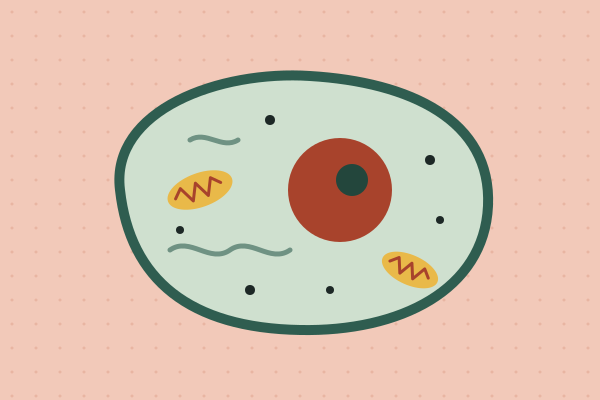
Cells: The Smallest Living Things
How small is a cell, how does water get in, what's inside, and why are cells so tiny? Four lessons with potatoes, strawberries and gelatin that work with a microscope or without one.
Three full lessons, free
Make a free account and download any three Fieldbook lessons, from any grade or subject, as printable PDFs. No card needed.
More free classroom tools
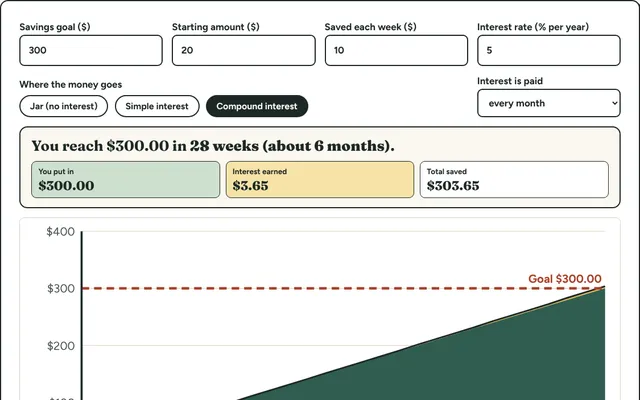
Savings Planner
Set a savings goal and see how long it takes, week by week. Compare saving in a jar with earning simple or compound interest.
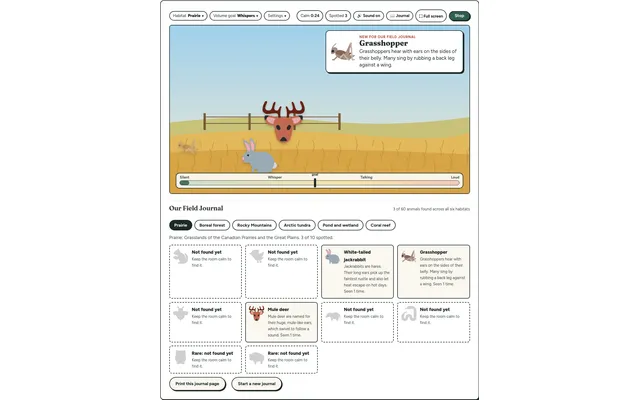
Field Watch
A quiet-room wildlife game for the projector. Keep the room calm and animals visit six real habitats, each with a fact to learn. Every animal spotted goes into your class Field Journal.
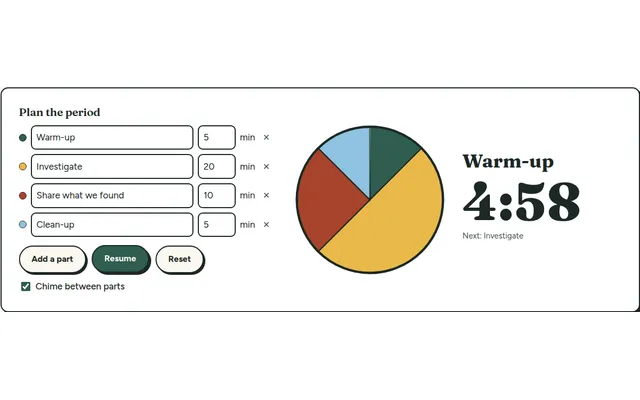
Lesson Timer
A big pie timer that splits a class period into named parts (warm-up, investigate, clean-up) so everyone can see what's next and how long is left.
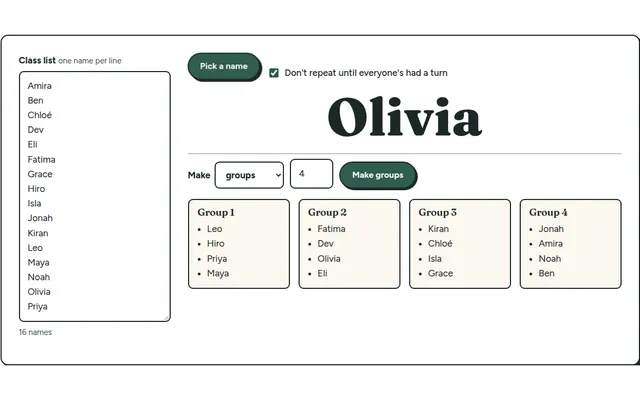
Team Maker
Paste your class list once, then pick a random name or split the class into balanced lab groups in one click.
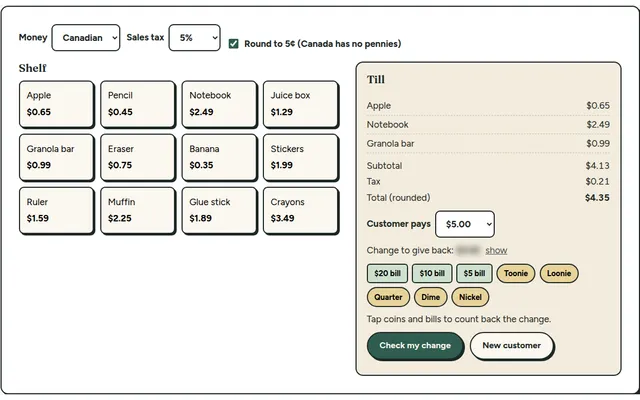
Corner Store
Ring up a pretend purchase, add sales tax and count back the change. Money practice with Canadian or US coins and bills.
Participation Tally
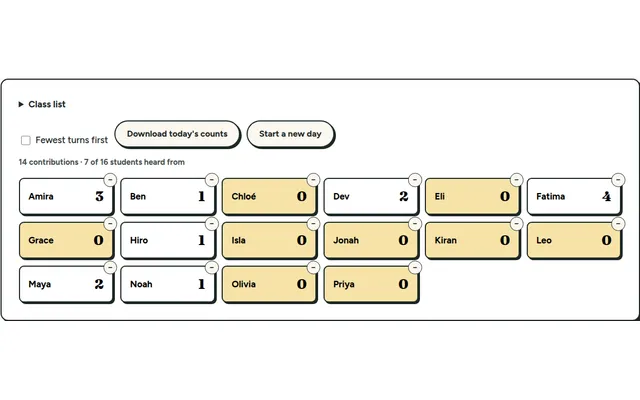
Tap a name each time a student contributes and see who hasn't had a turn yet. Everything stays on your own device.