Your Senses: How Does Your Body Know?
Map the most sensitive spots on your skin, find the blind spot in each eye, lose the flavour of a jelly bean by pinching your nose, and build an owl ear. Four lessons on how senses gather information and the brain makes sense of it.
Or try any 3 lessons free with an account.
Already bought it? Download the whole unit as one printable workbook: cover, contents, curriculum connections, every lesson, readings, practice pages, a unit test and an answer key, in black and white.
4 lessons in this unit
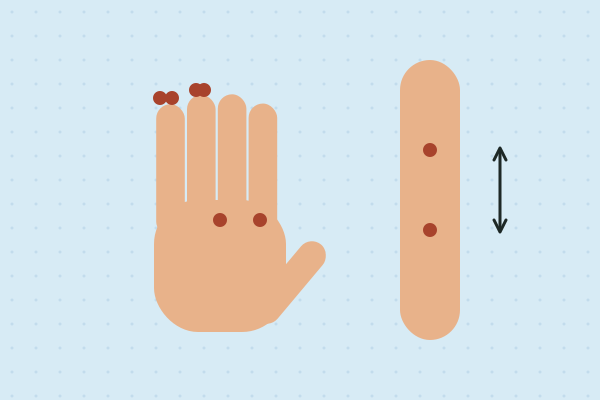 Lesson 1 · 45–60 minWhere is your skin most sensitive?Students use a bent paper clip to touch the skin with one point or two, and find the smallest gap they can feel as two on the fingertip, palm, back of the hand and forearm. Then they explain why fingertips are built for reading the world.
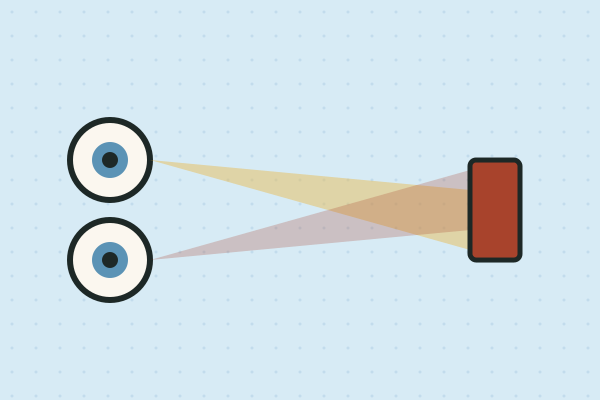 Lesson 2 · 45–60 minWhy do you have two eyes?Students try to touch a pen cap to a pen tip ten times with one eye covered and ten times with both eyes open, then make a dot vanish into their own blind spot. They explain what two eyes give the brain that one eye can't.
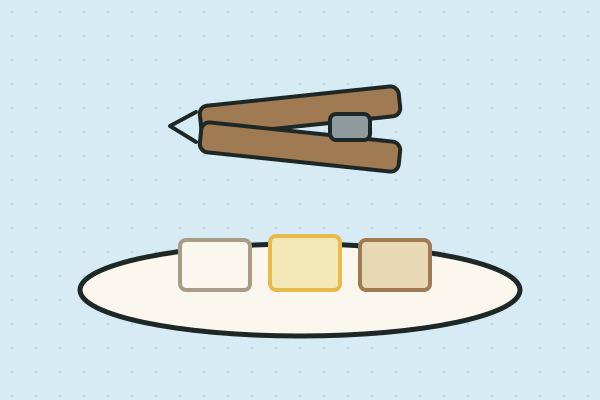 Lesson 3 · 45–60 minCan your nose change what you taste?With eyes closed and noses pinched, students try to name the flavour of a jelly bean and tell a cube of apple from a cube of potato. Then they let go of their noses and explain why most of what we call taste is really smell.
 Lesson 4 · 60 minHow do animals sense what we can't?Students read about whiskers, echolocation and owl ears, build a paper cone 'owl ear' and test whether it helps them find where a sound comes from. Then they define a problem and invent a sensor or tool inspired by an animal.
Materials for the whole unit · one list, lesson by lesson
Lesson 1: Where is your skin most sensitive?
- Large paper clip, unbent into a U (or two flat toothpicks with the tips snipped off)1 per team, plus spares
- Ruler with millimetre marks1 per team
- Washable marker1 per team
About $5 for a class of 30, if you have rulers
Lesson 2: Why do you have two eyes?
- Pen or marker with a cap1 per team
- Blank index card, 13 × 8 cm (5 × 3 in) or larger1 per student
- Black marker1 per team
- Ruler, 30 cm (12 in), or a metre stick1 per team
Free with classroom pens and index cards; about $5 for extra cards
Lesson 3: Can your nose change what you taste?
- Jelly beans in at least four flavours, from a bag with no nut warning (check the label, including 'may contain')4 per student
- Apple2 to 3 per class
- Potato (firm, no green patches or sprouts)1 to 2 per class
- Small paper cups1 per student
- Paper napkins2 per student
- Clean knife, peeler and cutting board (adult use only)1 set
About $15 for a class of 30
Lesson 4: How do animals sense what we can't?
- Sheet of card stock or a file folder, letter size2 per team
- Tape1 roll per team
- Two pencils (for tapping together as a soft sound)1 pair per team
- Masking tape and a marker, to mark a circle of 8 spots on the floor1 per class
- Printed research cards1 set per team
About $5 for a class of 30
Students turn their own bodies into the experiment. They use a bent paper clip to map where their skin can tell one touch from two, try to cap a pen with one eye closed and then make a dot vanish into their blind spot, pinch their noses to find out how much of “taste” is really smell, and finish by building a paper owl ear and inventing a sensor inspired by an animal.
By the end of the unit, students can explain that each sense collects one kind of information, that the brain puts the signals together and decides what to do, and that other animals have structures that let them sense things we can’t. Every lesson uses paper clips, index cards, paper, tape and a few snacks, and each one offers ways to take part for students whose senses work differently.