Sound: Can You See a Sound?
Can you see a sound? Young scientists make rice dance on a drum, talk through a string telephone and build a rubber-band guitar to find out that every sound starts with something shaking.
Or try any 3 lessons free with an account.
Already bought it? Download the whole unit as one printable workbook: cover, contents, curriculum connections, every lesson, readings, practice pages, a unit test and an answer key, in black and white.
3 lessons in this unit
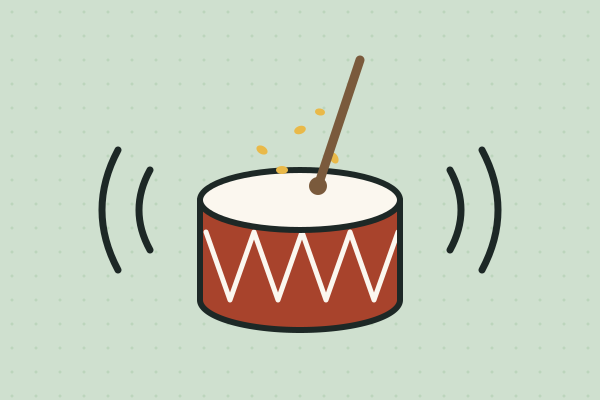
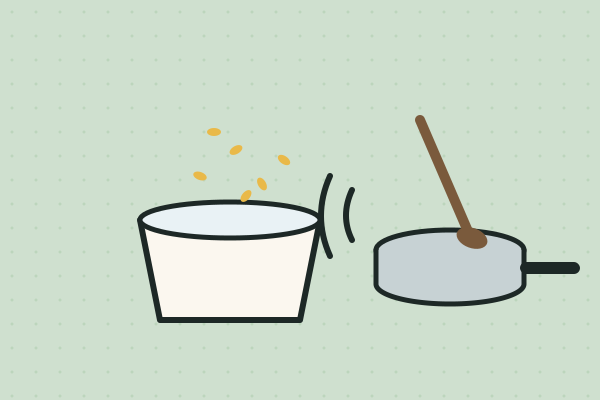 Lesson 1 · 40–45 minCan you see a sound?Children make grains of rice jump on a plastic-wrap drum, pluck rubber bands on a box and twang rulers on the edge of a table. They find out that every sound they make comes from something shaking back and forth very fast.
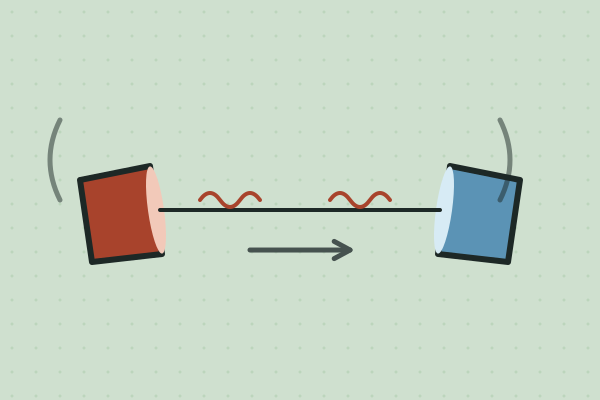 Lesson 2 · 45 minCan a string carry your voice?Children build cup-and-string telephones and test them with the string tight, loose and pinched, then compare different kinds of string. They find out that a tight string carries the shake of their voice from one cup to the other.
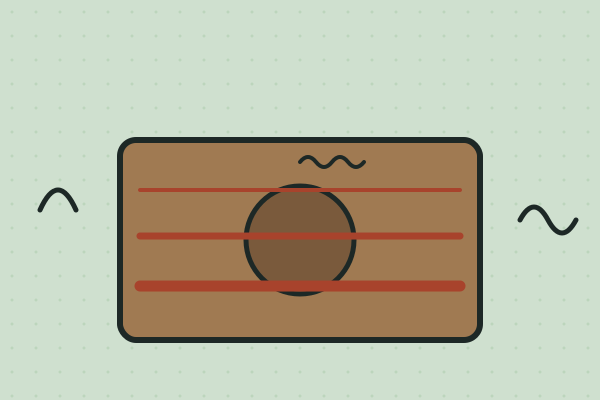 Lesson 3 · 45 minHow do you make a high note or a low note?Children build a rubber-band guitar with thick and thin bands and blow across plastic bottles holding different amounts of water. They find out that fast shaking makes a high note and slow shaking makes a low note.
Materials for the whole unit · one list, lesson by lesson
Lesson 1: Can you see a sound?
- Plastic or metal mixing bowl, about 15 to 20 cm (6 to 8 in) across1 per team
- Plastic wrap1 roll for the class
- Large rubber band to hold the wrap on the bowl1 per team
- Uncooked rice (or coarse salt)About 1 teaspoon per team
- Metal pot or baking pan and a metal or wooden spoon1 per team, or 1 for the teacher
- Small open box (tissue box or shoebox) and 2 rubber bands1 per team
- Ruler, 30 cm (12 in)1 per team
- Tuning fork and a clear plastic cup of water (optional)1 for the teacher
About $10 for a class of 30
Lesson 2: Can a string carry your voice?
- Paper cups (not waxed if you can choose), 250 to 350 mL (8 to 12 oz)2 per team, plus spares
- Cotton kitchen string, about 3 m (10 ft)1 piece per team
- Thick yarn, about 3 m (10 ft)1 piece per team
- Fishing line, about 3 m (10 ft)1 piece per team
- Paper clips6 per team
- Tape1 roll for the class
About $10 for a class of 30
Lesson 3: How do you make a high note or a low note?
- Small open box (shoebox, tissue box with top cut off, or plastic food tub)1 per team
- Rubber bands: one thick and one thin, about the same length2 per team, plus spares
- Pencil or marker to lift the bands (a bridge)1 per team
- Empty plastic water bottles with narrow necks, all the same size3 per team, plus 1 per child for blowing
- Water in a jug, and a funnel or measuring cup1 per team
- Food colouring (optional, to see the water level)A few drops
- Towels for spillsA few
About $8 for a class of 30, plus recycling
Children start by hunting for the shake inside a sound. They bang a pan beside a plastic-wrap drum and watch grains of rice jump, pluck rubber bands, twang rulers and feel their own throats hum. Next they build cup-and-string telephones and test whether the string carries their voice best tight or loose, and which kind of string works best. Last, they make high and low notes with thick and thin rubber bands and with plastic bottles holding different amounts of water.
By the end of the unit, children can say in their own words that sound is made when something vibrates (shakes back and forth very fast), that the shaking can travel through air and along a tight string, and that fast shaking makes a high note while slow shaking makes a low note. They practise a simple claim with evidence: “I think… because I saw… / because I heard…”. Every lesson uses bowls, plastic wrap, paper cups, string, rubber bands, boxes and bottles from the recycling bin.