 Preview · the opening mission
Read this to the class:
The class band is getting ready for a show. They have a drum, but they need something that plays high notes and low notes, like a bird going "tweet" and a bear going "grrr." There is no money for real instruments. Mr. Ortiz looked in the recycling bin and smiled. Your job: make an instrument from the recycling that can play a high note and a low note, and find out how it works.
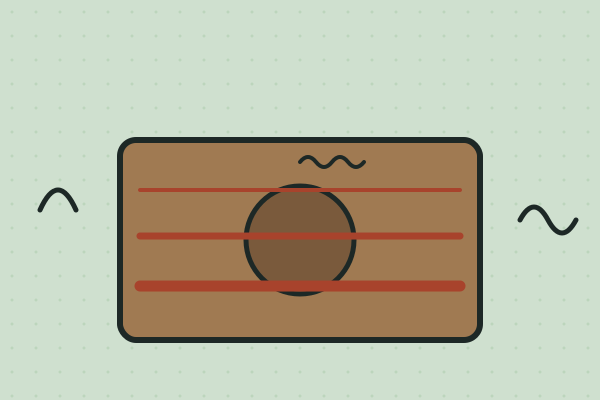
Teams of three, with three jobs that swap each test: the Player makes the sounds, the Listener closes their eyes and says "high" or "low," and the Recorder draws what happened on the team sheet.
Look inside the PDF
Sample pages, stamped “preview”. The download is the clean, full lesson.
In the full lesson PDF
- Predict (5 min)
- Hunt (20 min)
- Reveal (10 min)
- Act (5 min)
- Background for the teacher
- Assessment
- Student sheet
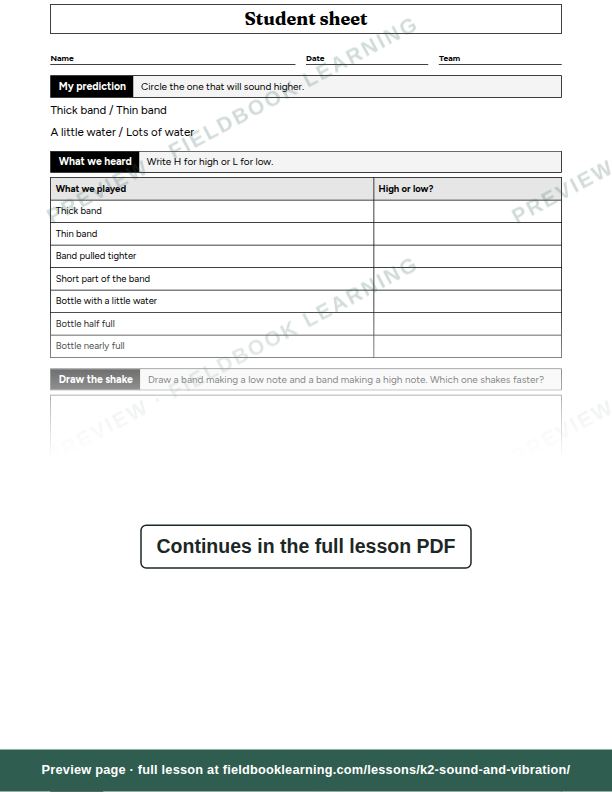
On the student sheet
- My prediction
- What we heard
- Draw the shake
- My instrument for the class band
- I think…
US Letter, prints cleanly in black and white. The student sheet is on its own page, ready to photocopy.
Free with an account (any 3 lessons), or US$19 / C$25 for all 3 lessons in this unit.
What students show by the end
- Hears pitch
- Links pitch to shaking
- Claim and evidence
From the lesson’s rubric, which scores each one as not yet, getting there or got it.
Questions teachers ask
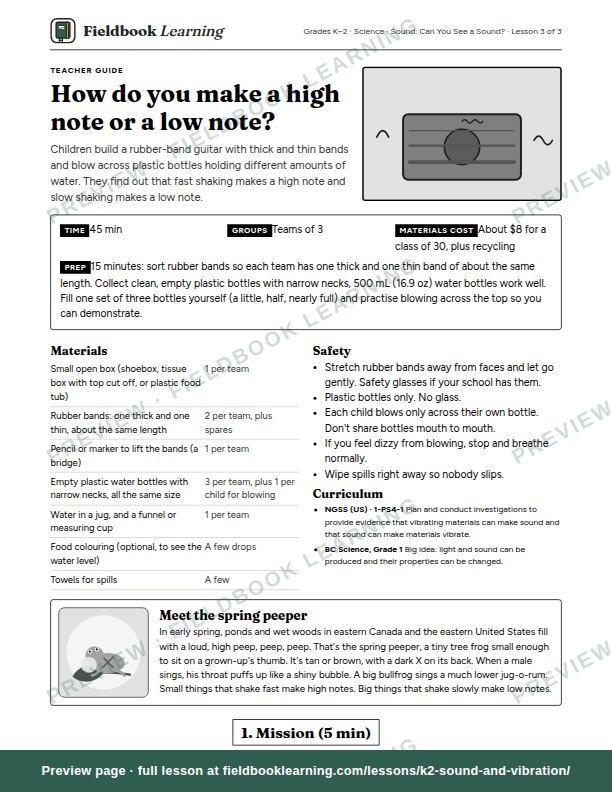
How long does “How do you make a high note or a low note?” take?
45 min. Group size: teams of 3.
How much prep does it need?
15 minutes: sort rubber bands so each team has one thick and one thin band of about the same length. Collect clean, empty plastic bottles with narrow necks, 500 mL (16.9 oz) water bottles work well. Fill one set of three bottles yourself (a little, half, nearly full) and practise blowing across the top so you can demonstrate.
What materials do I need?
Small open box (shoebox, tissue box with top cut off, or plastic food tub); rubber bands; pencil or marker to lift the bands (a bridge); empty plastic water bottles with narrow necks, all the same size; water in a jug, and a funnel or measuring cup; food colouring (optional, to see the water level); and 1 more. Cost: about $8 for a class of 30, plus recycling.
Which curriculum standards does it cover?
NGSS (US): 1-PS4-1. It also matches BC Science, Grade 1.
What’s in the lesson PDF?
A teacher guide that walks you through predict, hunt, reveal, act, background for the teacher and assessment, then a student sheet (“My prediction”, “What we heard”, “Draw the shake”, “My instrument for the class band” and “I think…”) on its own page, ready to photocopy. It’s US Letter and prints cleanly in black and white.
Can I try it for free?
Yes. A free account includes any 3 full lessons of your choice, and this can be one of them. After that, this unit is US$19 (C$25) for all 3 lessons, yours to keep, or every lesson is US$79 (C$109) a year.