Sink or Float
Drop objects into water, oil, salt water or syrup. Predict first, then see what sinks and floats and why, using mass, volume and density.
How to use it
Choose an object and a liquid (or press Surprise me), read its mass and volume, and decide: will it sink or float? Your prediction drops the object in. The tool then shows the density sum and keeps score of your predictions. In Density column mode the liquids are stacked like a real layered jar, and the object settles at the layer that matches its density.
The salt water slider goes from lightly salty (about sea water, 1.03) to very salty (about 1.20, close to as salty as water can get). Try the egg: it sinks in fresh water and floats once there is enough salt.
Density: how packed the mass is
Density is mass divided by volume. A grape and a steel bolt can have the same mass, but the bolt packs it into a smaller space, so it is denser. We measure it here in grams per cubic centimetre (g/cm³). Water is about 1 g/cm³: 1 cm³ of water has a mass of 1 g.
An object floats if it is less dense than the liquid and sinks if it is denser. Size alone does not decide it: a big apple floats and a tiny bolt sinks. A floating object sinks in just far enough to push aside its own mass of liquid, so the closer its density is to the liquid's, the lower it sits (ice floats with about nine-tenths under water). Values here are typical; real objects vary a little.
- Ask: why does a ship made of steel float? (Its hollow shape holds a lot of air, so the whole ship is less dense than water.)
- Try it for real: a jar of honey, dish soap, water and oil, then drop in a grape, a cap and a cork.
Free to use, no account needed. It runs in your browser: nothing you type, and no sound from your microphone, is sent to Fieldbook.
Hands-on lessons to pair with Sink or Float
Ready-to-teach units, each lesson a printable teacher guide and student sheet. Your first three lessons are free.
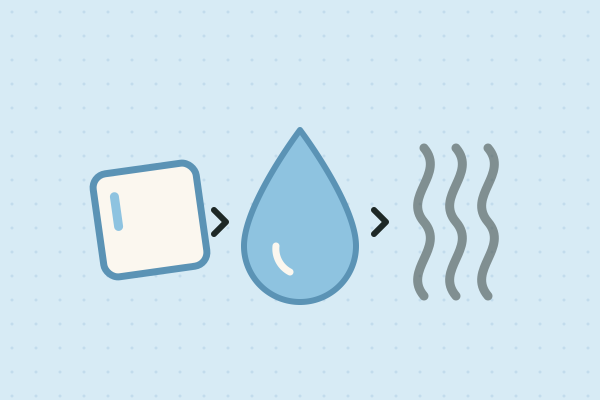
Solids, Liquids and Gases
Where does a puddle go? Why does ice float? A first look at the tiny particles that explain the stuff around us.
Kitchen Chemistry
Fizzing, curdling and colour changes with things from the grocery store. Students gather evidence of new substances, weigh a reaction in a sealed bottle, and turn red cabbage into an acid detector.
Kitchen Chemistry for Families
Four famous kitchen experiments, done properly: a homemade lava lamp, oobleck, a baking soda volcano and invisible ink. Each one starts with a real question, works with things from your cupboard, and leaves your child able to explain what happened.
Three full lessons, free
Make a free account and download any three Fieldbook lessons, from any grade or subject, as printable PDFs. No card needed.
More free classroom tools
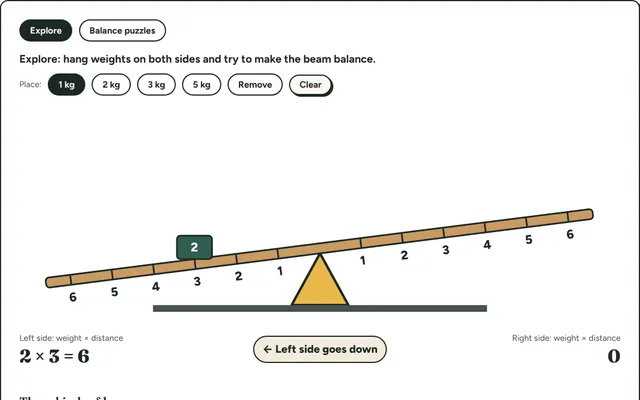
Lever Lab
Put weights on a seesaw and balance it. Discover the law of the lever (weight times distance) by experiment, then solve balance puzzles.
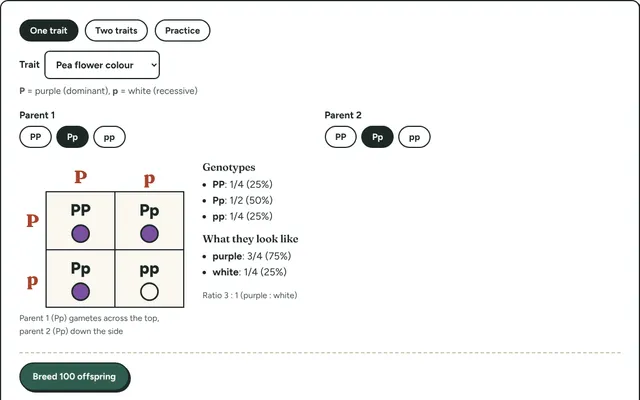
Punnett Squares
Cross two parents and see every possible offspring, with the ratios of genotypes and traits, plus a breeding simulator to test the prediction.
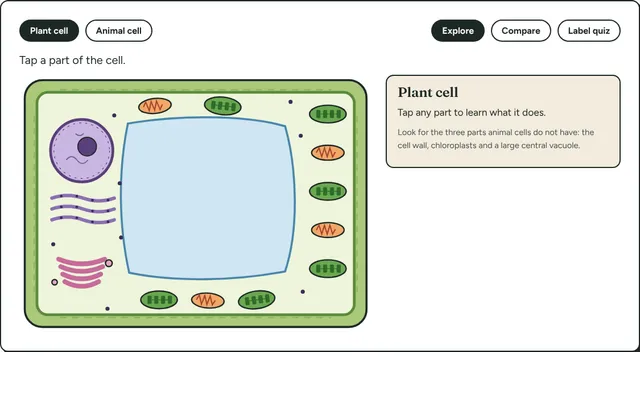
Cell Explorer
Tap the parts of a plant cell and an animal cell to learn what each one does, then compare the two and quiz yourself.
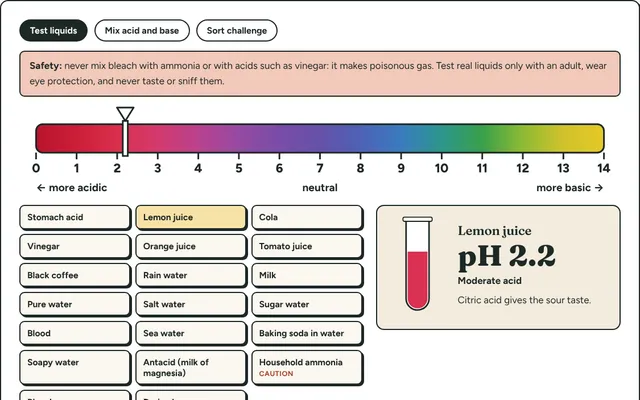
pH Scale Explorer
Test household liquids on a pH scale with a cabbage-juice indicator colour, from lemon juice to bleach, and mix acids and bases to see neutralisation.
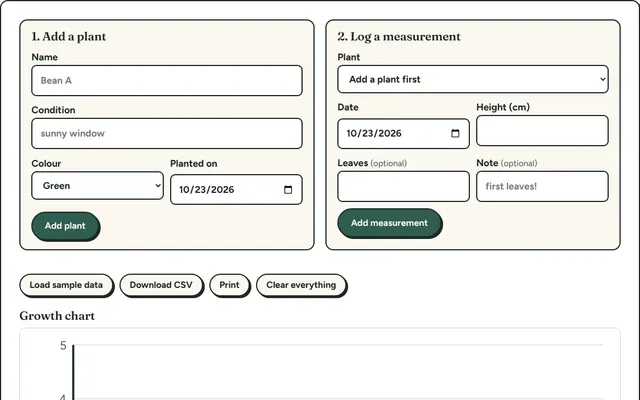
Plant Growth Journal
Log your class plants' height every few days and get a growth chart that compares plants or conditions. Saved on your device, ready to print.
Lab Stopwatch
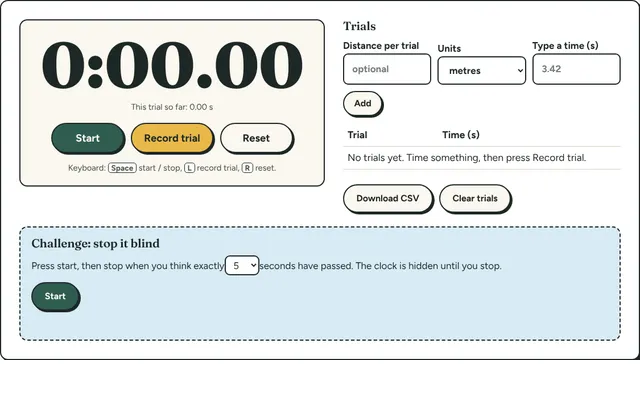
A big stopwatch with lap times for experiments: time several trials, see the average and spread, and download the results.