Sun and Shadow
Move through the day and the year to see where the Sun is in the sky, how long a stick's shadow is, and how many hours of daylight any latitude gets.
Sun height
Sun direction
Shadow of a 1 m stick
Sunrise / sunset
Daylight
How to use it
Pick a place (or type any latitude), a date and a time, then slide through the day. Watch the Sun climb and fall, the shadow shrink and grow, and the shadow swing around the stick. The year graph shows how the length of the day changes with the seasons. The quick check at the bottom asks questions you can answer by exploring.
Times here are local solar time: 12:00 is solar noon, when the Sun is highest. Clock time can differ from solar time by up to an hour or more because of time zones and daylight saving time. Sunrise and sunset include the usual allowance for the Sun's size and air bending light, so on the equinox the day is a few minutes longer than 12 hours.
Why shadows and days change
Earth's axis is tilted about 23.4°. As Earth orbits the Sun, the hemisphere tilted toward the Sun gets the Sun higher in the sky and longer days: that is summer. The Sun is straight overhead somewhere between the Tropic of Cancer (23.4° N) and the Tropic of Capricorn (23.4° S). North of the Arctic Circle and south of the Antarctic Circle there are days with no sunset (polar day) and days with no sunrise (polar night).
A shadow is longest when the Sun is low, because the light comes in at a shallow angle: shadow length = stick height ÷ tan(Sun height). At 45° the shadow equals the stick. In Canada the noon shadow always points north, because the Sun is to the south at midday. In Sydney it points south.
- Measure a real stick's shadow at the same time each week and compare with the tool.
- Ask: why does Quito have about 12 hours of daylight all year?
- Ask: in December, which has the longer day, Toronto or Buenos Aires? Why?
Free to use, no account needed. It runs in your browser: nothing you type, and no sound from your microphone, is sent to Fieldbook.
Hands-on lessons to pair with Sun and Shadow
Ready-to-teach units, each lesson a printable teacher guide and student sheet. Your first three lessons are free.
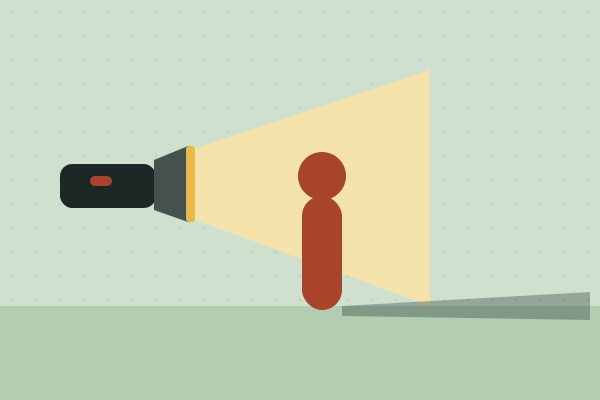
Light and Shadows
Why does my shadow follow me, and why is it so long in the morning? Young scientists chase their shadows, track the Sun across the day and test which things let light through.
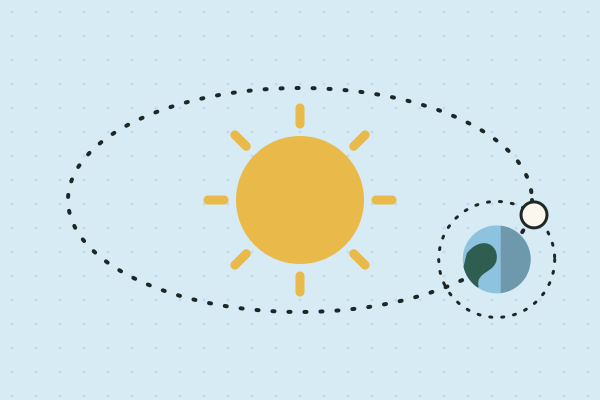
Sun, Earth and Moon
Why it's breakfast time in Calgary and bedtime in Singapore, why your shadow swings round the stick, why the Moon changes shape and why some places barely have seasons. Students build models with balls and lamps, track real shadows and read real sky data from cities around the world.
Weather Watchers: What Will the Sky Do Today?
Is it sunny, windy or wet today, and how can we tell? Young scientists keep a class weather chart for two weeks, build wind socks to catch the wind and make a rain gauge from a bottle to measure the rain.
Three full lessons, free
Make a free account and download any three Fieldbook lessons, from any grade or subject, as printable PDFs. No card needed.
More free classroom tools
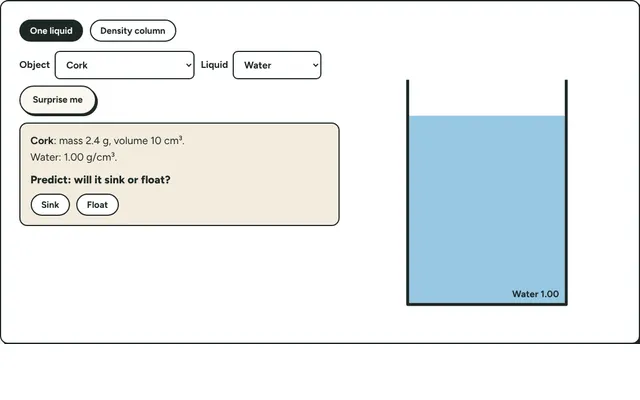
Sink or Float
Drop objects into water, oil, salt water or syrup. Predict first, then see what sinks and floats and why, using mass, volume and density.
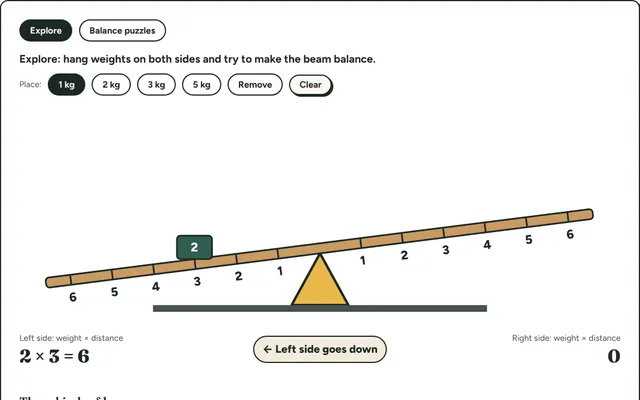
Lever Lab
Put weights on a seesaw and balance it. Discover the law of the lever (weight times distance) by experiment, then solve balance puzzles.
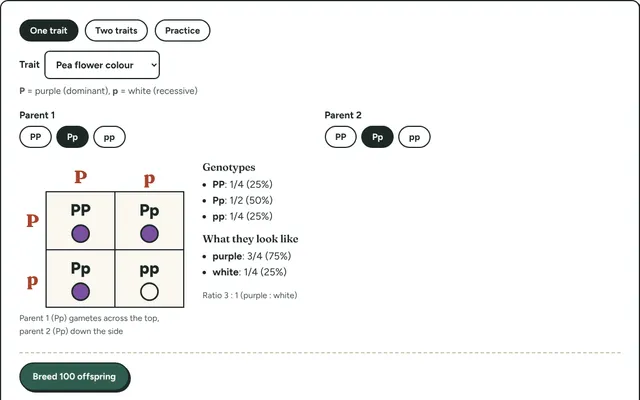
Punnett Squares
Cross two parents and see every possible offspring, with the ratios of genotypes and traits, plus a breeding simulator to test the prediction.
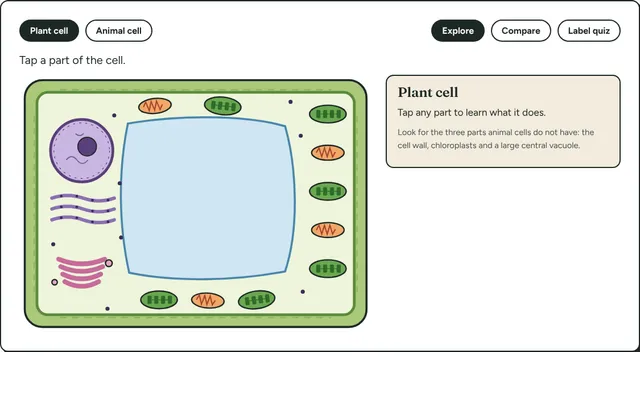
Cell Explorer
Tap the parts of a plant cell and an animal cell to learn what each one does, then compare the two and quiz yourself.
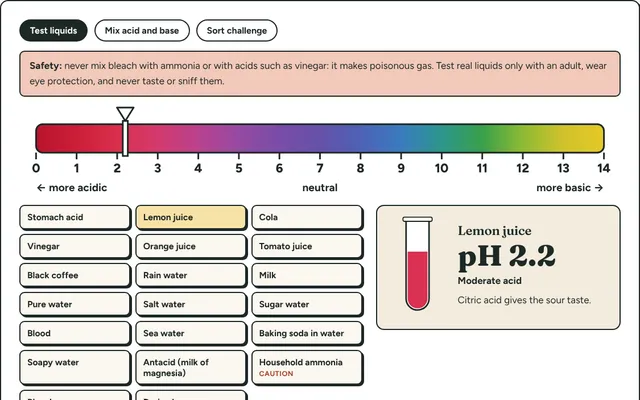
pH Scale Explorer
Test household liquids on a pH scale with a cabbage-juice indicator colour, from lemon juice to bleach, and mix acids and bases to see neutralisation.
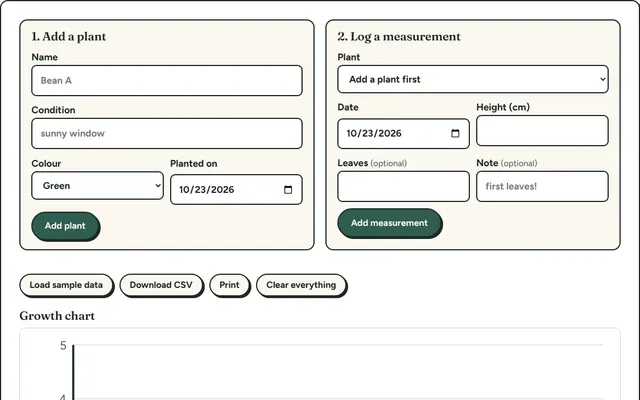
Plant Growth Journal
Log your class plants' height every few days and get a growth chart that compares plants or conditions. Saved on your device, ready to print.