Monsoon Science: Rain, Sun and the Nón Lá
Science and English together, for English learners (CEFR A2–B1). Why is the Vietnamese nón lá shaped like a cone? Students build paper hats, test them in 'monsoon rain' and 'midday sun', and find the best shape for a rice farmer.
Or try any 3 lessons free with an account.
Already bought it? Download the whole unit as one printable workbook: cover, contents, curriculum connections, every lesson, readings, practice pages, a unit test and an answer key, in black and white.

1 lessons in this unit
Materials for the whole unit · one list, lesson by lesson
Lesson 1: How does a nón lá keep a rice farmer dry?
- Ordinary paper circles, 16 cm, 21 cm and 28 cm across (one of each makes three hats with the same width), plus one spare 16 cm circle4 per team, plus spares
- Stopwatch, or a clock with a seconds hand1 per team
- Tape and scissors1 each per team
- Plastic cup (the farmer's 'head')1 per team
- Square of paper towel, 5 cm, to sit on top of the cup3 per team
- Spray bottle or small watering can1 per team
- Large tray or baking sheet, lined with newspaper1 per team
- Ruler1 per team
- Desk lamp or a sunny window1 per class, or 1 per two teams
About $10 for a class of 30
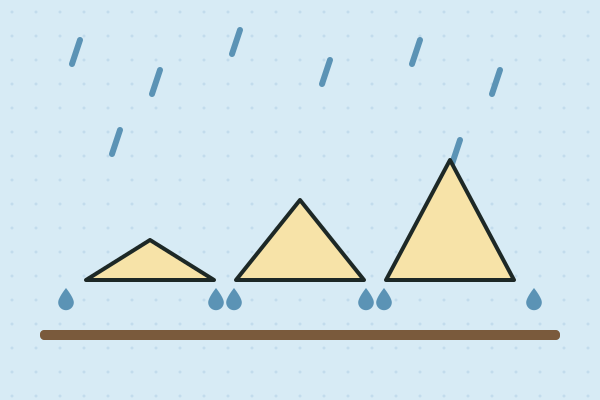
In much of Vietnam, the year has a rainy season with sudden heavy downpours, and hot, bright sun the rest of the time. Rice farmers working in the paddies wear the nón lá, a cone-shaped hat of palm leaves on a bamboo frame. In this unit students find out why that shape works, by building cones of different steepness and testing them against “rain” and “sun”.
They come away able to explain how the shape of an object helps it do its job, why engineers test one change at a time, and why the best design is often a trade-off.
Every lesson teaches English alongside the science: key words in English and Vietnamese, sentence frames for predicting and comparing, a speaking role-play, and readings at two levels.