Years 2–4 in England and Wales · Cambridge Primary Stages 2–4 · IB PYP, ages 6–9
Like Parent, Like Baby? Traits and Families
Why does a grey cygnet grow into a white swan, why are puppies in one litter different colours, and why does a bean plant grown in the dark come up tall and yellow? Three lessons with nothing to buy: students match drawn family cards, make a living bar graph of pea cards beside Gregor Mendel's real counts, and walk a case-file trail of plants and animals changed by where they live.
Or try any 3 lessons free with an account. Prices in US dollars.
Already bought it? Download the whole unit as one printable workbook (51 pages): cover, contents, curriculum connections, every lesson, readings, practice pages, a unit test and an answer key, in black and white. Want to change the wording? Get every student page as one editable Word file.
3 lessons in this unit
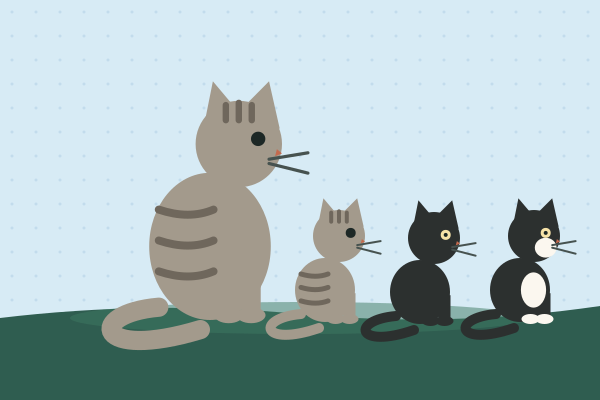
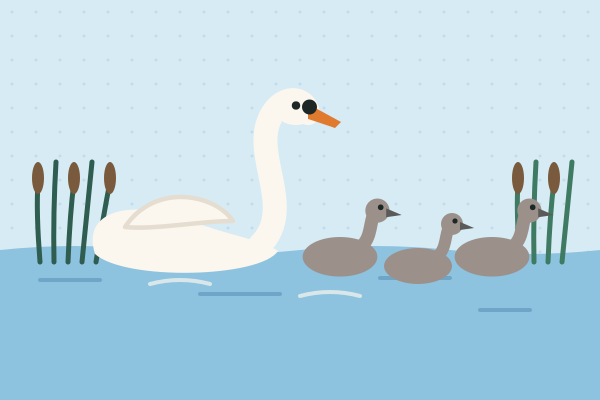 Lesson 1 · 40–50 min · 8 pagesDo baby animals look like their parents?Teams match twelve drawn cards of young and adult plants and animals, then sort them: some young already look like small adults, others look different now but grow to be like their parents. They find one way each young is like its parent and one way it is not, and build an evidence-based account that young are like, but not exactly like, their parents.
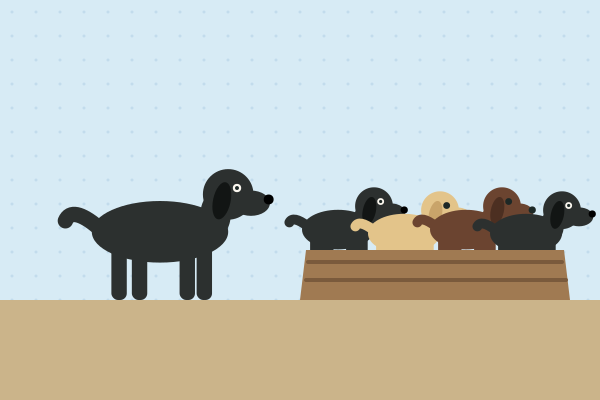 Lesson 2 · 45–60 min · 10 pagesWhy don't puppies from the same parents look the same?Teams read family files on a Labrador litter, a cat litter and a pea pod, then the whole class becomes a living bar graph of 32 pea cards and compares it with the 8,023 peas Gregor Mendel counted. Students use the data to explain that young inherit traits from their parents and that brothers and sisters still vary.
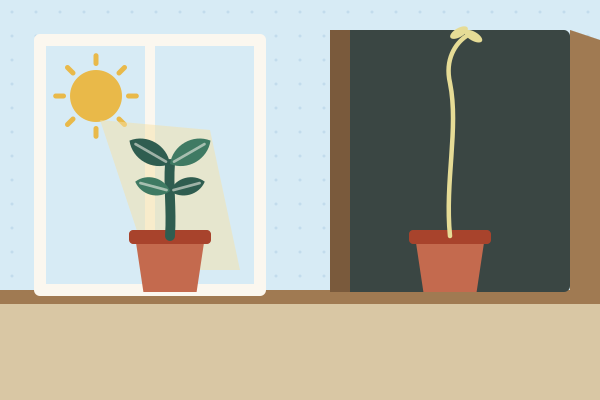 Lesson 3 · 45–60 min · 8 pagesCan where you live change how you look?Teams walk a trail of five case files: bean plants grown in sun and in the dark, pink flamingos and their food, hydrangeas in different soils, a Siamese cat's cool paws and two puppies fed differently. They sort each trait as inherited, changed by the surroundings, or both, and use the evidence to explain that the environment can change traits.
Students sort twelve drawn cards into families and find that a kitten already looks like a small cat, while a grey cygnet, a fluffy penguin chick and a caterpillar look different now but grow up to be like their parents. They read family files on a Labrador litter and a cat litter, then each hold one pea card and line up as a living bar graph, comparing their 32 peas with the 8,023 peas Gregor Mendel counted. Finally they walk a trail of case files (bean plants in sun and dark, flamingos and their food, hydrangeas and their soil, a Siamese cat’s cool paws and two puppies fed differently) and sort each change as inherited, caused by the surroundings, or both.
By the end, students can say that young plants and animals are like their parents but not exactly like them; that young from the same parents share many traits but vary in others, and that a big sample shows the pattern better than one family; and that some traits, such as a flamingo’s pink or a plant’s height and colour, are changed by food, light, soil or temperature. Every lesson uses only printed sheets, and no child is ever asked to compare themselves with their own family.