Keep It Cool: Ice, Insulation and Staying Comfortable
Why salt makes ice melt faster, which wrap keeps a drink coldest, how a seal and a fennec fox each keep their body temperature steady, and how to build a cool box that beats the heat. Four hands-on lessons that start from a freezer and work in any climate.
Or try any 3 lessons free with an account.
Already bought it? Download the whole unit as one printable workbook: cover, contents, curriculum connections, every lesson, readings, practice pages, a unit test and an answer key, in black and white.
4 lessons in this unit
 Lesson 1 · 50–60 minWhat melts ice fastest on a hot day?Teams sprinkle salt, sugar and sand on identical ice cubes, leave one plain, and measure the meltwater. Then they use their evidence to advise a drinks seller whether to salt the ice, and find that salted ice melts faster and gets colder.
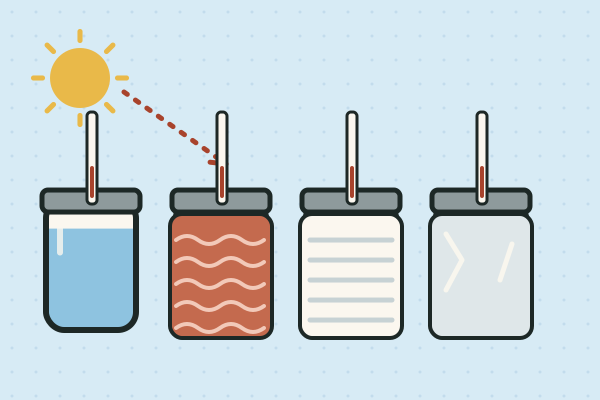 Lesson 2 · 50–60 minWhich wrap keeps a drink coldest?Teams wrap jars of chilled water in wool, cotton, foil or nothing, and read a thermometer every 5 minutes to see which lets heat in slowest. Then they explain what a wrap really does, and why 'cold' doesn't leak in or out.
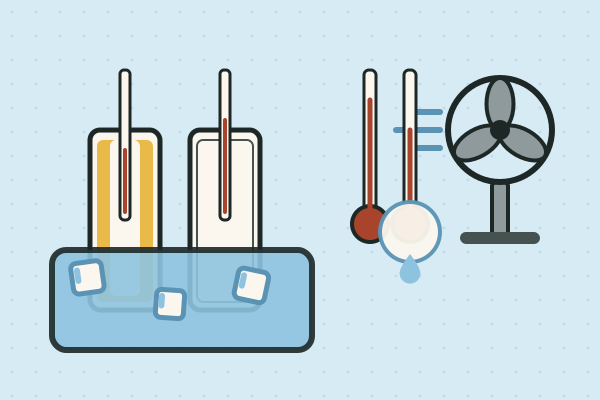 Lesson 3 · 50–60 minHow do animals stay warm in the sea and cool in the desert?Students put a hand into ice water inside a 'blubber glove' made of fat between two bags, then cool a thermometer with a wet cloth in front of a fan. They use both results to argue how fur, blubber, big ears and panting help animals keep a steady body temperature.
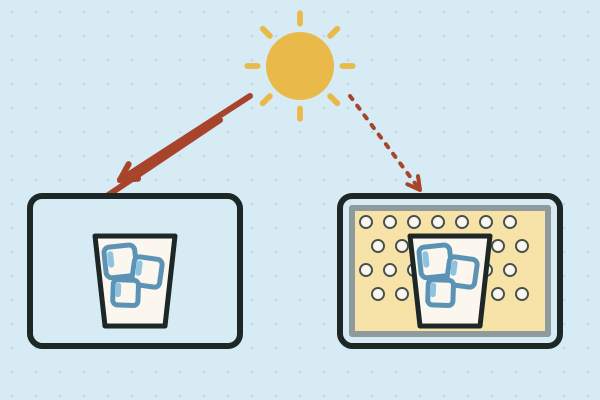 Lesson 4 · 75–90 min, or build in one session and test in the nextCan you build a cool box that beats the heat?Teams design and build a cool box from recycled materials, test it against a plain tub with the same ice, and measure the meltwater after 40 minutes. They find the weak spots, explain how insulation slows heat, and plan one improvement.
Materials for the whole unit · one list, lesson by lesson
Lesson 1: What melts ice fastest on a hot day?
- Ice cubes, all from the same type of tray4 per team, plus spares
- Clear plastic cups, all the same4 per team
- Table salt1 teaspoon (5 mL) per team, plus 2 tablespoons for the demo
- White sugar1 teaspoon (5 mL) per team
- Clean play sand1 teaspoon (5 mL) per team
- Small paper cups to hold each solid3 per team
- Plastic spoon1 per team
- Medicine cups or a small measuring cup with mL markings1 per team
- Alcohol-filled thermometer that reads below 0 °C (to at least −10 °C)1 for the teacher demo
- Clock or timer, and paper towels1 each
About $10 for a class of 30
Lesson 2: Which wrap keeps a drink coldest?
- Small plastic jar or food container with a lid, about 250 mL (1 cup), all the same1 per team, plus 2 for the class
- Alcohol-filled thermometer that fits through the hole in the lid1 per jar
- Wool sock (mostly wool, from home or the lost-and-found)Enough for a quarter of the teams
- Cotton sockEnough for a quarter of the teams
- Aluminium foilA sheet about 30 cm (12 in) square per foil team
- Elastic bands2 per team
- Measuring cup1
- Chilled water (see prep)About 3 L (3 qt)
- Towels for spillsA few
About $25 for a class of 30 (most of it for 10 thermometers, if you don't have them)
Lesson 3: How do animals stay warm in the sea and cool in the desert?
- Large zip-top freezer bags, about 4 L (1 gal)16 for the class
- Vegetable shortening, white cooking fat or petroleum jellyAbout 2 kg (4 lb) for four gloves
- Duct tape1 roll
- Tubs or buckets of ice and cold water, deep enough to cover a hand4 for the class
- Alcohol-filled thermometers12 for the class (8 for the gloves, 4 for two wet-and-dry sets)
- Paper towel or cotton wool, cut into 5 cm (2 in) squares4 squares
- Rubber bands4
- Cup of room-temperature water1
- Desk fan (or a piece of card to fan with)1
- Feathers, fur or fleece scraps, and photos of animals to look at1 set per station
- Timer and towels1 timer per station, several towels
About $20 for a class of 30 (fat and freezer bags), plus thermometers
Lesson 4: Can you build a cool box that beats the heat?
- Plastic food tub with lid, about 1 to 1.5 L, all the same (the cool box)1 per team, plus 2 for controls
- Small plastic cup, about 200 mL, all the same1 per team, plus 2 for controls
- Ice cubes, all from the same type of tray4 per cup, plus spares
- Loose insulation to choose from (see prep)About 1 L per team
- Aluminium foilA 30 cm (12 in) square per team
- Tape and scissors1 each per team
- Medicine cup or small measuring cup with mL markings1 per team
- Clock or timer, and a thermometer for the room1 each
- Paper towelsA roll
About $15 for a class of 30 (most materials come from recycling)
Students race ice cubes dusted with salt, sugar and sand to find out what really speeds up melting, and why a drinks seller who salts the ice gets colder bottles but runs out of ice sooner. They wrap jars of chilled water in wool, cotton and foil and read a thermometer every five minutes to see which wrap keeps the heat out best. They push a hand into ice water inside a blubber glove, cool a thermometer with a wet cloth in front of a fan, and work out how a Weddell seal, a camel, a fennec fox and a Galápagos penguin each keep their body temperature steady. Finally they design, build and test a cool box against a plain tub, with a freezer as the only cold source.
By the end, students can explain that heat always moves from warmer things to cooler things, that wool, foam, fur, blubber and still air do not make cold or heat but slow heat down, that salt melts ice by dissolving into the water, not by heating it, and that evaporating water takes heat away. Each lesson ends with a claim, evidence and reasoning, and everything comes from a kitchen, a dollar store or the recycling bin. Nothing needs snow, winter or a cold climate: only ice cubes from a freezer.