Years 4–7 in England and Wales · Cambridge Primary Stage 4 to Lower Secondary Stage 7 · IB PYP to MYP 1, ages 8–12
The Water Cycle, Start to Finish
A water-drop journey game around eight stations of the room, a 100-square model of where all of Earth's water really is, from USGS data, and a sealed bag of water on a sunny window that shows the Sun driving the whole cycle. Two of the three lessons need nothing but printed sheets.
Or try any 3 lessons free with an account. Prices in US dollars.
Already bought it? Download the whole unit as one printable workbook (57 pages): cover, contents, curriculum connections, every lesson, readings, practice pages, a unit test and an answer key, in black and white. Want to change the wording? Get every student page as one editable Word file.
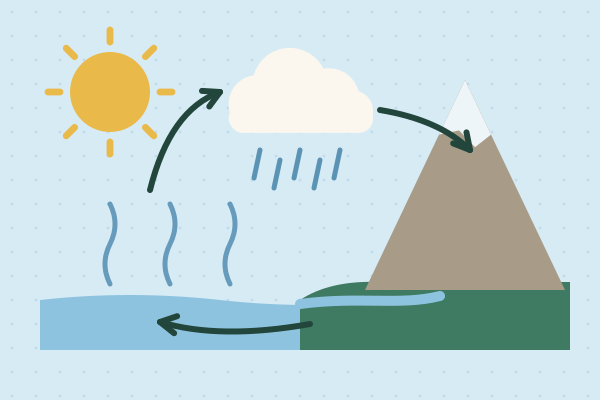
3 lessons in this unit
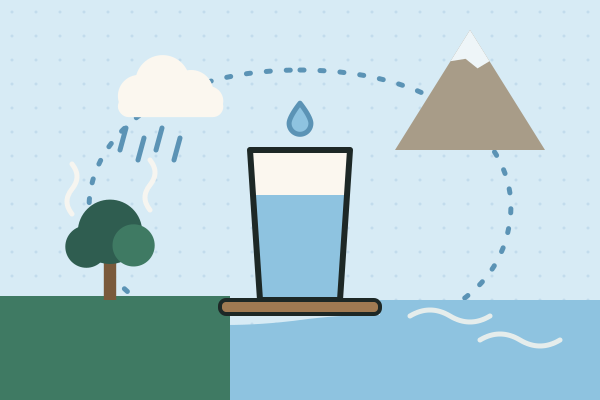 Lesson 1 · 45–60 min · 13 pagesWhere has the water in your glass been?Every student becomes a water drop and travels between eight stations around the room (ocean, cloud, glacier, river, lake, groundwater, plant and animal), spinning a printed spinner to find out what happens next and logging each step. The class then compares journeys and finds that the water cycle is a tangle of paths, not one neat circle.
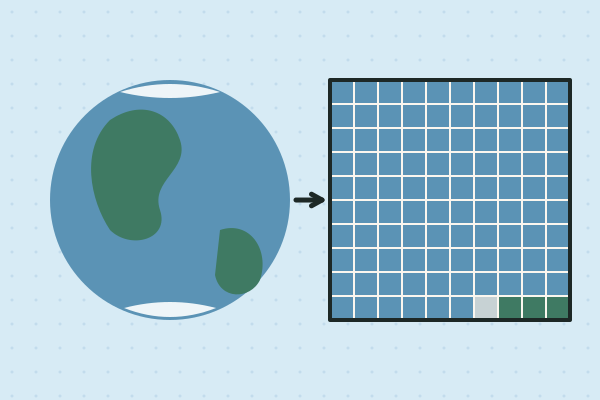 Lesson 2 · 45–60 min · 9 pagesWhere is all of Earth's water?Teams shade two 100-square grids from real USGS data to show how much of Earth's water is salty, frozen, underground or in lakes and rivers, then the whole class becomes a human model of all the water on Earth. Students graph the amounts and explain why fresh, liquid water is so precious.
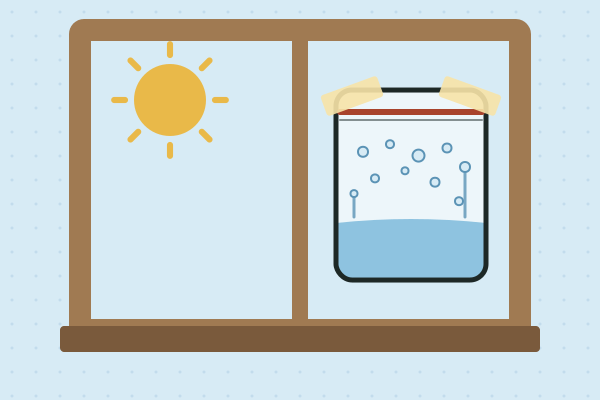 Lesson 3 · 45 min, plus 5-minute look-backs later that day and the next morning · 9 pagesCan you make a mini water cycle?Teams seal a little coloured water in two zip-top bags, tape one to a sunny window and one in the shade, and watch water evaporate, condense into drops and run back down. Comparing the two bags gives the evidence that the Sun drives the water cycle and gravity brings the water back.
Materials for the whole unit · one list, lesson by lesson
Lesson 3: Can you make a mini water cycle?
- Zip-top sandwich bag, clear, about 15 × 15 cm (6 × 6 in)2 per team
- Tap water, room temperature50 mL (about 3 tablespoons) per bag
- Blue food colouring (optional)2 drops per bag
- Masking tape or clear tapeAbout 30 cm per team
- Permanent marker1 per team
- Measuring cup or spoon marked in mL1 per team
About $5 for a class of 30
Students become water drops and travel around eight stations in the room (ocean, cloud, glacier, river, lake, groundwater, plant and animal), spinning a printed spinner to find out where they go next and logging every step of their journey. They shade two 100-square grids from real USGS figures to see how much of Earth’s water is salty, frozen or underground, and how little is in lakes and rivers. Then they seal a little water in a zip-top bag, tape one bag to a sunny window and one in the shade, and watch it evaporate, condense and drip back down.
By the end, students can name and explain evaporation, condensation, precipitation, collection and transpiration; say that clouds are made of tiny liquid drops or ice crystals, not vapour; explain that the cycle is a tangle of paths rather than one neat circle; describe in numbers why fresh, liquid water is so precious; and use their own evidence to argue that the Sun drives the cycle and gravity brings the water back down. The free water cycle tool works alongside every lesson.