How Your Body Works
Why your heart races when you run, what happens to your lunch, how your arm bends and where germs hide. Students take their own pulse, build a model gut and a card elbow, and run a handwashing fair test with glitter 'germs'. Everyday materials, no winter, works in any country.
Or try any 3 lessons free with an account.
Already bought it? Download the whole unit as one printable workbook: cover, contents, curriculum connections, every lesson, readings, practice pages, a unit test and an answer key, in black and white.
4 lessons in this unit
 Lesson 1 · 45–60 minWhy does your heart beat faster when you run?Students find their pulse, count it at rest, after a minute of star jumps and every minute while it comes back down, then graph the recovery. They use the pattern to explain the heart as a pump that sends oxygen and food to working muscles.
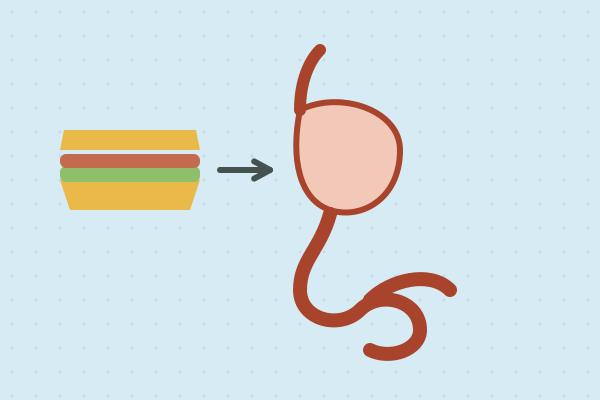 Lesson 2 · 45–60 minWhat happens to your lunch?Teams build a working model of the gut: teeth (a fork), a stomach (a bag with water and vinegar) and an intestine (a stocking squeezed over a tray), and follow a cracker through it. They check their own teeth in a mirror and put the parts of the digestive system in order, with a job for each.
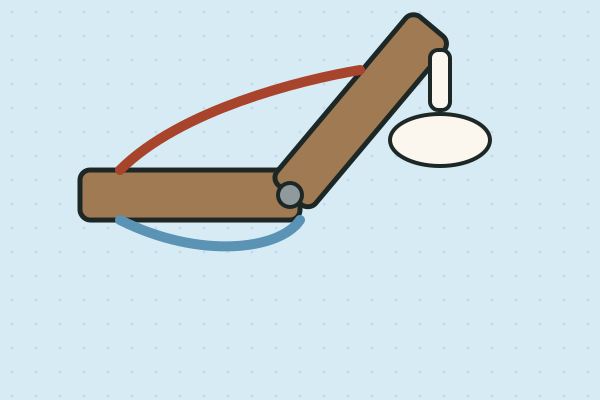 Lesson 3 · 45–60 minHow does your arm bend?Teams build an elbow from card, a paper fastener and two strings, and find that it will only bend if one string pulls while the other goes slack. They feel their own biceps and triceps swap jobs while lifting a bag of rice, and explain why muscles always work in pairs.
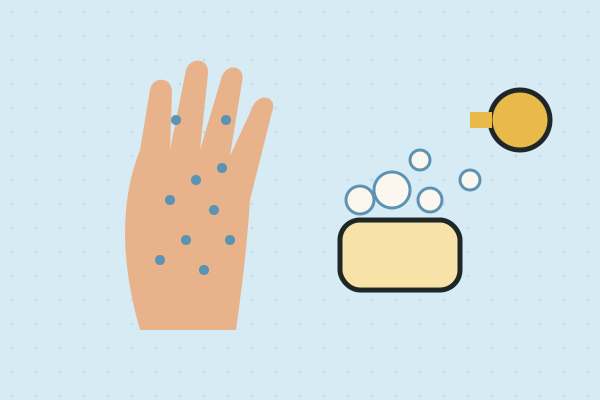 Lesson 4 · 45–60 minWhere do germs hide?Students put glitter gel 'germs' on one hand, shake hands down a line and count how far the glitter travels. Then they run a fair test of handwashing (water only, soap for 5 seconds, soap for 20 seconds) and score each hand by counting the glitter that is left, to find what really gets germs off.
Materials for the whole unit · one list, lesson by lesson
Lesson 1: Why does your heart beat faster when you run?
- Clock with a second hand, or a timer on the board1 for the class
- Student sheet and pencil1 per student
- Squared paper for the graph1 sheet per student
- Water bottles1 per student
Under $5 for a class of 30
Lesson 2: What happens to your lunch?
- Zip-seal freezer bag, 1 L1 per team
- Plain crackers or a slice of bread (check allergies)2 per team
- Water, about 100 mL (half a cup)Per team
- White vinegar, about 50 mL (3 tablespoons), in a labelled cupPer team
- Leg of a stocking or thin tights, about 40 cm (16 in)1 per team
- Tray or shallow dish1 per team
- Paper towels6 per team
- Fork1 per team
- Small mirror1 per team
- Disposable gloves and a bin bag1 pair per student, 1 bag per class
About $12 for a class of 30
Lesson 3: How does your arm bend?
- Stiff card strips, about 25 cm by 4 cm (10 in by 1.5 in)2 per team
- Paper fastener (split pin)1 per team, plus spares
- String, about 40 cm (16 in)2 per team
- Hole punch1 per 3 teams
- Sticky tape1 roll per team
- Bag of rice or dried beans, about 1 kg (2 lb), tied shut1 per 3 teams
- Marker pen1 per team
About $10 for a class of 30
Lesson 4: Where do germs hide?
- Clear hand gel or plain lotion mixed with fine glitter ('germs')1 small pot per team
- Desk lamp or a sunny window1 for the class
- Ordinary soap (bar or pump)1 per sink or basin
- Basins of warm water and a jug, if there is no sink in the room2 for the class
- Paper towels2 per student
- Timer or clock with a second hand1 per team
- Hand lens (optional)1 per team
About $8 for a class of 30
Students count their own pulse at rest and after a minute of star jumps, then watch it come back down and graph the recovery. They build a working model of the gut with a bag, a stocking and a tray, build an elbow out of card and string with two muscles that pull in turn, and spread glitter “germs” from hand to hand to find out how far one touch travels and what really gets germs off.
By the end, students can explain the heart as a pump that speeds up when muscles need more oxygen and food, name the parts of the digestive system in order and say what each does, explain that muscles only pull so they work in pairs, and argue from their own data that soap and twenty seconds beat a quick rinse.