Food Webs: Who Eats Whom?
Where a plant's food comes from, what happens when the wolves disappear, who cleans up, and how much life hides under a log. Four lessons on how energy and matter move through living things.
Or try any 3 lessons free with an account.
Already bought it? Download the whole unit as one printable workbook: cover, contents, curriculum connections, every lesson, readings, practice pages, a unit test and an answer key, in black and white.
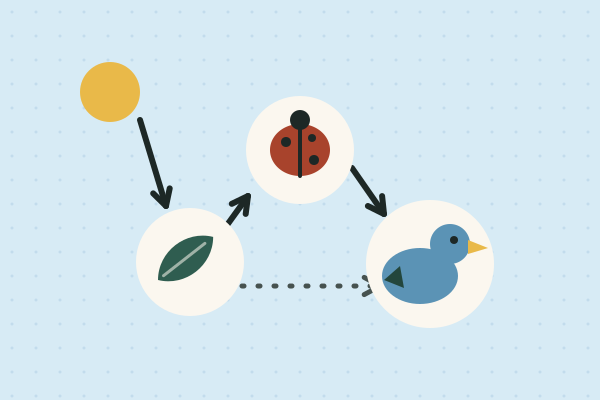
4 lessons in this unit
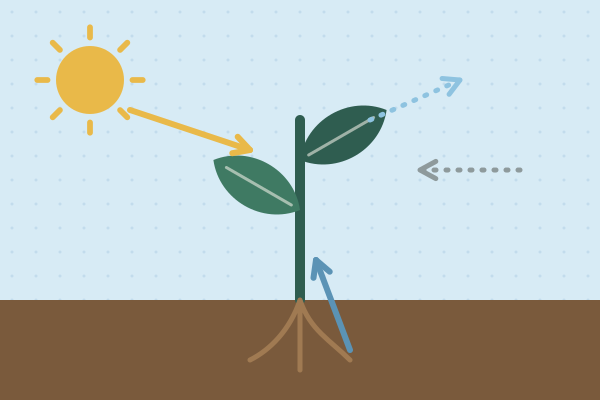 Lesson 1 · 50–60 min, plus 10 min to weigh seedlings two weeks laterWhere does a plant get its food?Students sink spinach leaf disks in baking soda water and watch them float back up in the light as they make oxygen, then start bean seedlings with no soil at all and weigh them two weeks later. They explain that plants build their food from air and water using light, not from the soil.
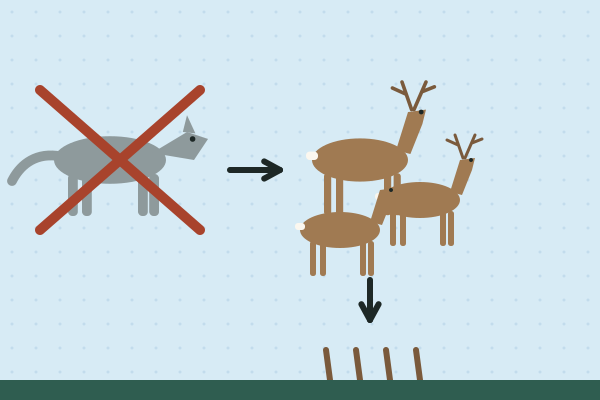 Lesson 2 · 45–60 minWhat would happen if the wolves disappeared?Students become species in a northern forest or a prairie and connect themselves with yarn into a living food web. When one species is removed, everyone who feels the yarn tug finds out how far the change spreads, and students explain why no species lives on its own.
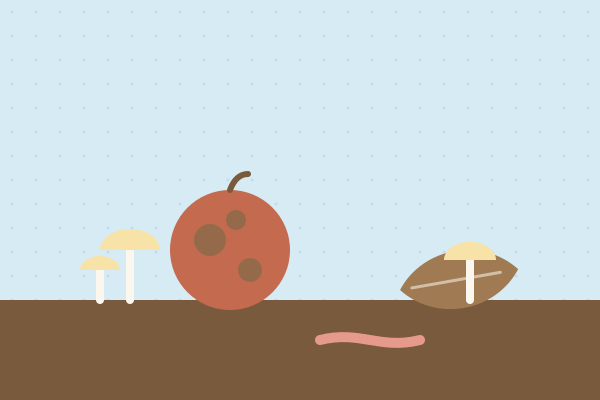 Lesson 3 · 45 min to set up, 5 min check-ins twice a week, then 30 min after 2 weeks (bread) and 20 min after 4 to 6 weeks (leaves)Who cleans up?Students seal bread and fruit in taped zip bags to watch mould grow without ever opening them, and bury mesh bags of dry leaves in soil to weigh what's left weeks later. They explain how decomposers break down dead things and return matter to the soil for plants to use again.
 Lesson 4 · 50–60 minCan we count the life under a log?Teams mark out a 1 m square in two different parts of the schoolyard, tally every kind of living thing they find, and compare the two sites. They explain which place supports more life and why, using the food webs and decomposers from earlier lessons.
Materials for the whole unit · one list, lesson by lesson
Lesson 1: Where does a plant get its food?
- Fresh spinach leaves (thick, dark green, not wilted)2 leaves per team
- Plastic syringe, 10 mL or larger, with no needle (pharmacy or dollar store)1 per team
- Thick drinking straw or single-hole paper punch, to cut leaf disks1 per team
- Baking soda water with a drop of dish soap (see prep)About 150 mL (2/3 cup) per team
- Clear plastic cups2 per team, plus 1 per team for beans
- Bright LED desk lamp or a sunny window; a box or foil for the dark cup1 shared
- Large dry beans (kidney or lima), paper towels, water10 beans per team
- Digital kitchen scale1 per class
About $20 for a class of 30
Lesson 2: What would happen if the wolves disappeared?
- Ball of yarn or string, at least 30 m (100 ft)1 per circle
- Index cards with a string loop, one species per card15 per circle
- Scissors (teacher only) to cut the removed species free1
- Chart paper and markers1 sheet per team
About $10 for a class of 30
Lesson 3: Who cleans up?
- Bread from a bakery or homemade (grocery bread with preservatives moulds slowly)2 slices per team
- Soft fruit: orange segments, strawberries or banana pieces2 pieces per team
- Heavy zip-top freezer bags, about 1 L (1 qt)4 per team
- Clear packing tape and a permanent marker1 per team
- Dry fallen leavesAbout 40 g per team
- Mesh, tulle or netting squares, about 25 cm (10 in), and twist ties2 per team
- Tub of moist garden soil, at least 20 cm (8 in) deep1 per class
- Disposable gloves1 pair per student handling soil
- Digital kitchen scale1 per class
About $25 for a class of 30
Lesson 4: Can we count the life under a log?
- String, 4.5 m (15 ft), with knots or tape marks every 1 m1 per team
- Tent pegs, chopsticks or craft sticks for corners4 per team
- Magnifying glass1 per team
- Plastic spoon and white paper plate, for a close look1 each per team
- Clipboard and pencil1 per team
- Disposable or garden gloves1 pair per student
- Tray version: two shallow trays, bagged potting mix, a bag of leaf litter and soil from a park edge, a few small plants2 trays per class
About $25 for a class of 30
Students start with the food at the bottom of every web. They watch spinach leaf disks rise as they make oxygen in the light, and grow bean seedlings with no soil at all to test where a plant’s mass really comes from. Then they build a living food web out of yarn, from a northern forest and a prairie, and pull one species out to feel who gets tugged. They set up sealed mould bags and buried leaf bags to catch decomposers at work, and finish outdoors with a 1 m square, counting and comparing the life in two parts of the schoolyard (or in a planted tray, if there’s no green space nearby).
By the end, students can trace the energy in their lunch back to the sun, explain why losing one species can ripple through a whole web, and describe how decomposers return matter to the soil so plants can use it again. Every lesson asks for a claim, evidence and reasoning, and uses materials from a grocery or dollar store.