Test the Claim: Science Facts, Myths and AI Answers
Sayings, ads, forum posts and AI chatbot answers all sound sure of themselves. Students put popular claims to a real hands-on test, grade the answers, and learn how to decide which sources deserve their trust.
Or try any 3 lessons free with an account.
Already bought it? Download the whole unit as one printable workbook: cover, contents, curriculum connections, every lesson, readings, practice pages, a unit test and an answer key, in black and white.
3 lessons in this unit
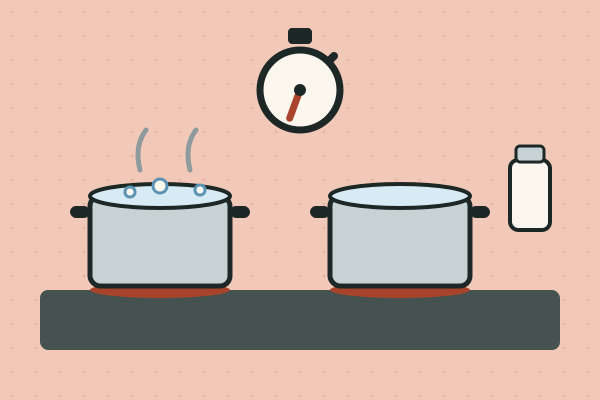 Lesson 1 · 45–60 minDoes salt make water boil faster?Students test two kitchen claims at once: that a watched pot never boils, and an AI-style answer saying salt makes water boil faster. They time plain and salted water in a teacher-run kettle, then write a claim, evidence and reasoning about what really happened.
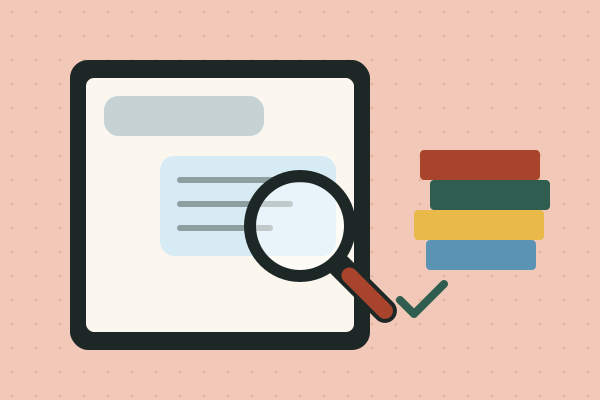 Lesson 2 · 50–60 minIs that AI answer true?Students get three printed AI chatbot answers to science questions, write a test for each, and run the two that fit in one class: dropping a full and an empty bottle, and melting ice in fresh and salty water. They grade each answer and explain why a confident answer still has to be checked.
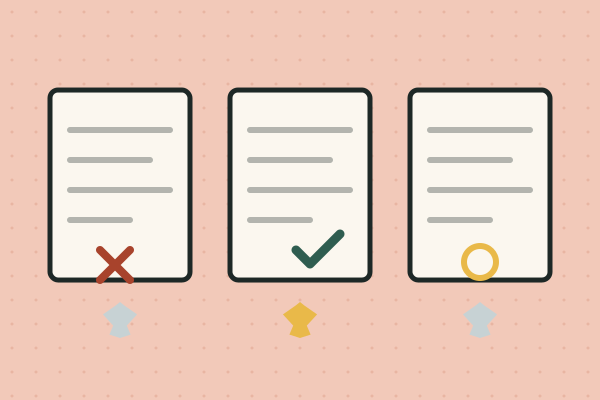 Lesson 3 · 50–60 minWhich source should we trust?Students compare four sources making the same claim about a paper towel: a study summary, an ad, a forum post and an AI chatbot answer. They rate the evidence behind each, then run a fair absorbency test to settle the question with their own data.
Materials for the whole unit · one list, lesson by lesson
Lesson 1: Does salt make water boil faster?
- Electric kettle with automatic shut-off (or a hot plate and small pot), teacher use only1 per class
- Measuring cup, 500 mL (2 cups)1 per class
- Jug of room-temperature tap water, about 3 L (3 qt)1 per class
- Table saltAbout 2 tablespoons
- Stopwatch, or a phone or tablet stopwatch1 per team
- Kitchen thermometer (optional, to check the starting temperature)1 per class
- No-heat version: clear plastic cups and a thermometer per team, with hot tap water poured by the teacher2 cups and 1 thermometer per team
About $10 for a class of 30 (more if you need thermometers for the no-heat version)
Lesson 2: Is that AI answer true?
- Ice cubes with a drop of food colouring frozen in, all from the same tray2 per team, plus spares
- Clear plastic cups, about 300 mL (10 oz)2 per team
- Room-temperature tap waterAbout 500 mL (2 cups) per team
- Table salt2 tablespoons per team
- Spoon for stirring1 per team
- Matching small plastic bottles with caps, about 500 mL (16 oz), one empty and one full of water1 pair per team
- Towel or mat to land the bottles on1 per team
- Stopwatch or classroom clock1 per team
- Printed AI answer cards (from the Student sheet)1 set per team
About $10 for a class of 30
Lesson 3: Which source should we trust?
- Two kinds of paper towel (one advertised as extra absorbent, one store brand)1 roll each per class
- Kitchen scale that reads to 1 g, or 0.1 g if you have one (borrowed or about $15)1 or 2 per class, shared
- Bowls or wide cups of water1 per team
- Stopwatch or classroom clock1 per team
- Ruler and scissors (if students cut their own squares)1 per team
- Paper plate or tray for carrying wet towels to the scale1 per team
- Printed source cards (from the Student sheet)1 set per team
About $25 for a class of 30 (less if you can borrow a kitchen scale)
Every lesson starts with a claim students have probably heard: salt makes water boil faster, heavier things fall faster, this paper towel is twice as absorbent. Some come from old sayings, some from ads and forum posts, and some from AI chatbot answers, which the teacher prints on cards so no student accounts or devices are needed. Students write a fair test, run it with cheap materials, and grade each claim as right, partly right, wrong, or not tested yet.
By the end of the unit, students can explain that an AI chatbot writes likely-sounding text and can be confidently wrong, that a source’s confidence is not evidence, and how to check a claim: ask who made it and how they know, look for a test you could repeat, and run one yourself when you can. Every Reveal ends with a claim, evidence and reasoning (CER) that students write themselves.