 Preview · the opening mission
Read this to the class:
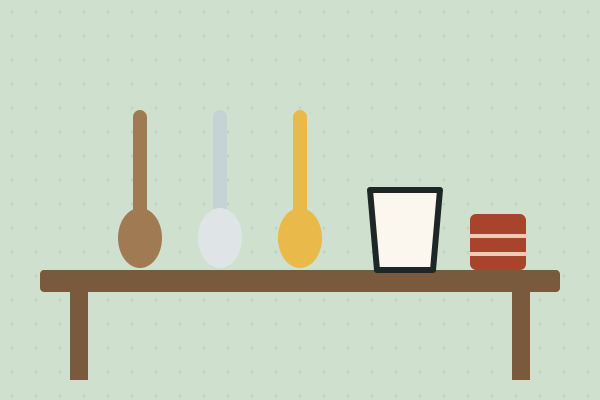
Mina was helping her grandmother in the kitchen. "Pass me a spoon," said Grandma. Mina found three. One was brown and light, one was shiny and cold, one was yellow and bendy. "They're all spoons," said Mina, "but they're not the same." "No," said Grandma. "Same shape, different stuff. Each one is made of something different." Your job: find out what things are made of, and sort them.
Children work in pairs with two jobs that swap halfway: the Feeler reaches into the bag and says what they feel, and the Sorter guesses the object and puts it in the right place.
Look inside the PDF
Sample pages, stamped “preview”. The download is the clean, full lesson.
In the full lesson PDF
- Predict (5 min)
- Hunt (15 min)
- Reveal (10 min)
- Act (10 min)
- Background for the teacher
- Assessment
- Student sheet
- Worksheet: Label it
- Worksheet: Try it at home
On the student sheet
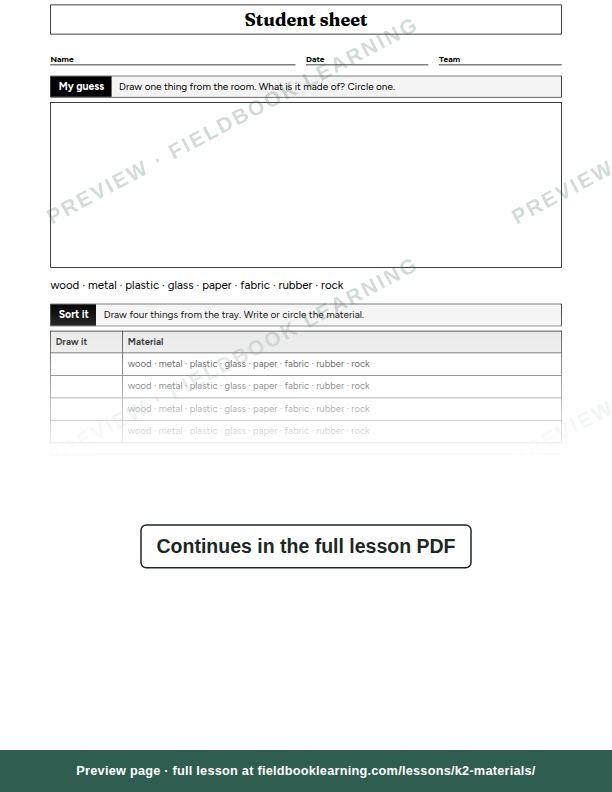
- My guess
- Sort it
- Test it
- Material hunt
- Two in one
- Label it
- Try it at home
US Letter, prints cleanly in black and white. The student sheet is on its own page, ready to photocopy.
Free with an account (any 3 lessons), or US$19 / C$25 for all 3 lessons in this unit.
What students show by the end
- Names materials
- Describes properties
- Sorts and groups
From the lesson’s rubric, which scores each one as not yet, getting there or got it.
Questions teachers ask
How long does “What is it made of?” take?
40–50 min. Group size: pairs (two jobs that swap).
How much prep does it need?
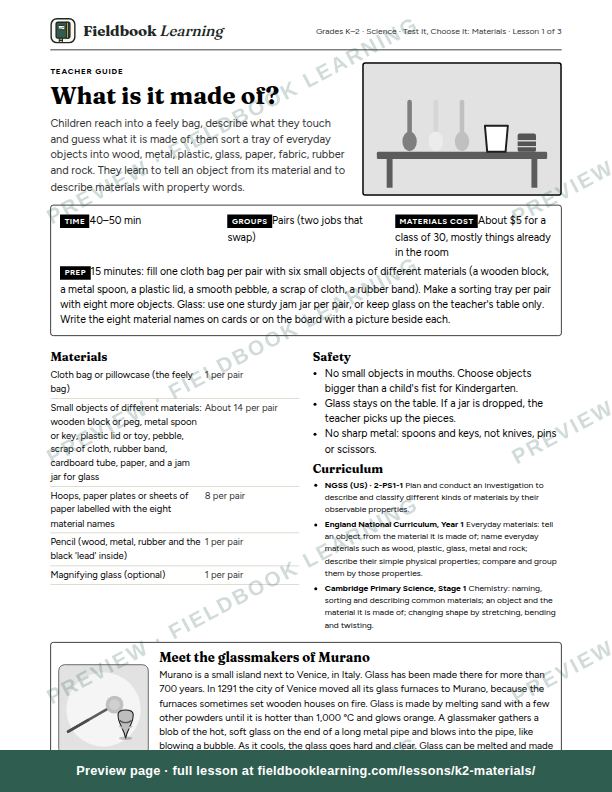
15 minutes: fill one cloth bag per pair with six small objects of different materials (a wooden block, a metal spoon, a plastic lid, a smooth pebble, a scrap of cloth, a rubber band). Make a sorting tray per pair with eight more objects. Glass: use one sturdy jam jar per pair, or keep glass on the teacher's table only. Write the eight material names on cards or on the board with a picture beside each.
What materials do I need?
Cloth bag or pillowcase (the feely bag); small objects of different materials; hoops, paper plates or sheets of paper labelled with the eight material names; pencil (wood, metal, rubber and the black 'lead' inside); magnifying glass (optional). Cost: about $5 for a class of 30, mostly things already in the room.
Which curriculum standards does it cover?
NGSS (US): 2-PS1-1. It also matches England National Curriculum, Year 1 and Cambridge Primary Science, Stage 1.
What’s in the lesson PDF?
A teacher guide that walks you through predict, hunt, reveal, act, background for the teacher and assessment, then a student sheet (“My guess”, “Sort it”, “Test it”, “Material hunt”, “Two in one”, “Label it” and “Try it at home”) on its own page, ready to photocopy. It’s US Letter and prints cleanly in black and white.
Can I try it for free?
Yes. A free account includes any 3 full lessons of your choice, and this can be one of them. After that, this unit is US$19 (C$25) for all 3 lessons, yours to keep, or every lesson is US$79 (C$109) a year.