Winter Science: Ice, Snow and Staying Warm
Why roads get salted, which mitten really works, how a seal stays warm in icy water, and why a mouse is cosier under the snow than on top of it. Four hands-on lessons on ice, heat and insulation.
Or try any 3 lessons free with an account.
Already bought it? Download the whole unit as one printable workbook: cover, contents, curriculum connections, every lesson, readings, practice pages, a unit test and an answer key, in black and white.
4 lessons in this unit
 Lesson 1 · 50–60 minWhat melts ice fastest?Teams sprinkle salt, sugar and sand on identical ice cubes, leave one plain, and measure the meltwater after 20 minutes. Then they use their evidence to explain why road crews spread salt, and why salted ice actually gets colder.
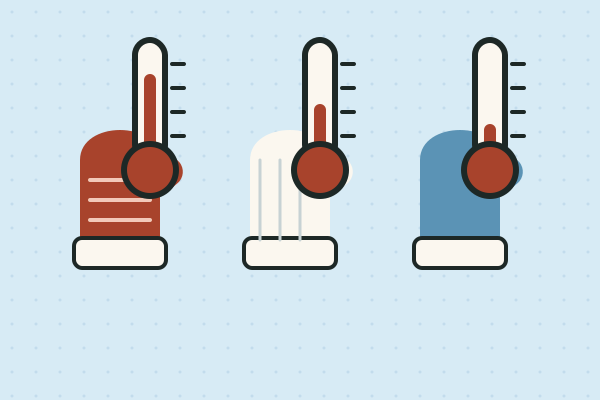 Lesson 2 · 50–60 minWhich mitten keeps a hand warmest?Teams wrap jars of warm water in wool, cotton, foil or nothing, and read a thermometer every 5 minutes to see which loses heat slowest. Then they explain what a mitten really does, and why it doesn't make any heat of its own.
 Lesson 3 · 50–60 minHow do animals stay warm in winter?Students put a hand into ice water inside a 'blubber glove' made of shortening between two zip bags, measure the difference with thermometers, and compare a lone cup of warm water with a huddle. Then they argue how blubber, fur, feathers and huddling help animals survive the cold.
 Lesson 4 · 60–75 min, including about 40 min outdoorsCan snow keep things warm?Teams build a 'den' for a jar of warm water, leave one on top of the snow and bury one underneath, and compare temperatures after 30 minutes. They also probe the snow with thermometers, then explain why voles, grouse and bears spend winter under the snow. A no-snow version uses a freezer and a snow stand-in.
Materials for the whole unit · one list, lesson by lesson
Lesson 1: What melts ice fastest?
- Ice cubes, all from the same type of tray4 per team, plus spares
- Clear plastic cups, all the same4 per team
- Table salt1 teaspoon (5 mL) per team, plus 2 tablespoons for the demo
- White sugar1 teaspoon (5 mL) per team
- Clean play sand1 teaspoon (5 mL) per team
- Small paper cups to hold each solid3 per team
- Plastic spoon1 per team
- Medicine cups or a small measuring cup with mL markings1 per team
- Thermometer that reads below 0 °C (32 °F)1 for the teacher demo
- Paper towelsA roll
About $10 for a class of 30
Lesson 2: Which mitten keeps a hand warmest?
- Small plastic jar or food container with a lid, about 250 mL (1 cup), all the same1 per team, plus 2 for the class
- Thermometer that fits through the hole in the lid1 per jar
- Wool sock (mostly wool, from home or the lost-and-found)Enough for a quarter of the teams
- Cotton sockEnough for a quarter of the teams
- Aluminum foilA sheet about 30 cm (12 in) square per foil team
- Elastic bands2 per team
- Measuring cup1
- Jug of warm tap waterAbout 3 L (3 qt)
- Towels for spillsA few
About $25 for a class of 30 (most of it for 10 thermometers, if you don't have them)
Lesson 3: How do animals stay warm in winter?
- Large zip-top freezer bags, about 4 L (1 gal)16 for the class
- Vegetable shortening1 tub, about 1 kg (2 to 3 lb)
- Duct tape1 roll
- Tubs or buckets of ice and cold water, deep enough to cover a hand4 for the class
- Thermometers10 for the class
- Paper or plastic cups, all the same, about 250 mL (8 oz)8 for the huddle
- Warm tap waterAbout 2 L (2 qt)
- Feathers, fur or fleece scraps, and photos of winter animals to look at1 set per station
- Timer1 per station
- TowelsSeveral
About $15 for a class of 30 (shortening and freezer bags), plus thermometers
Lesson 4: Can snow keep things warm?
- Small plastic container with a lid, about 250 mL (1 cup), all the same2 per team
- Larger tub that fits over the small container (the 'den'), all the same2 per team
- Thermometers1 per team
- Measuring cup1
- Jug of warm tap waterAbout 4 L (1 gal)
- Small shovels, scoops or sturdy plastic cups for moving snow1 per team
- Flags or sticks to mark buried dens1 per team
- No-snow version: cotton balls or polyester stuffing, and a shoebox-sized containerEnough to fill the container
About $10 for a class of 30 (containers are free if you collect them), plus thermometers
Students race ice cubes coated in salt, sugar and sand to find out what really melts ice, and why road crews salt the streets. They wrap jars of warm water in wool, cotton and foil and take readings every five minutes to see which “mitten” holds the heat in. They push a hand into ice water inside a blubber glove, compare a lone cup of warm water with a huddle, and finally bury a warm jar under snow (or a snow stand-in, for classes without any) to see why so many animals spend winter underneath it.
By the end, students can explain that heat always moves from warmer things to colder things, that mittens, fur, blubber and snow don’t make heat but slow it down by trapping still air or adding a thick layer, and that salt melts ice by mixing into the water, not by heating it. Each lesson ends with a claim, evidence and reasoning, and everything comes from a grocery store, a dollar store or the lost-and-found.