Years 8–9 in England and Wales · Cambridge Lower Secondary Stages 8–9 · IB MYP 2 to MYP 3, ages 12–14
Genes and Traits: Heredity and Punnett Squares
Why you look like your family but not exactly, how two purple-flowered pea plants can have a white-flowered one, what Gregor Mendel really counted, and what happens when a gene changes. Four no-materials lessons with printed allele cards, Punnett squares, Mendel's own data and a real gene to decode.
Or try any 3 lessons free with an account. Prices in US dollars.
Already bought it? Download the whole unit as one printable workbook (65 pages): cover, contents, curriculum connections, every lesson, readings, practice pages, a unit test and an answer key, in black and white. Want to change the wording? Get every student page as one editable Word file.
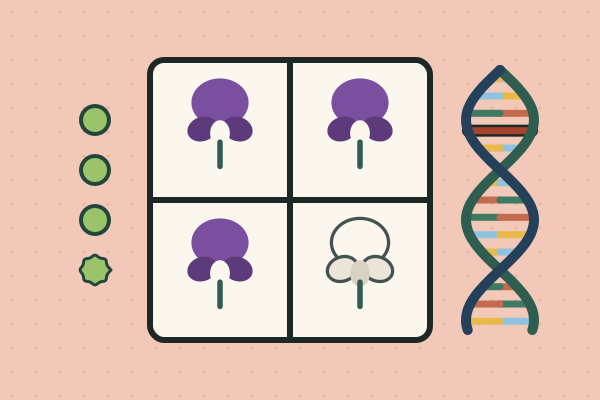
4 lessons in this unit
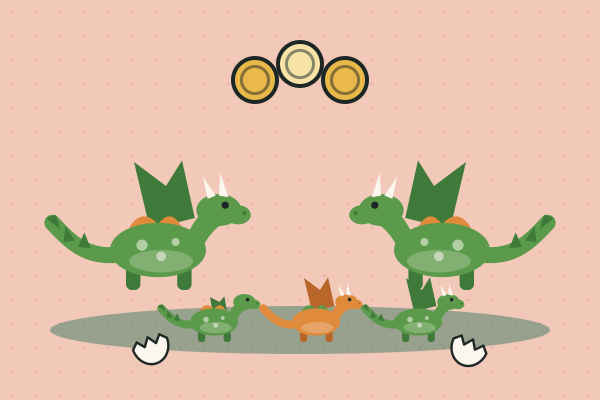 Lesson 1 · 45–60 min · 9 pagesWhy do you look like your family, but not exactly?Teams build baby dragons by flipping printed allele coin cards from two parents, then bud copies of one parent and compare the two litters. They explain genes, alleles and chromosomes, and why sexual reproduction makes variety while asexual reproduction makes copies.
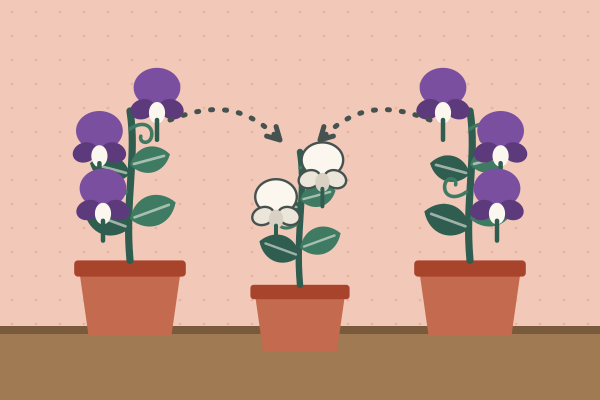 Lesson 2 · 45–60 min · 10 pagesHow can two purple-flowered pea plants have a white-flowered one?Students play pea plants, passing allele slips from behind their backs to make offspring, then draw Punnett squares for three crosses and solve four case files. They explain dominant and recessive alleles, genotype and phenotype, and why most human traits do not follow these simple rules.
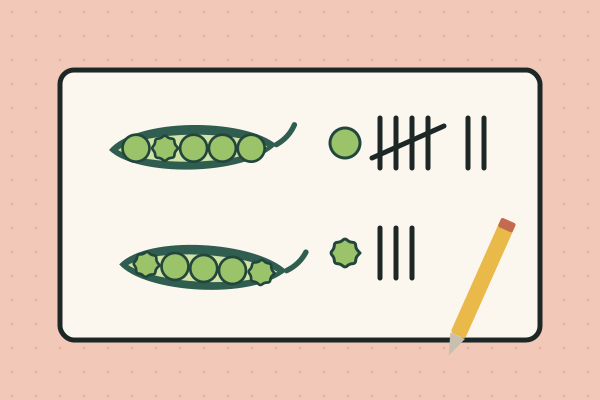 Lesson 3 · 45–60 min · 8 pagesWhat did Mendel count?Teams rotate around seven data stations with Gregor Mendel's real pea counts from 1866, work out each ratio, and compare it with the 3 to 1 a Punnett square predicts. A card of ten single plants shows how much small samples wobble, so students explain heredity as probability, not certainty.
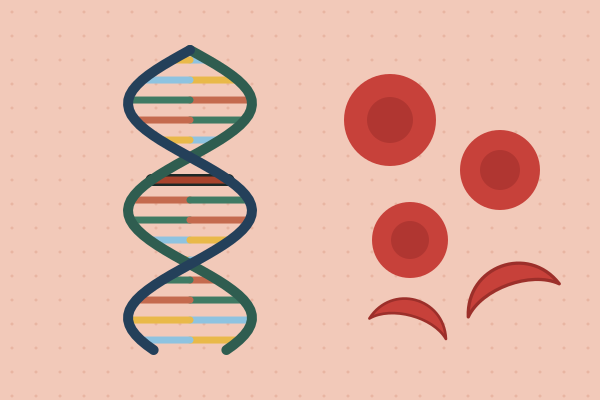 Lesson 4 · 45–60 min · 8 pagesWhat happens when a gene changes?Students decode the first words of the real human haemoglobin gene, apply five mutation cards and see which changes alter the protein. Then they stand in the corner of the room that matches each real case: harmful, neutral, helpful or it depends. They explain how a change in a gene can change a protein and a trait.
Students build baby dragons by flipping printed allele coin cards, then bud copies of a parent and compare the two litters. They play pea plants that swap allele cards behind their backs, draw Punnett squares for Mendel’s purple and white flowers, work out the ratios in Gregor Mendel’s real counts from 1866, and decode the first letters of the human haemoglobin gene to see what one changed letter does.
By the end, students can explain genes, alleles and chromosomes in their own words; say why sexual reproduction gives variety and asexual reproduction gives copies; predict offspring with a Punnett square and say why real counts only come close with large numbers; and describe how a change in a gene can change a protein and a trait, with harmful, neutral and helpful examples. Every lesson needs only the printed sheets, and the free Punnett square tool runs the crosses on screen.