French Numbers Game
Hear a number in French and type it, or see a number and pick the French word. From zéro to cent, including soixante-dix and quatre-vingts.
Number explorer Tap a number to hear it
Arrow keys move around the grid; Enter says the number.
No French voice was found on this device, so the numbers may not be read aloud. Add a French voice in your device's speech or language settings. Read and write and Match work without sound.
Numbers to practise (missed ones; they leave the list once you get them right)
French Numbers Game · free from Fieldbook Learning
How to use it
Pick a game and a level. Listen and type reads a number aloud in French; type it in digits. Listen and pick reads a number and gives four numerals to choose from. Read and write shows a numeral; choose the French words, or switch to Type and spell them yourself. Match sets out five French number words and five numerals to pair up. Use Replay and Slow as often as you like.
The levels go 0 to 10, 11 to 20, 21 to 69, 70 to 100, mixed 0 to 100, and a bonus level from 100 to 1000. Your score, streak and a list of numbers to practise are saved in this browser. Tap Practise only these to drill the ones you missed.
The number explorer is a 0 to 100 chart: tap any number to hear it and see how its name is built, word by word. Spelling follows the traditional rules taught in most Canadian schools; tick 1990 spelling to see the reform spelling, which joins every word with hyphens (vingt-et-un, deux-cents). Typed answers are accepted in either spelling. Sound uses your device's French voice, and prefers a Canadian French one.
How French numbers work
French numbers 1 to 100 follow a few patterns. Zéro to seize (0 to 16) are their own words. From 17, French builds: dix-sept is "ten-seven". The tens vingt, trente, quarante, cinquante and soixante take the ones after a hyphen (vingt-deux), except for 1, which joins with et: vingt et un, trente et un, soixante et un.
After soixante, France and Canada keep counting from sixty: 70 is soixante-dix ("sixty-ten"), 71 is soixante et onze, 77 is soixante-dix-sept. Eighty is quatre-vingts, "four twenties". The s drops when a number follows, and there is no et: quatre-vingt-un. Ninety is quatre-vingt-dix ("four twenties ten"), and 91 is quatre-vingt-onze. Then cent (not "un cent"), deux cents, but deux cent un, and mille, which never takes an s.
Belgium and Switzerland say septante (70) and nonante (90). For 80, the Swiss cantons of Vaud, Valais and Fribourg say huitante; Belgium and the rest of Switzerland say quatre-vingts. Octante is an old word you will rarely hear today.
Tips: learn 0 to 16 by heart first, then the tens. For the 70s and 90s, think "sixty plus" and "eighty plus" a teen.
- Why is 71 "soixante et onze" and not "soixante-dix et un"?
- Which numbers between 20 and 100 use et? Which ones don't, and why?
- Write quatre-vingt-dix-sept as a sum. How many words does it need?
- Count by tens in French from dix to cent, then try it the Swiss way.
Free to use, no account needed. It runs in your browser: nothing you type, and no sound from your microphone, is sent to Fieldbook.
Hands-on lessons to pair with French Numbers Game
Ready-to-teach units, each lesson a printable teacher guide and student sheet. Your first three lessons are free.
Three full lessons, free
Make a free account and download any three Fieldbook lessons, from any grade or subject, as printable PDFs. No card needed.
More free classroom tools
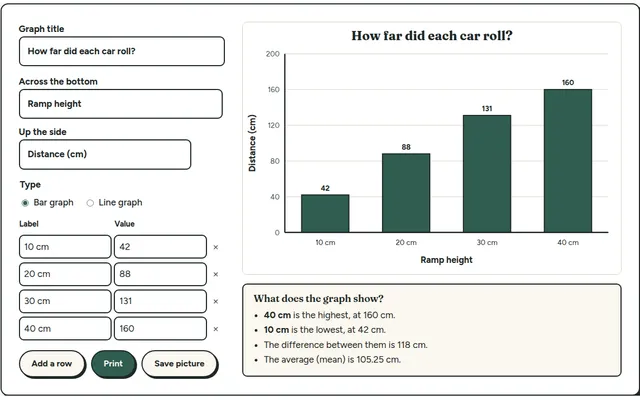
Class Graph Maker
Type in your class's results and get a clean bar or line graph to project or print. Built for the data step of every Fieldbook investigation.
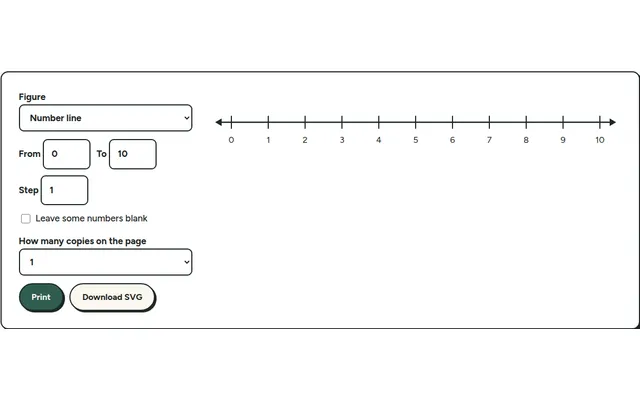
Math Figures
Printable number lines, coordinate grids, graph paper and hundred charts for worksheets and tests, sized the way you need them.
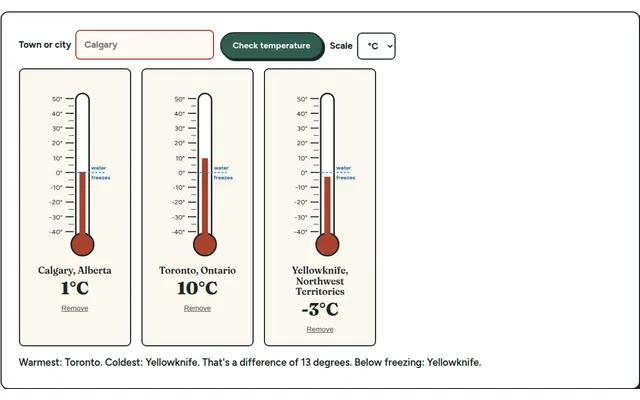
Weather Station
A live thermometer for any town. Read the scale, compare cities, and log the day's temperature for a weather unit.
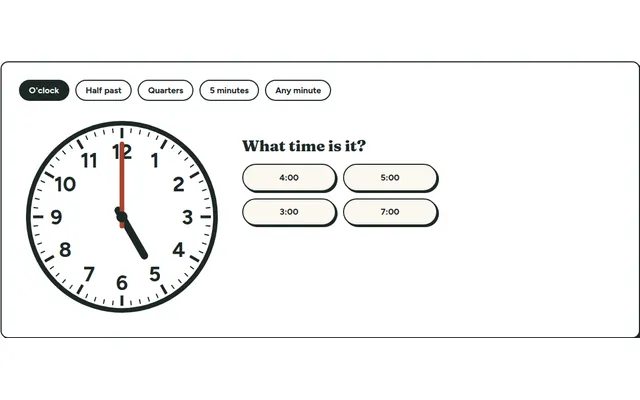
Clock Match
Read an analog clock and pick the matching time. Five levels, from o'clock up to the nearest minute.
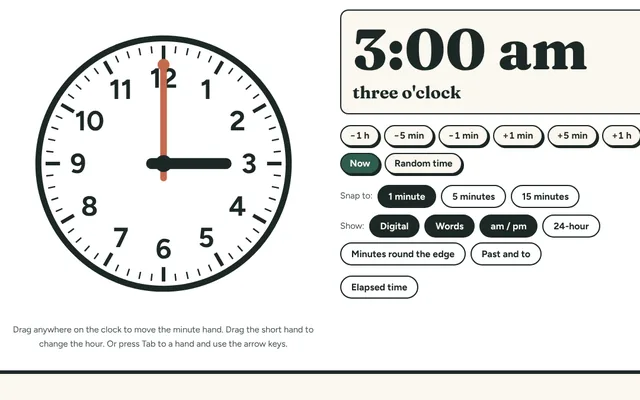
Teaching Clock
A big analog clock with hands you can drag. The hour hand moves with the minute hand like a real clock, and the time shows in digital and in words.
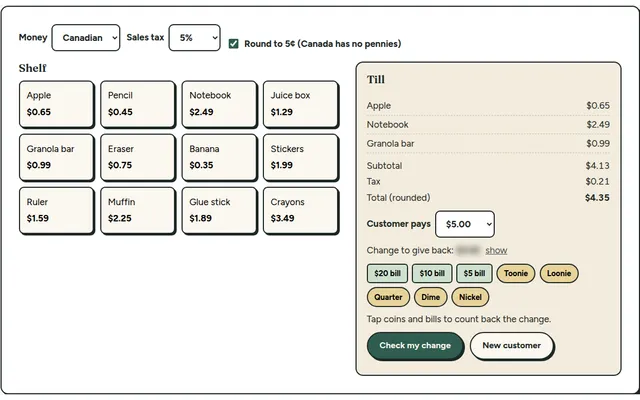
Corner Store
Ring up a pretend purchase, add sales tax and count back the change. Money practice with Canadian or US coins and bills.