Free math tools and virtual manipulatives
32 free math tools for the projector and for students: virtual manipulatives, games and generators. No sign-up, nothing to install, and they work on tablets and Chromebooks.
Math tools starting in grades K–2
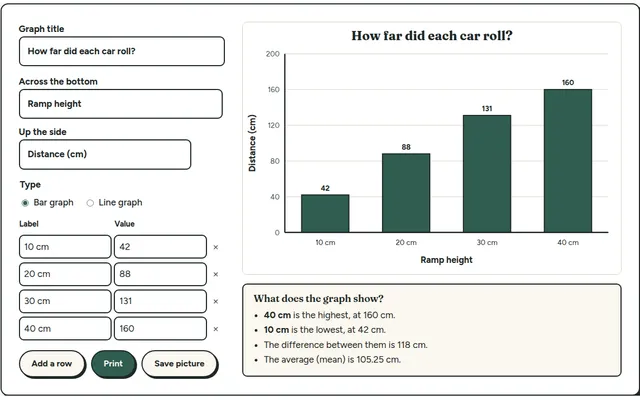
Class Graph Maker
Type in your class's results and get a clean bar or line graph to project or print. Built for the data step of every Fieldbook investigation.
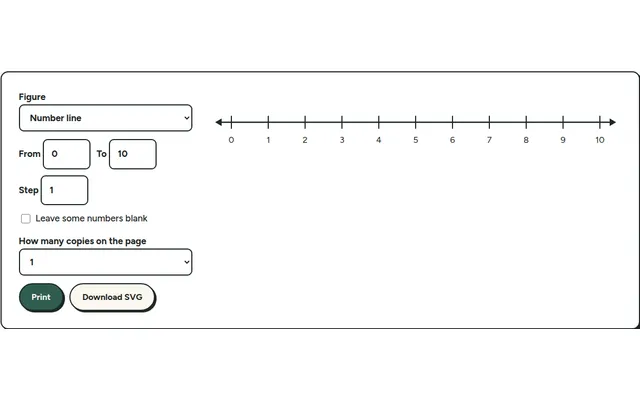
Math Figures
Printable number lines, coordinate grids, graph paper and hundred charts for worksheets and tests, sized the way you need them.
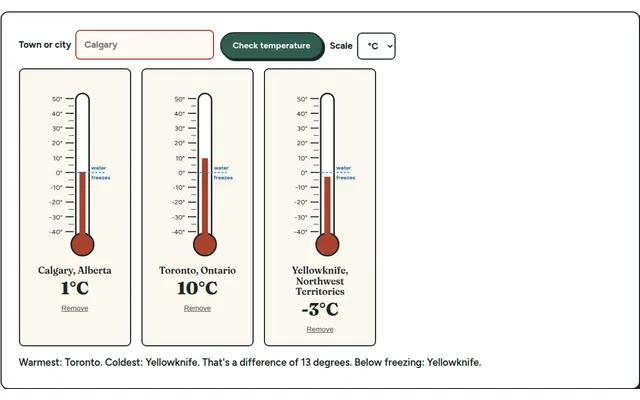
Weather Station
A live thermometer for any town. Read the scale, compare cities, and log the day's temperature for a weather unit.
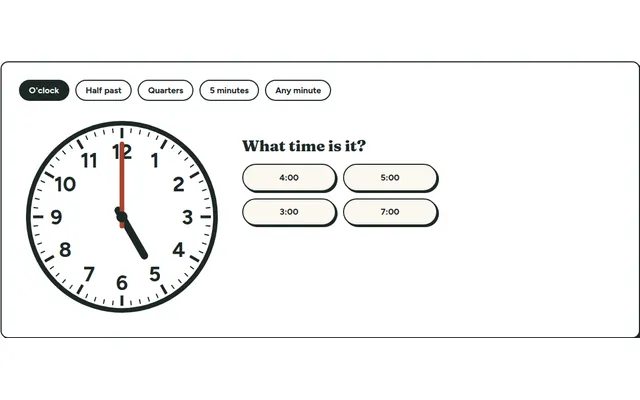
Clock Match
Read an analog clock and pick the matching time. Five levels, from o'clock up to the nearest minute.
Teaching Clock
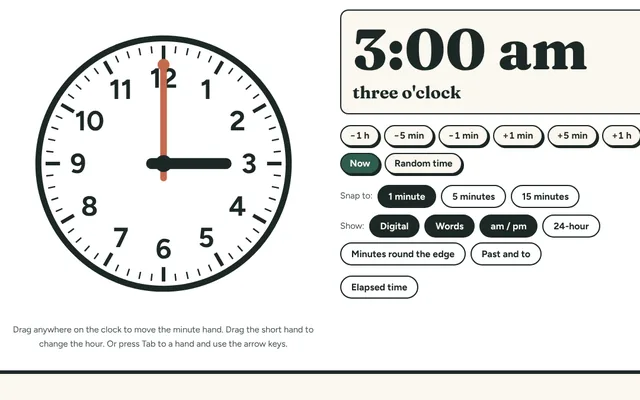
A big analog clock with hands you can drag. The hour hand moves with the minute hand like a real clock, and the time shows in digital and in words.
Corner Store
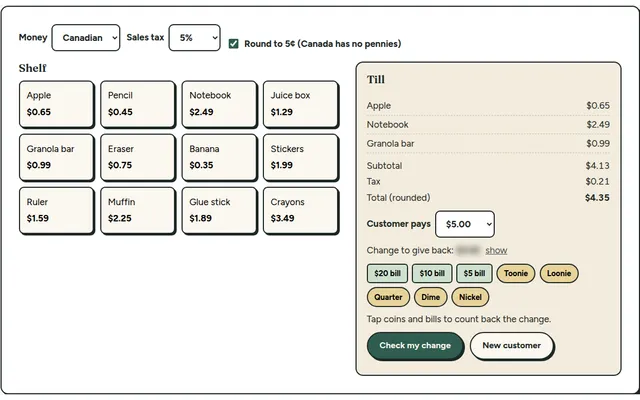
Ring up a pretend purchase, add sales tax and count back the change. Money practice with Canadian or US coins and bills.
Fraction Circles
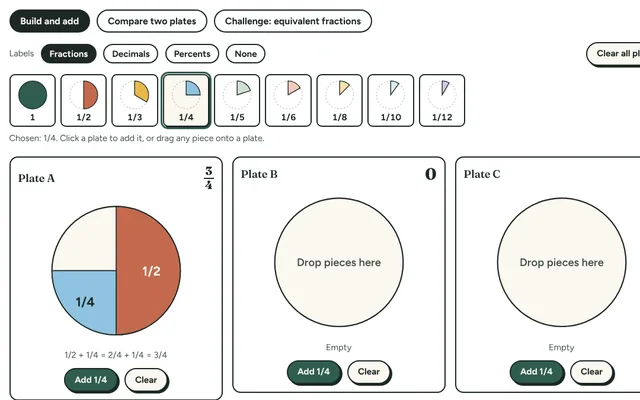
Drag fraction pie pieces onto a whole circle to build, compare and add fractions. See when pieces make a whole, and when they spill into a mixed number.
Place Value Blocks
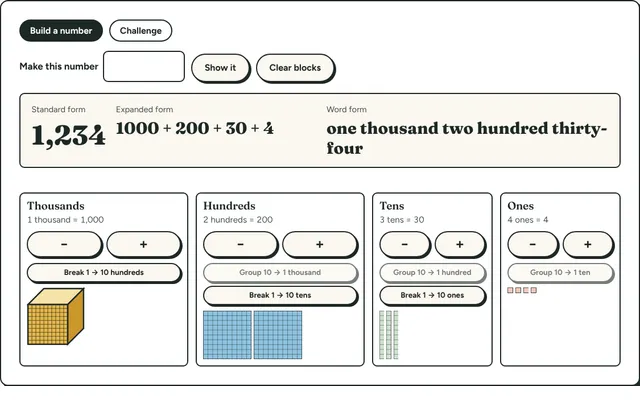
Build any number from ones, tens, hundreds and thousands blocks, trade ten for one, and see it written in standard, expanded and word form.
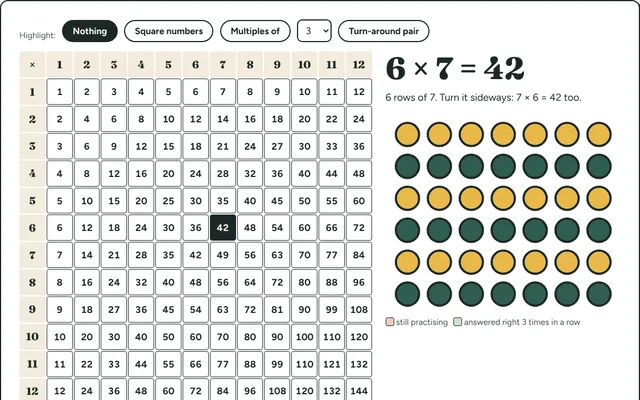
Times Table Trainer
Explore the multiplication grid as arrays and patterns, then practise the facts you pick with a quick quiz that tracks which ones still need work.
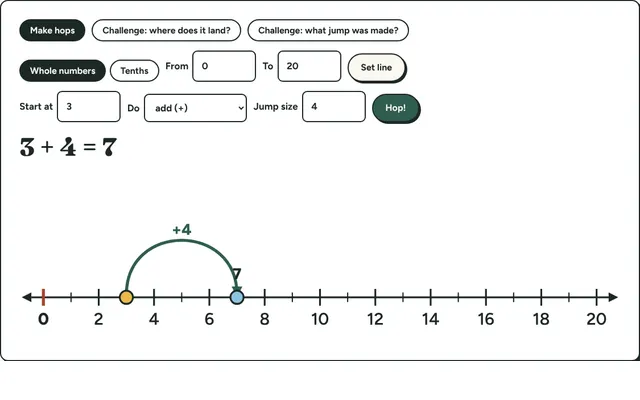
Number Line Hops
Show addition, subtraction and skip counting as jumps along a number line, with whole numbers, negatives or decimals.
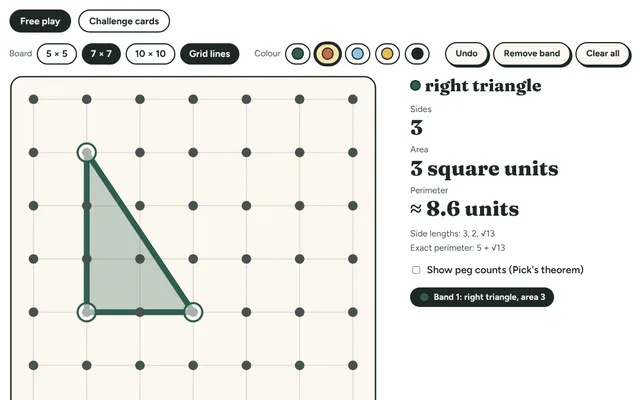
Geoboard
Stretch rubber bands between pegs to make shapes, then see each shape's area and perimeter. Copy shapes from the challenge cards or make your own.
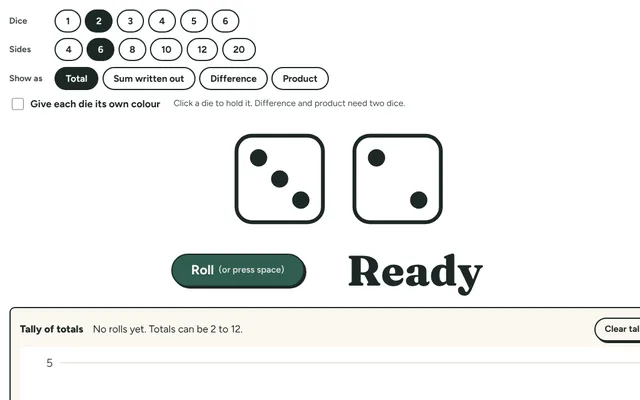
Dice Roller
Roll up to six big dice for games and math centres: regular six-sided dice or 4, 8, 10, 12 and 20-sided ones, with the total and a tally of every roll.
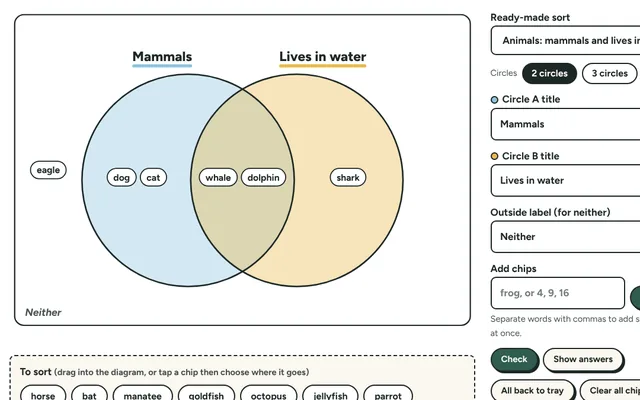
Venn Diagram Maker
Sort words, numbers or pictures into two or three overlapping circles. Start from a ready-made sort or type your own, then print the finished diagram.
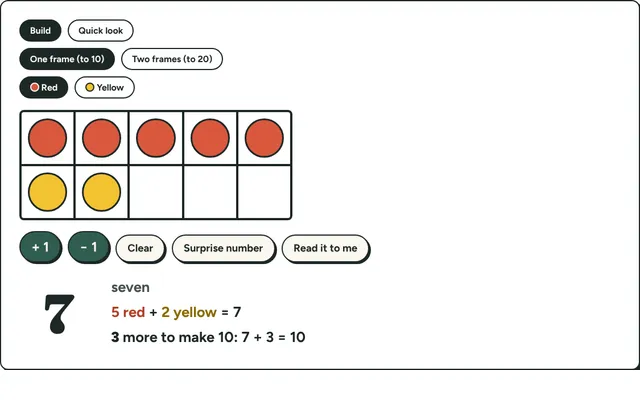
Ten Frames
Fill ten frames with counters to show numbers to 20, make ten and practise quick looks. Early number sense for kindergarten to grade 2.
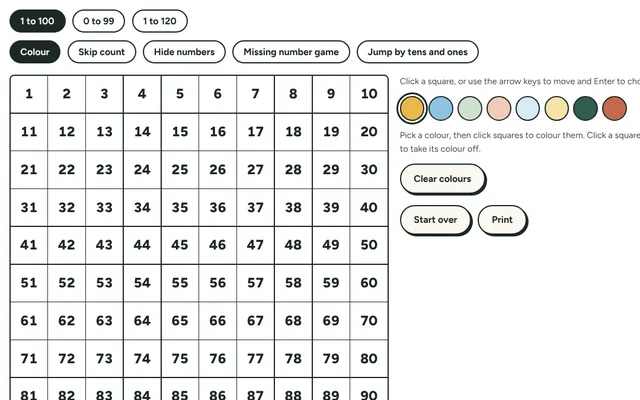
Hundred Chart
An interactive 100 or 120 chart. Shade skip-counting patterns, hide numbers for a missing-number puzzle, and jump by tens and ones.
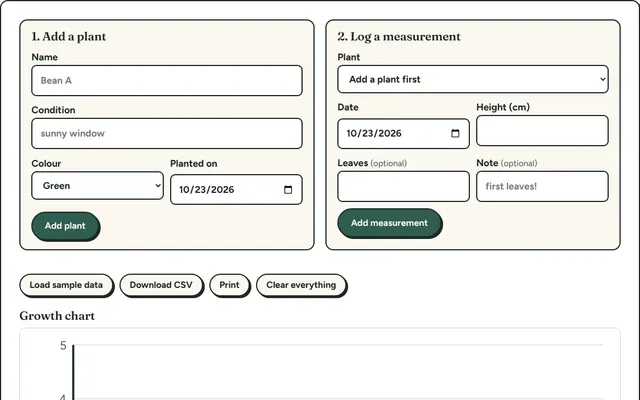
Plant Growth Journal
Log your class plants' height every few days and get a growth chart that compares plants or conditions. Saved on your device, ready to print.
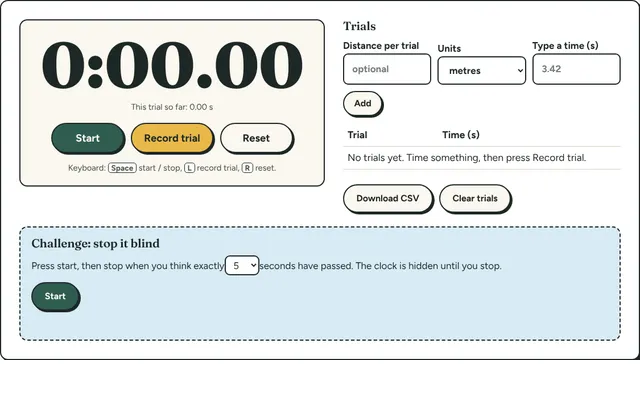
Lab Stopwatch
A big stopwatch with lap times for experiments: time several trials, see the average and spread, and download the results.
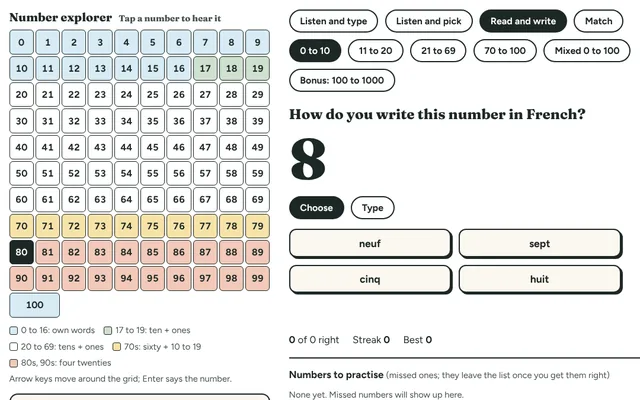
French Numbers Game
Hear a number in French and type it, or see a number and pick the French word. From zéro to cent, including soixante-dix and quatre-vingts.
Math tools starting in grades 3–5
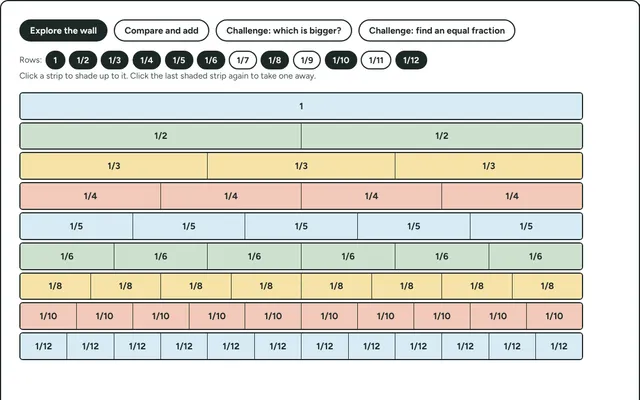
Fraction Wall
Stack fraction strips to see which fractions are equal, which is bigger, and how they add up. Then test yourself with compare-and-match challenges.
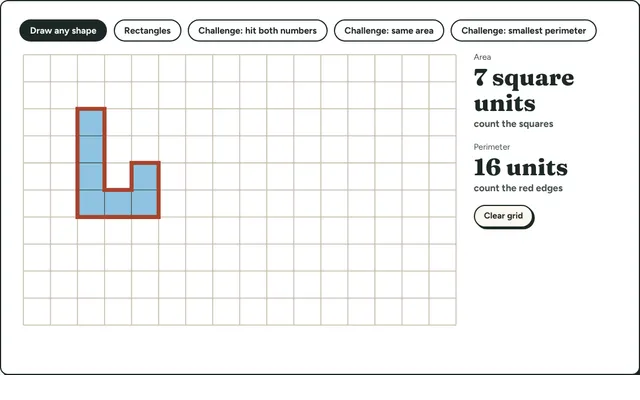
Area and Perimeter Builder
Draw shapes on a square grid and watch the area and perimeter count up. Challenges ask for shapes with the same area but different perimeters.
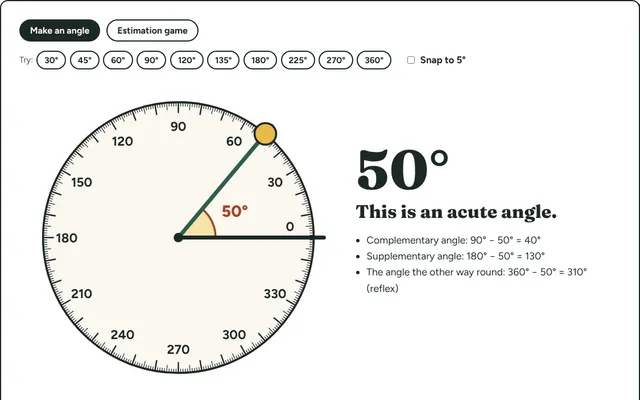
Angle Maker
Turn a ray around an on-screen protractor to make and measure angles, name them acute, right, obtuse or reflex, then estimate angles in a game.
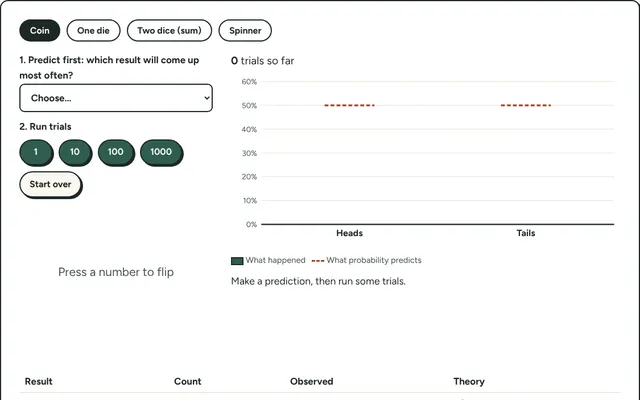
Probability Lab
Flip coins, roll dice or spin a spinner hundreds of times and compare what happened with what probability predicts.
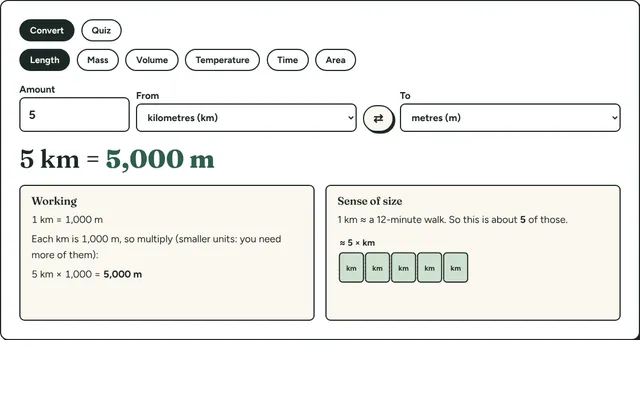
Measurement Converter
Convert length, mass, volume, temperature and time between metric and imperial units, with the working shown and a sense-of-size picture for each.
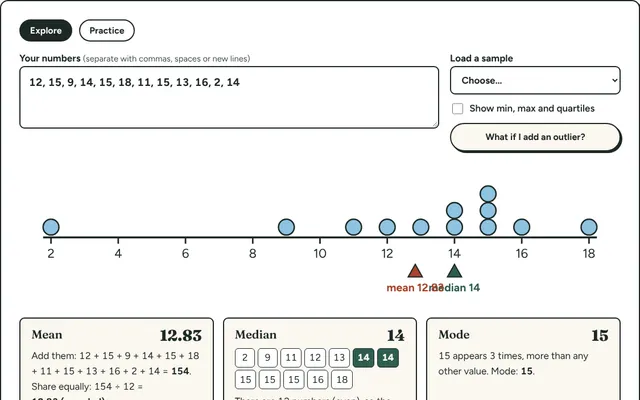
Mean, Median and Mode
Type in a set of numbers and see the mean, median, mode and range worked out step by step, with a dot plot that shows where each one sits.
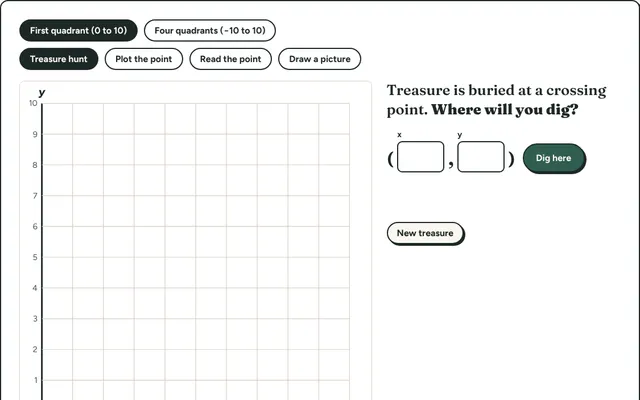
Coordinate Hunt
Find hidden treasure by plotting and reading points on a coordinate grid. First quadrant for beginners, all four quadrants for grade 6 and up.
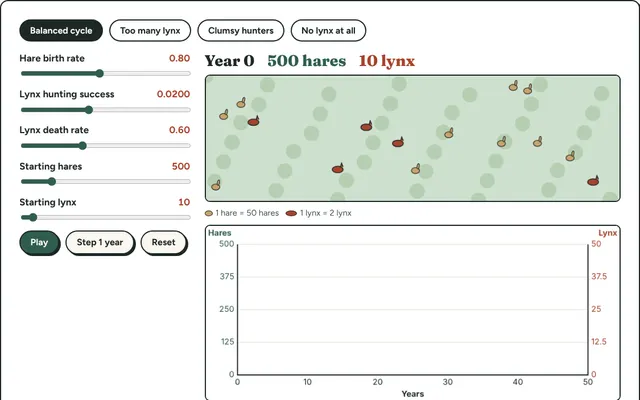
Predator and Prey
Run a simulated meadow of hares and lynx. Change birth and hunting rates and watch the two populations rise and fall on a live graph.
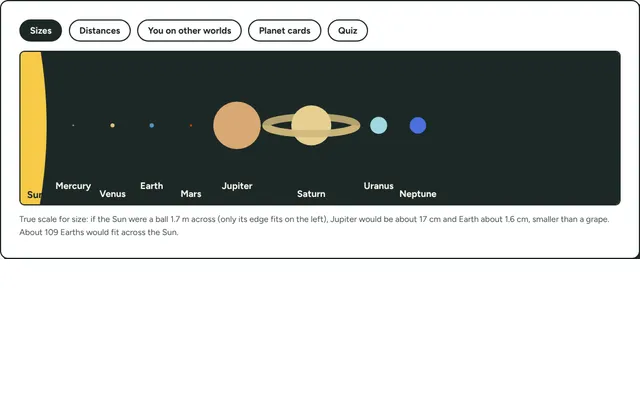
Solar System Scale
See the planets at true scale for size and distance, find your weight and age on each one, and work out how long light takes to reach them.
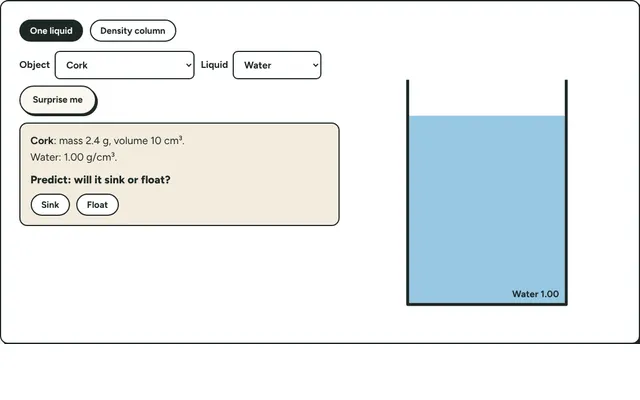
Sink or Float
Drop objects into water, oil, salt water or syrup. Predict first, then see what sinks and floats and why, using mass, volume and density.
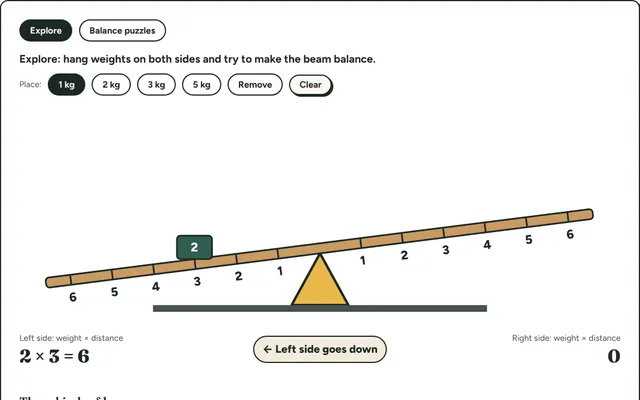
Lever Lab
Put weights on a seesaw and balance it. Discover the law of the lever (weight times distance) by experiment, then solve balance puzzles.
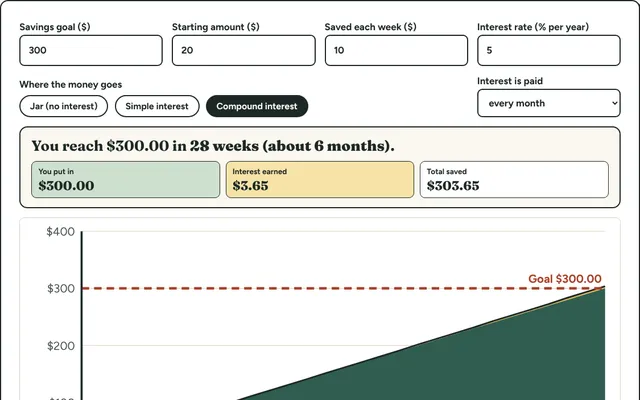
Savings Planner
Set a savings goal and see how long it takes, week by week. Compare saving in a jar with earning simple or compound interest.
Math tools starting in grades 6–8
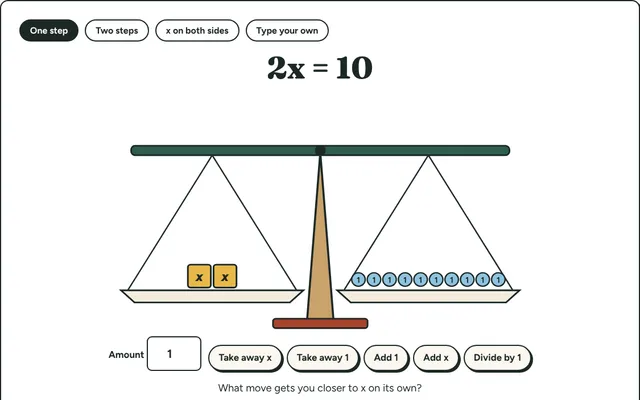
Equation Balance
Solve equations on a balance scale: do the same thing to both sides until x stands alone. Step-by-step algebra for grades 6 to 8.
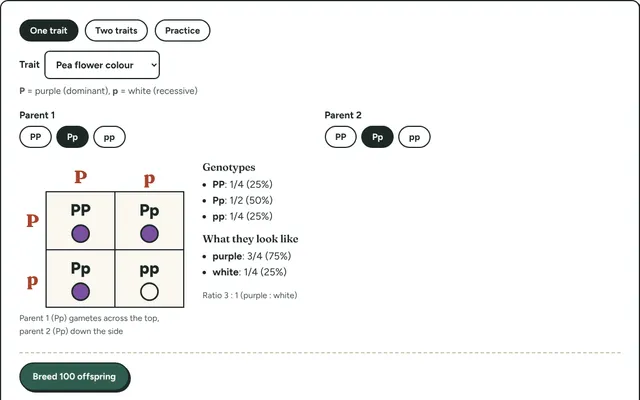
Punnett Squares
Cross two parents and see every possible offspring, with the ratios of genotypes and traits, plus a breeding simulator to test the prediction.
Why use virtual math manipulatives?
Hands-on materials such as base ten blocks, fraction strips, geoboards and ten frames help students see what numbers and operations mean before they work with symbols alone. The virtual versions here keep that concrete step, and add things a box of plastic pieces can't: the whole class can watch on the projector, every student gets an unlimited set, nothing gets lost, and the tool shows the matching number sentence as students move the pieces.
A good pattern is concrete, then pictorial, then abstract: start with the real materials if you have them, use these tools to share and discuss on the board, then move to written work. Each tool page explains the math behind it and gives questions to ask.
Which tool for which topic
- Number sense and place value: Ten Frames, Hundred Chart, Place Value Blocks, Number Line Hops.
- Fractions: Fraction Wall and Fraction Circles.
- Multiplication: Times Table Trainer and Dice Roller games.
- Geometry and measurement: Geoboard, Area and Perimeter Builder, Angle Maker, Teaching Clock.
- Data and probability: Class Graph Maker, Mean, Median and Mode, Probability Lab, Venn Diagram Maker.
- Algebra: Equation Balance and Coordinate Hunt.
More free tools
Pair the tools with full lessons
Fieldbook lessons are complete, hands-on science and math lessons with a teacher guide and student sheet to print. Make a free account and download any three. No card needed.