Equation Balance
Solve equations on a balance scale: do the same thing to both sides until x stands alone. Step-by-step algebra for grades 6 to 8.
How to use it
Each x box hides the same unknown weight, and each round weight is 1. The scale is balanced, so both sides weigh the same. Choose an amount, then a move. Every move happens to both sides, so the scale stays level. Keep going until one side holds a single x box and the other holds only round weights: that is the answer.
Start with One step, then Two steps, then x on both sides. In Type your own, enter an equation like 4x + 3 = 2x + 11 using whole numbers and plus signs.
Why "do the same to both sides" works
An equation says two amounts are equal, just like a balanced scale. If you take the same weight off both pans, or add the same weight to both, it stays balanced. If you split both pans into the same number of equal groups, one group from each side still balances. These moves change how the equation looks, not its solution.
Solving is choosing moves that get x by itself. A good order is: first take away x boxes so x is on one side only, then take away the loose weights on that side, then divide to find one x. The tool refuses moves a real scale couldn't do (taking away weights that aren't there) and divisions that would cut a box or a weight into pieces. Fractions are fine in algebra, but this tool keeps everything whole so the picture stays honest.
- Ask: "What could you do to both sides that gets rid of the 5 on the left?"
- After solving, put the answer back into the original equation to check it.
- Why is "add 3 to both sides" allowed but not helpful here?
Free to use, no account needed. It runs in your browser: nothing you type, and no sound from your microphone, is sent to Fieldbook.
Hands-on lessons to pair with Equation Balance
Ready-to-teach units, each lesson a printable teacher guide and student sheet. Your first three lessons are free.
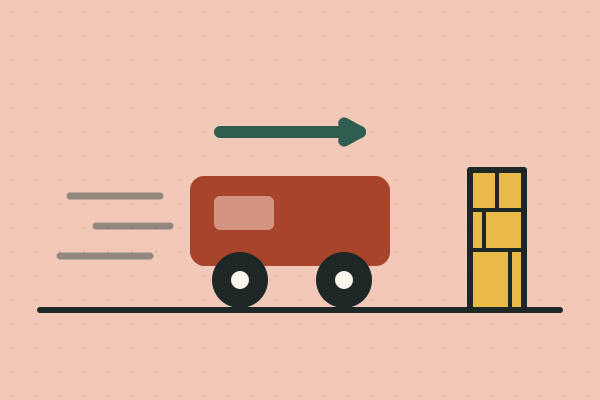
Forces and Motion: Crash, Push and Stop
Why you lurch forward when the bus brakes, how fast a toy car really goes, why heavier carts hit harder, and how to build a crumple zone that saves an egg. Four lessons on inertia, speed, mass and stopping safely.

Test the Claim: Science Facts, Myths and AI Answers
Sayings, ads, forum posts and AI chatbot answers all sound sure of themselves. Students put popular claims to a real hands-on test, grade the answers, and learn how to decide which sources deserve their trust.

Pushes, Pulls and Magnets
Why a rolling ball always stops, whether a magnet can pull through a table, and how far a paper clip will jump. Three lessons on the pushes and pulls that start, stop and steer things.
Three full lessons, free
Make a free account and download any three Fieldbook lessons, from any grade or subject, as printable PDFs. No card needed.
More free classroom tools
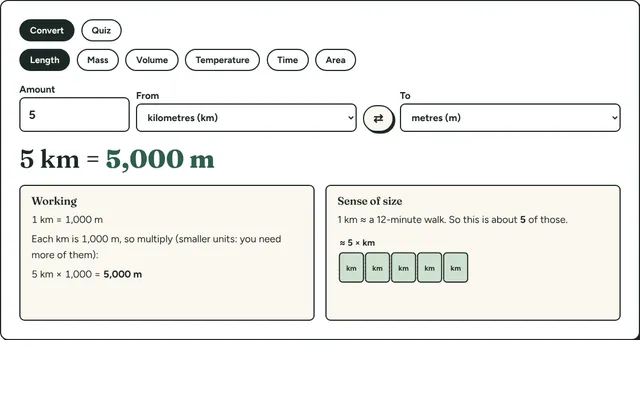
Measurement Converter
Convert length, mass, volume, temperature and time between metric and imperial units, with the working shown and a sense-of-size picture for each.
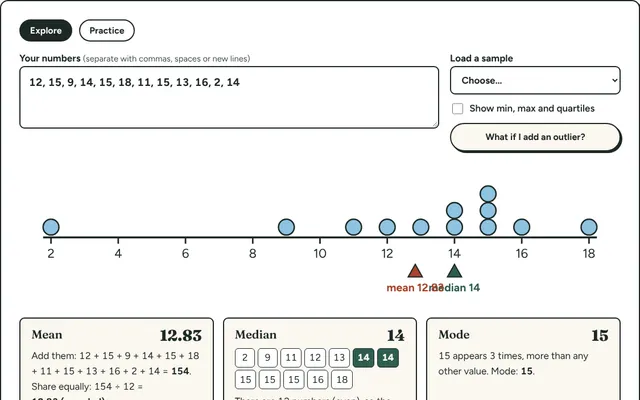
Mean, Median and Mode
Type in a set of numbers and see the mean, median, mode and range worked out step by step, with a dot plot that shows where each one sits.
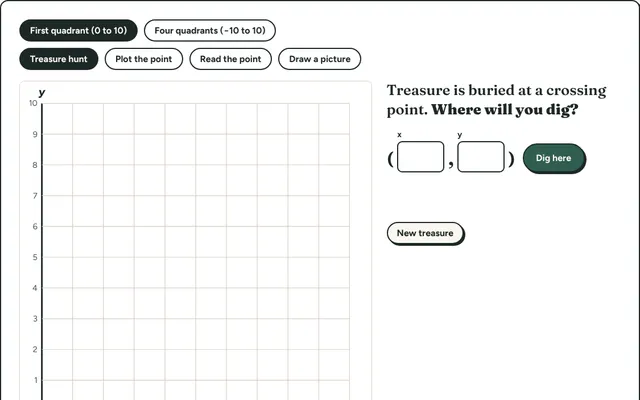
Coordinate Hunt
Find hidden treasure by plotting and reading points on a coordinate grid. First quadrant for beginners, all four quadrants for grade 6 and up.
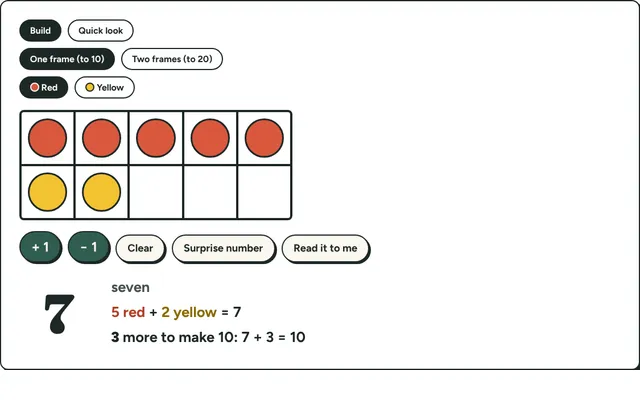
Ten Frames
Fill ten frames with counters to show numbers to 20, make ten and practise quick looks. Early number sense for kindergarten to grade 2.
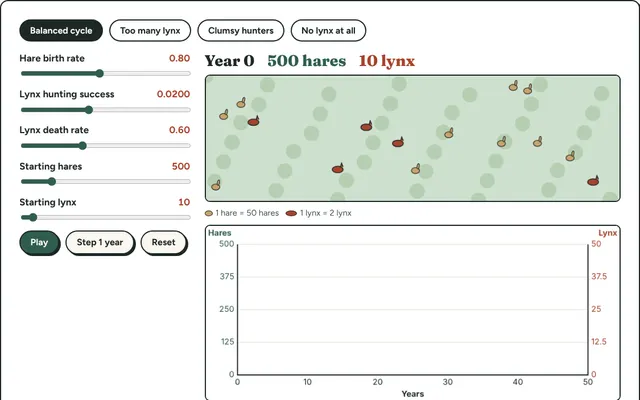
Predator and Prey
Run a simulated meadow of hares and lynx. Change birth and hunting rates and watch the two populations rise and fall on a live graph.
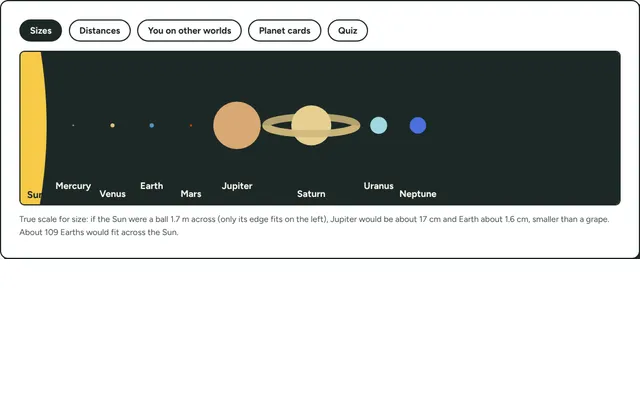
Solar System Scale
See the planets at true scale for size and distance, find your weight and age on each one, and work out how long light takes to reach them.