Predator and Prey
Run a simulated meadow of hares and lynx. Change birth and hunting rates and watch the two populations rise and fall on a live graph.
1 hare = 50 hares 1 lynx = 2 lynx
How to use it
Pick a scenario and press Play. Hares (green line, left scale) eat plants and have babies; lynx (red line, right scale) eat hares. Change a slider while it runs to see what happens, or press Reset to start again from the starting numbers. One year passes about every second.
Try predicting first: if lynx get better at hunting, will there be more lynx or fewer in the long run? (Surprise: often fewer hares, and about the same or fewer lynx.)
Why the numbers go round in cycles
When there are lots of hares, lynx find food easily, raise more kittens and their numbers climb. Soon the many lynx eat hares faster than hares can be born, so the hares crash. With little to eat, lynx starve or have no young, and their numbers fall a year or two later. With few lynx left, the hares recover, and the cycle starts again. The lynx peak always comes after the hare peak. If predators are too successful, they wipe out their own food and then die out too.
This is a classic real story from Canada. The Hudson's Bay Company kept records of snowshoe hare and Canada lynx furs bought from trappers for about a hundred years (roughly 1845 to 1935). Ecologists found the counts rose and fell about every 10 years, with lynx following hares. Fur counts depended on trapping too, and later field studies in the Yukon (such as at Kluane Lake) showed that food supply, predators and stress all play a part in the real hare cycle. The model here uses the Lotka–Volterra equations with a limit on how many hares the meadow can feed (8000), so it is a simplified picture, not a forecast.
- Read the graph: how many years between hare peaks? Does the lynx peak come before or after?
- What happens to the hares when there are no lynx at all? Why do they level off?
- Which scenario is best for the lynx in the long run, and why?
Free to use, no account needed. It runs in your browser: nothing you type, and no sound from your microphone, is sent to Fieldbook.
Hands-on lessons to pair with Predator and Prey
Ready-to-teach units, each lesson a printable teacher guide and student sheet. Your first three lessons are free.
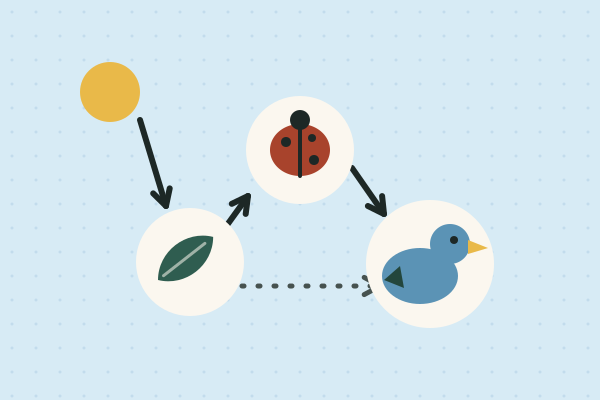
Food Webs: Who Eats Whom?
Where a plant's food comes from, what happens when the wolves disappear, who cleans up, and how much life hides under a log. Four lessons on how energy and matter move through living things.
Our Living Planet
Air, water, land and living things, and how each one depends on the others. Students build a sealed jar ecosystem to keep for a month and catch the water cycle in a bag on the window.
Earth Day Investigations: Make Your School Better
Four hands-on investigations into the school's own garbage, shade, water and electricity. Each one ends with students taking a real, evidence-based recommendation to the principal or caretaker.
Three full lessons, free
Make a free account and download any three Fieldbook lessons, from any grade or subject, as printable PDFs. No card needed.
More free classroom tools
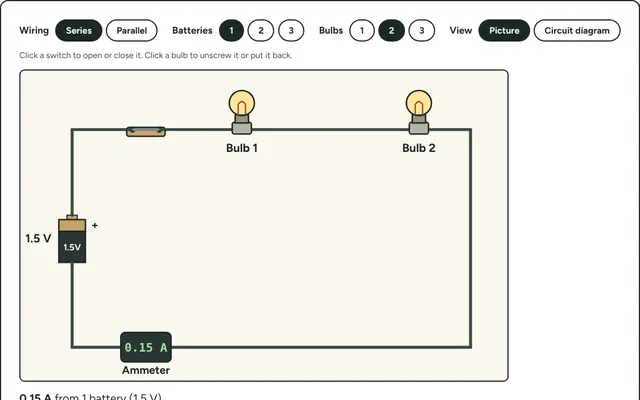
Circuit Lab
Wire batteries and bulbs in series or parallel, flip switches and see which bulbs light, how bright, and how much current flows.
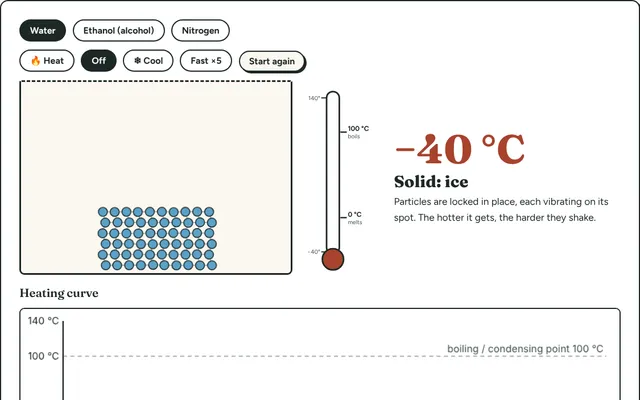
States of Matter
Heat and cool a box of particles and watch them pack into a solid, slide as a liquid and fly apart as a gas, with a live thermometer.
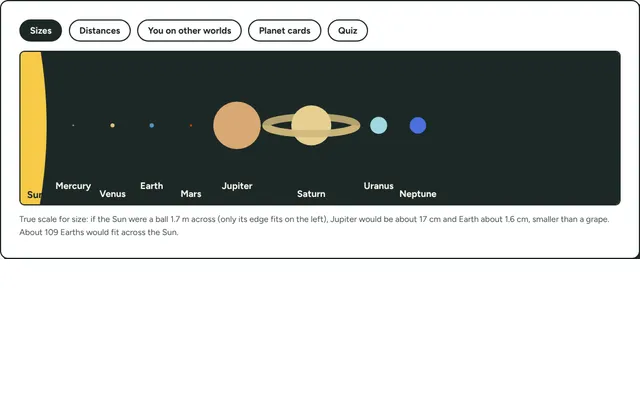
Solar System Scale
See the planets at true scale for size and distance, find your weight and age on each one, and work out how long light takes to reach them.
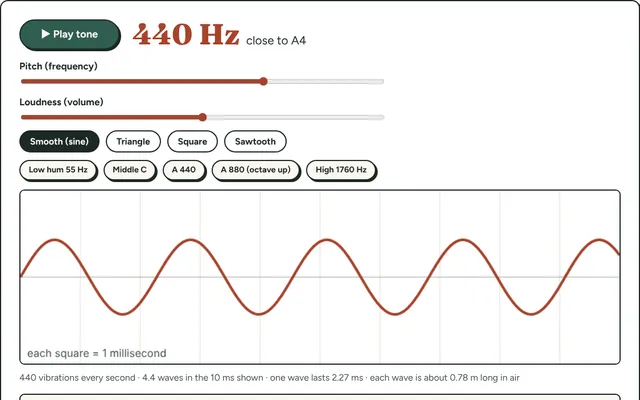
Sound Wave Lab
Play a tone, change its pitch and loudness, and watch the wave change shape. Includes a live microphone wave view to see your own voice.
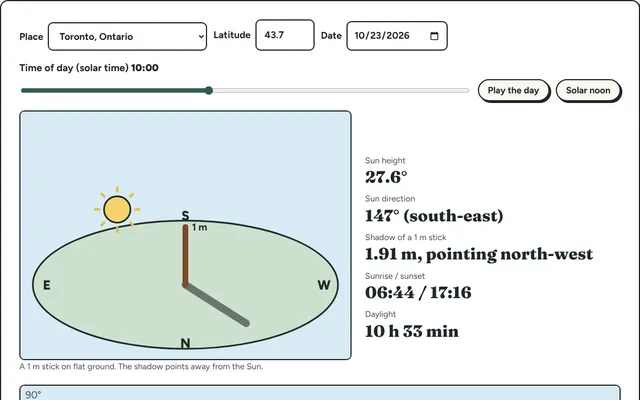
Sun and Shadow
Move through the day and the year to see where the Sun is in the sky, how long a stick's shadow is, and how many hours of daylight any latitude gets.
Sink or Float
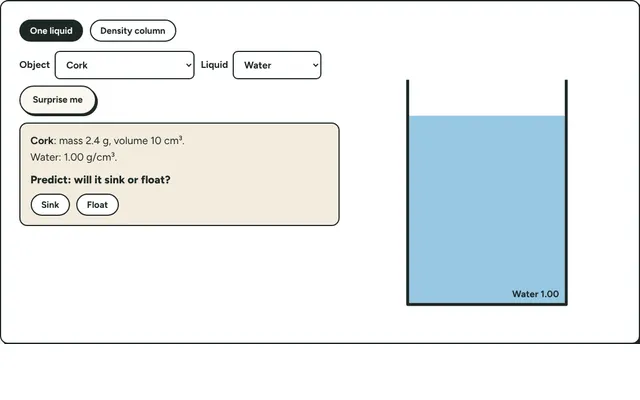
Drop objects into water, oil, salt water or syrup. Predict first, then see what sinks and floats and why, using mass, volume and density.