Circuit Lab
Wire batteries and bulbs in series or parallel, flip switches and see which bulbs light, how bright, and how much current flows.
Click a switch to open or close it. Click a bulb to unscrew it or put it back.
How to use it
Choose how many batteries and bulbs, then wire the bulbs in series (one loop, one after another) or parallel (each bulb on its own branch with its own switch). Click switches and bulbs right on the drawing. The ammeter shows the current leaving the batteries, and the readout lists the voltage, current and brightness of each bulb. Switch to Circuit diagram to see the same circuit drawn with standard symbols.
The Challenge asks students to predict before they test. Each question describes its own circuit; after each answer, the lab builds that circuit so students can check.
The science: current needs a complete loop
Electric current only flows around a complete, unbroken path from one end of the battery to the other. Opening a switch or removing a bulb breaks the path. In a series circuit there is only one path, so every bulb goes out. In a parallel circuit each bulb has its own path, so the others stay on, just as bright. That is why the lights in your home are wired in parallel.
Each battery here gives 1.5 volts, and each bulb has a resistance of 5 ohms. Ohm's law says current = voltage ÷ resistance. Bulbs in series share the battery's voltage, so two bulbs in series each get half and glow much dimmer (a quarter of the power). Bulbs in parallel each get the full voltage, so they are as bright as a single bulb, but the battery has to push more total current and runs down faster. Adding batteries in series adds their voltages. The model treats batteries as perfect and bulbs as fixed resistors; real bulbs and batteries change a little as they warm up and wear out.
Free to use, no account needed. It runs in your browser: nothing you type, and no sound from your microphone, is sent to Fieldbook.
Hands-on lessons to pair with Circuit Lab
Ready-to-teach units, each lesson a printable teacher guide and student sheet. Your first three lessons are free.
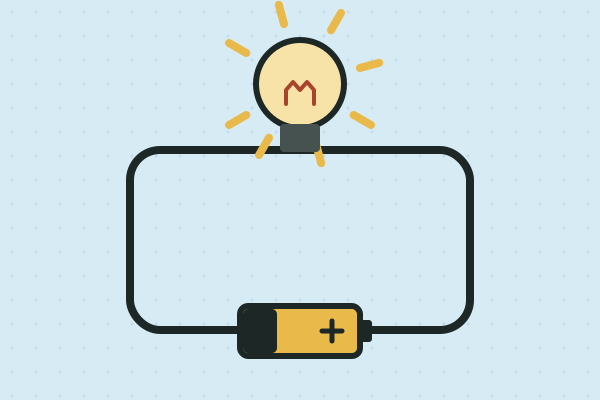
Simple Circuits: Make It Light Up
Light a bulb with one wire, hunt for materials that let electricity through, find out why string lights all go dark at once, and build a burglar alarm. Four hands-on lessons on closed loops, safe and cheap.
Power Up: Where Electricity Comes From
Where does the electricity in our classroom come from, and why is it made differently in different places? Students trace the wires, build a wind machine that does real work, and weigh up solar power like an energy planner.

Build It, Launch It
Egg drops, paper planes and balloon rockets, done properly at home. Three engineering challenges where kids build, test, fix and explain the pushes and pulls behind what happened.
Three full lessons, free
Make a free account and download any three Fieldbook lessons, from any grade or subject, as printable PDFs. No card needed.
More free classroom tools
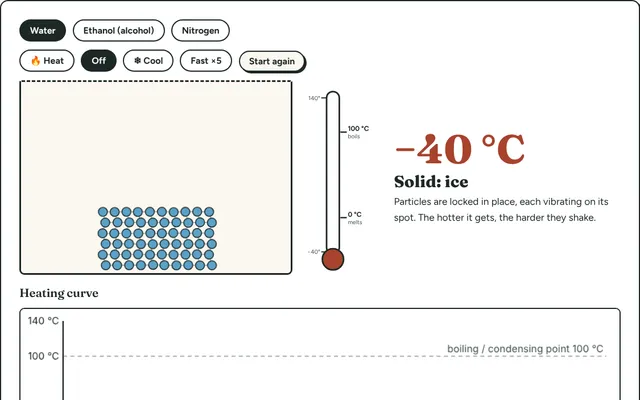
States of Matter
Heat and cool a box of particles and watch them pack into a solid, slide as a liquid and fly apart as a gas, with a live thermometer.
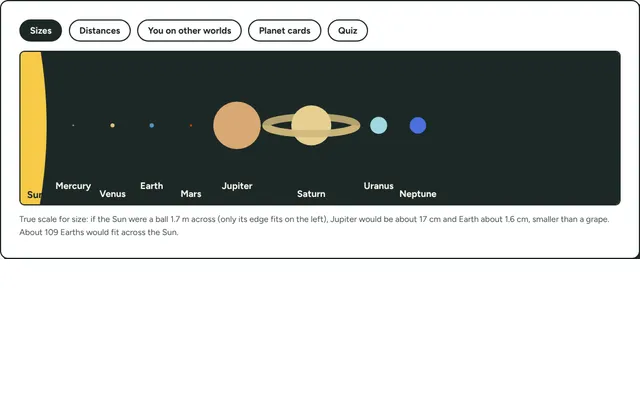
Solar System Scale
See the planets at true scale for size and distance, find your weight and age on each one, and work out how long light takes to reach them.
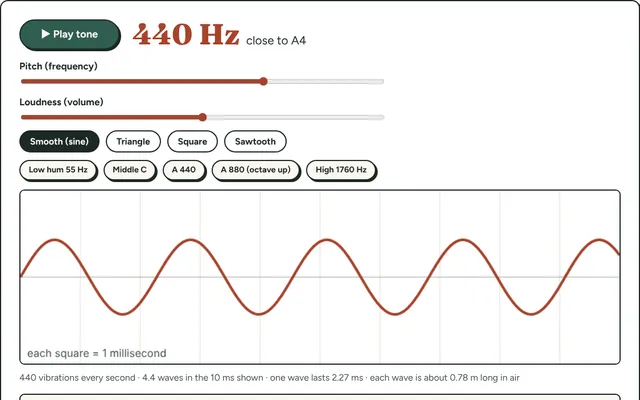
Sound Wave Lab
Play a tone, change its pitch and loudness, and watch the wave change shape. Includes a live microphone wave view to see your own voice.
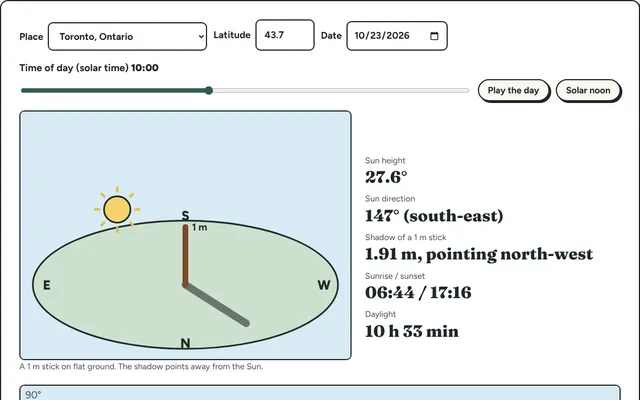
Sun and Shadow
Move through the day and the year to see where the Sun is in the sky, how long a stick's shadow is, and how many hours of daylight any latitude gets.
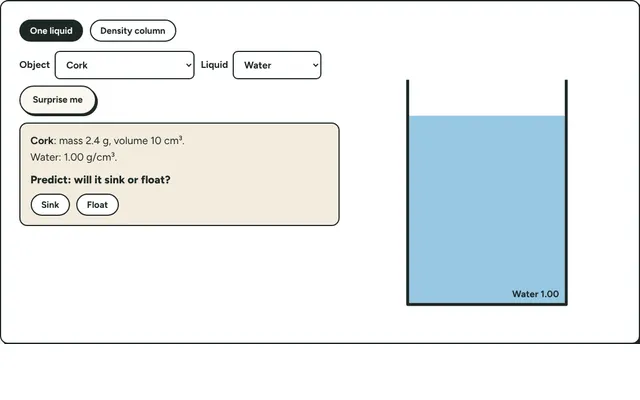
Sink or Float
Drop objects into water, oil, salt water or syrup. Predict first, then see what sinks and floats and why, using mass, volume and density.
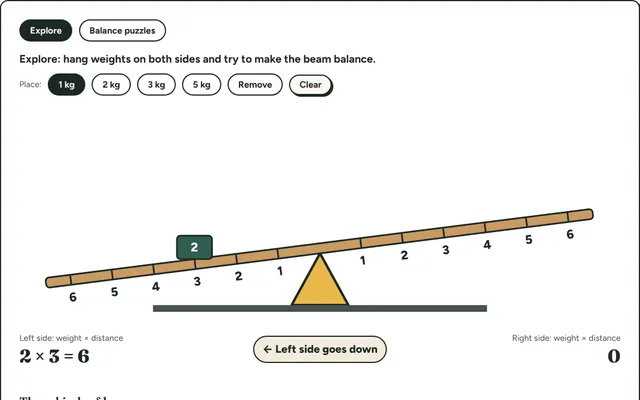
Lever Lab
Put weights on a seesaw and balance it. Discover the law of the lever (weight times distance) by experiment, then solve balance puzzles.