States of Matter
Heat and cool a box of particles and watch them pack into a solid, slide as a liquid and fly apart as a gas, with a live thermometer.
Heating curve
How to use it
Choose a substance, then press Heat and watch. The particles start locked in a solid, vibrating in place. Keep heating and they break free and slide past each other as a liquid, then fly apart as a gas. Press Cool to run it backwards, or Fast ×5 if boiling is taking too long. The graph draws the heating (or cooling) curve as you go.
Before heating, ask students to sketch what they think the graph will look like. Then compare. The flat parts surprise almost everyone.
Why the graph goes flat
All matter is made of tiny particles that are always moving. Temperature is a measure of how fast they move on average. In a solid the particles are held tightly in place and can only vibrate. In a liquid they are still close together but can slide past one another, so a liquid flows and takes the shape of its container. In a gas they are far apart and zoom around freely, filling the whole container.
While a solid is melting, the heat goes into breaking particles free from their places, not into making them move faster, so the temperature stays at the melting point until it has all melted. The same thing happens at the boiling point, and that plateau is much longer because pulling particles completely apart takes far more energy: boiling a gram of water away takes about five times the energy needed to warm it from 0 °C to 100 °C. Cooling runs the same steps in reverse: condensing and freezing give that energy back.
Melting and boiling points shown are at normal air pressure: water 0 °C and 100 °C, ethanol −114 °C and 78 °C, nitrogen −210 °C and −196 °C. Real liquids also evaporate slowly below their boiling point; this simulation shows only boiling. The box shows a handful of particles; a real drop of water holds more than a billion trillion.
Free to use, no account needed. It runs in your browser: nothing you type, and no sound from your microphone, is sent to Fieldbook.
Hands-on lessons to pair with States of Matter
Ready-to-teach units, each lesson a printable teacher guide and student sheet. Your first three lessons are free.
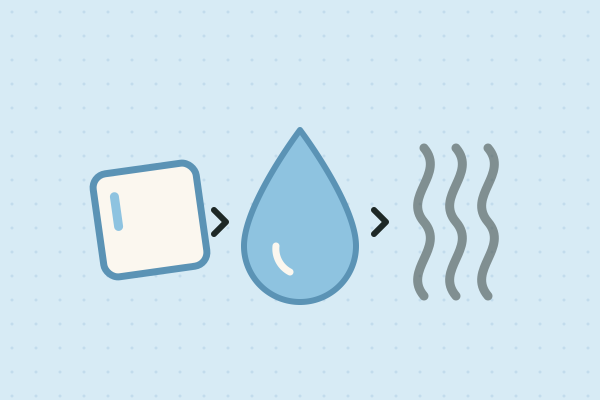
Solids, Liquids and Gases
Where does a puddle go? Why does ice float? A first look at the tiny particles that explain the stuff around us.
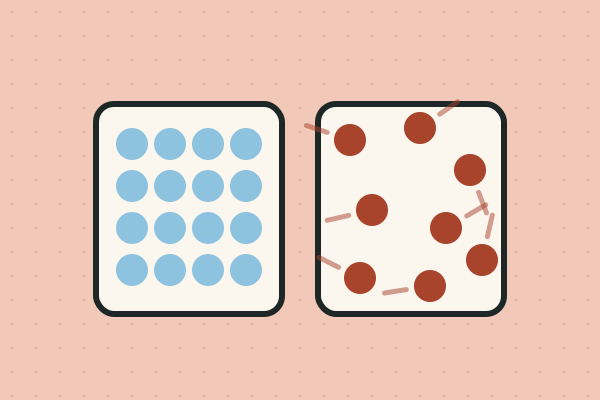
Hot and Cold: Particles on the Move
Why tires go soft in winter, why sidewalks have gaps, and how a thermometer knows. Five lessons on what heating and cooling do to the particles in everything around us.
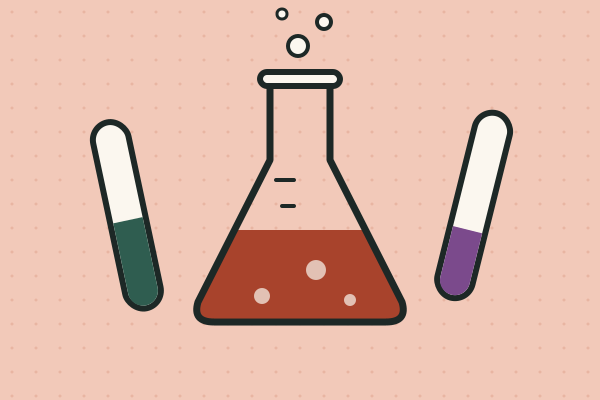
Kitchen Chemistry
Fizzing, curdling and colour changes with things from the grocery store. Students gather evidence of new substances, weigh a reaction in a sealed bottle, and turn red cabbage into an acid detector.
Three full lessons, free
Make a free account and download any three Fieldbook lessons, from any grade or subject, as printable PDFs. No card needed.
More free classroom tools
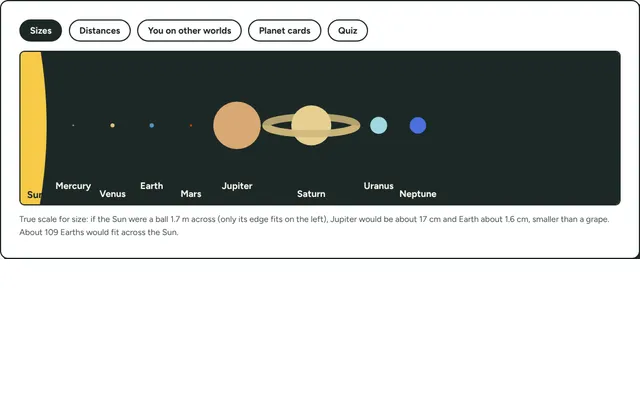
Solar System Scale
See the planets at true scale for size and distance, find your weight and age on each one, and work out how long light takes to reach them.
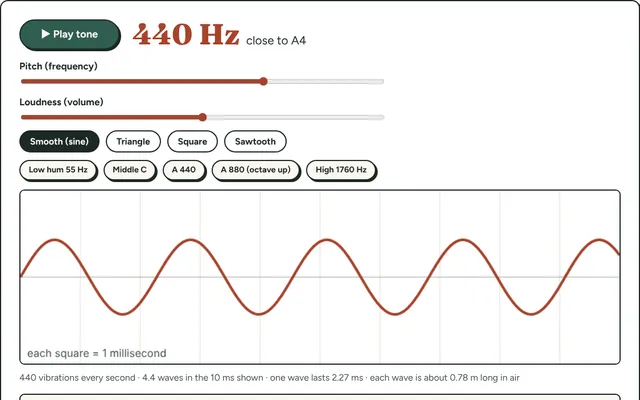
Sound Wave Lab
Play a tone, change its pitch and loudness, and watch the wave change shape. Includes a live microphone wave view to see your own voice.
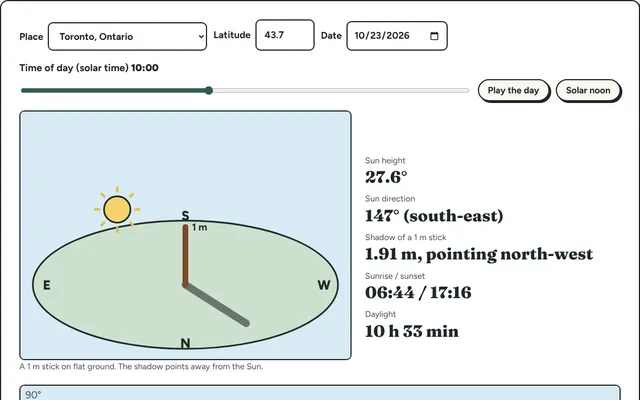
Sun and Shadow
Move through the day and the year to see where the Sun is in the sky, how long a stick's shadow is, and how many hours of daylight any latitude gets.
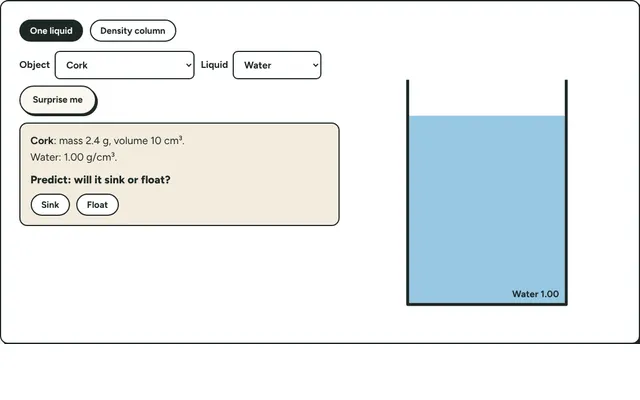
Sink or Float
Drop objects into water, oil, salt water or syrup. Predict first, then see what sinks and floats and why, using mass, volume and density.
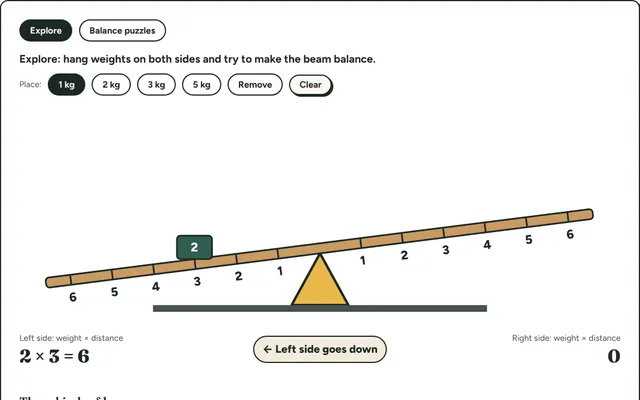
Lever Lab
Put weights on a seesaw and balance it. Discover the law of the lever (weight times distance) by experiment, then solve balance puzzles.
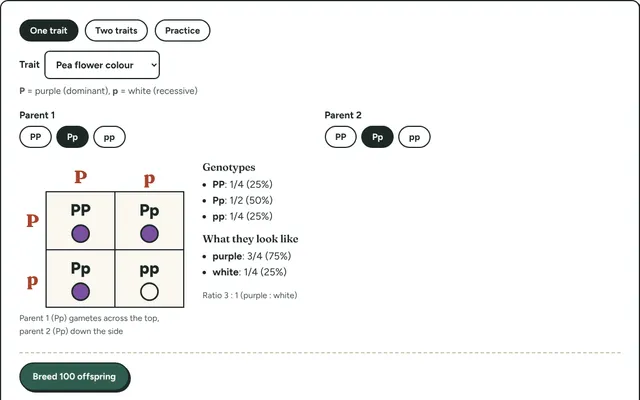
Punnett Squares
Cross two parents and see every possible offspring, with the ratios of genotypes and traits, plus a breeding simulator to test the prediction.