Coordinate Hunt
Find hidden treasure by plotting and reading points on a coordinate grid. First quadrant for beginners, all four quadrants for grade 6 and up.
How to use it
In Treasure hunt, the treasure is buried at a crossing point. Click a point or type its coordinates to dig; the hint tells you how close you are and which way to go. Plot the point asks you to put a point in the right place; Read the point asks you to name one. Draw a picture joins points with lines: plot your own, or load a mystery list of points and see what appears.
Start with the first quadrant (0 to 10). Grade 6 and up can switch to all four quadrants with negative numbers.
Reading coordinates
A point is named by an ordered pair (x, y). The x-coordinate says how far to go across from the origin (0, 0): right for positive, left for negative. The y-coordinate says how far to go up (positive) or down (negative). Order matters: (2, 5) and (5, 2) are different points. A common memory aid is "along the corridor, then up the stairs."
The two axes split the plane into four quadrants. In quadrant I both numbers are positive; in II, x is negative; in III both are negative; in IV, y is negative. The hot-and-cold hint uses straight-line distance, so students can also reason about how far apart two points are.
- If (3, 4) is "cold", which points can you rule out?
- What do all the points on the x-axis have in common?
- Design a mystery picture for a partner: write the list of points, swap, and plot.
Free to use, no account needed. It runs in your browser: nothing you type, and no sound from your microphone, is sent to Fieldbook.
Hands-on lessons to pair with Coordinate Hunt
Ready-to-teach units, each lesson a printable teacher guide and student sheet. Your first three lessons are free.

Data Detectives
How fast are our reflexes? Which graph is telling the truth? Do taller people really have bigger hands? Three lessons where students collect their own measurements and find out what numbers can and can't tell you.
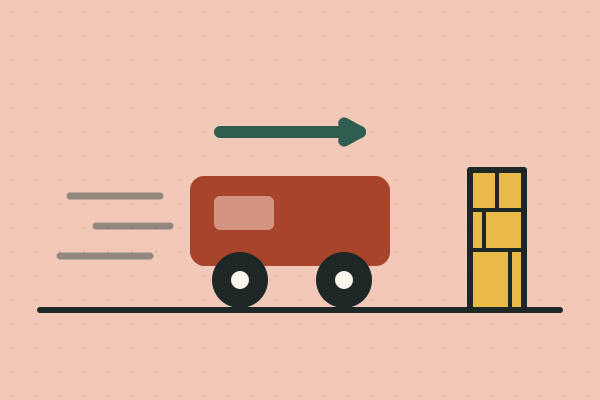
Forces and Motion: Crash, Push and Stop
Why you lurch forward when the bus brakes, how fast a toy car really goes, why heavier carts hit harder, and how to build a crumple zone that saves an egg. Four lessons on inertia, speed, mass and stopping safely.
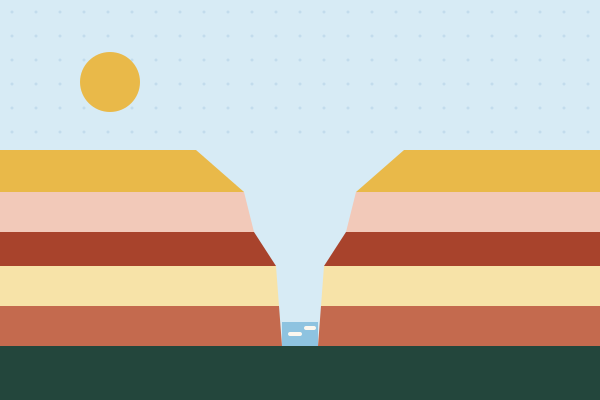
Rocks and Erosion: How Land Changes Shape
Why some rocks scratch and some fizz, how a trickle of water carves a canyon, what keeps a hillside in place, and how a boulder ends up as sand. Four hands-on lessons on rocks, weathering and erosion.
Three full lessons, free
Make a free account and download any three Fieldbook lessons, from any grade or subject, as printable PDFs. No card needed.
More free classroom tools
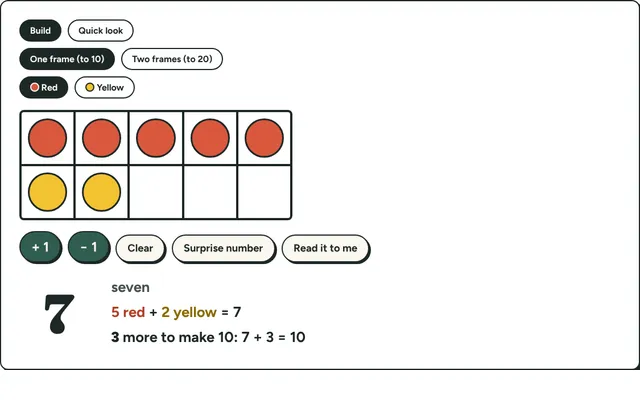
Ten Frames
Fill ten frames with counters to show numbers to 20, make ten and practise quick looks. Early number sense for kindergarten to grade 2.
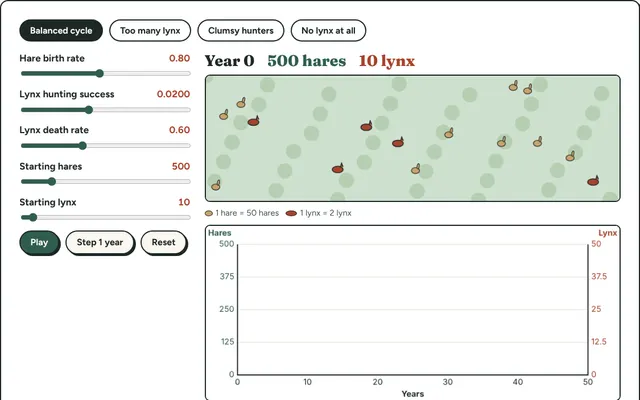
Predator and Prey
Run a simulated meadow of hares and lynx. Change birth and hunting rates and watch the two populations rise and fall on a live graph.
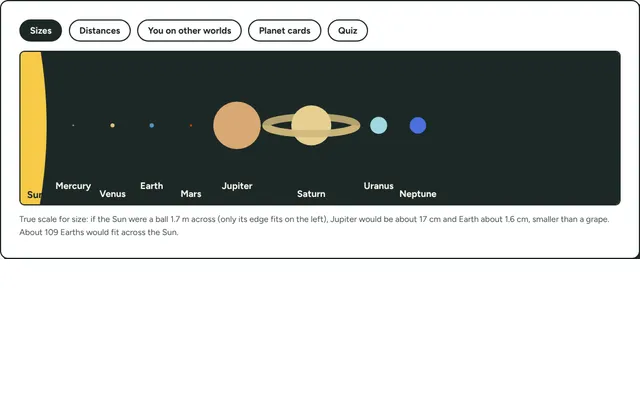
Solar System Scale
See the planets at true scale for size and distance, find your weight and age on each one, and work out how long light takes to reach them.
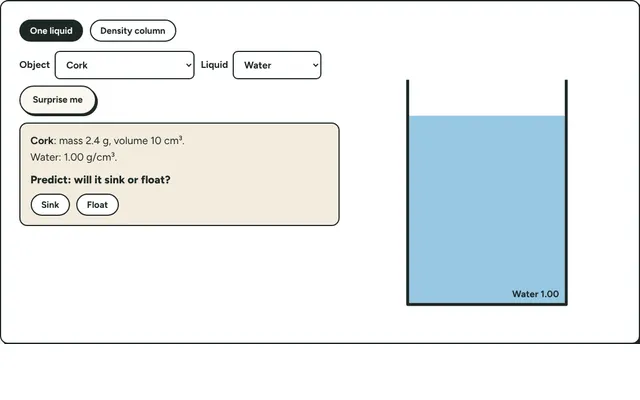
Sink or Float
Drop objects into water, oil, salt water or syrup. Predict first, then see what sinks and floats and why, using mass, volume and density.
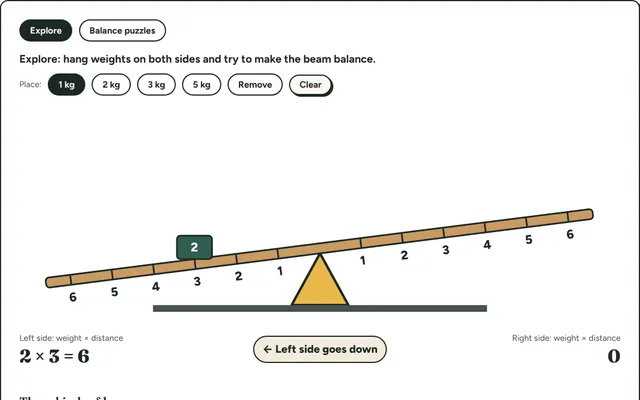
Lever Lab
Put weights on a seesaw and balance it. Discover the law of the lever (weight times distance) by experiment, then solve balance puzzles.
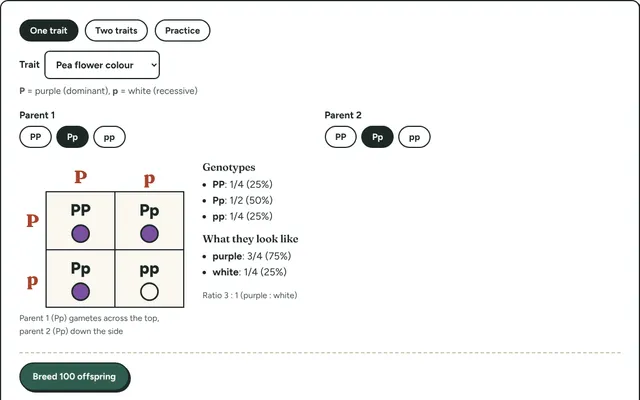
Punnett Squares
Cross two parents and see every possible offspring, with the ratios of genotypes and traits, plus a breeding simulator to test the prediction.