Ten Frames
Fill ten frames with counters to show numbers to 20, make ten and practise quick looks. Early number sense for kindergarten to grade 2.
How to use it
Build: tap a box to put a counter in it, and tap again to take it out. Pick red or yellow first to show a number in two parts, like 7 = 5 + 2. The tool says how many there are, the number sentence and how many more make 10 (or 20). Read it to me says it out loud on devices that can speak.
Quick look: press Show me!. The frame appears for a moment, then hides. Tap how many counters you saw. Start with 3 seconds and shorten it as children get faster.
Why ten frames work
A ten frame is two rows of five. Children learn to "see" amounts without counting one by one (this is called subitizing): a full top row is 5, a full frame is 10, 7 is "5 and 2 more", and 8 is "2 empty, so 2 less than 10". These are the facts that make adding and subtracting easier later, especially making 10 (8 + 2, 7 + 3) and working with teen numbers as "10 and some more".
In a quick look, children can't count each counter, so they have to use the structure. Ask "How did you know?" Answers like "the top row was full and there were 3 more" show the strategy you're hoping for.
- Show 6. How many more to make 10? How do you know without counting?
- Use two colours to show all the ways to make 10: 9 + 1, 8 + 2, 7 + 3…
- With two frames, show 14 as "a full ten and 4 more".
Free to use, no account needed. It runs in your browser: nothing you type, and no sound from your microphone, is sent to Fieldbook.
Hands-on lessons to pair with Ten Frames
Ready-to-teach units, each lesson a printable teacher guide and student sheet. Your first three lessons are free.

Weather Watchers: What Will the Sky Do Today?
Is it sunny, windy or wet today, and how can we tell? Young scientists keep a class weather chart for two weeks, build wind socks to catch the wind and make a rain gauge from a bottle to measure the rain.
Plants and Seeds: What Does a Seed Need?
What's hiding inside a bean, and what does it need to wake up and grow? Young scientists open soaked seeds, sprout beans in bags and watch seedlings bend to find the light.
Sound: Can You See a Sound?
Can you see a sound? Young scientists make rice dance on a drum, talk through a string telephone and build a rubber-band guitar to find out that every sound starts with something shaking.
Three full lessons, free
Make a free account and download any three Fieldbook lessons, from any grade or subject, as printable PDFs. No card needed.
More free classroom tools
Predator and Prey
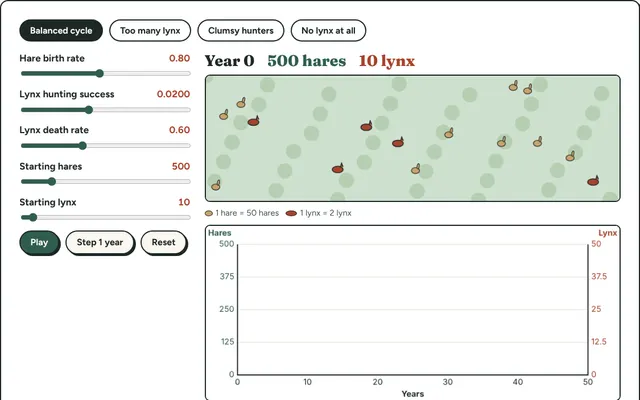
Run a simulated meadow of hares and lynx. Change birth and hunting rates and watch the two populations rise and fall on a live graph.
Solar System Scale
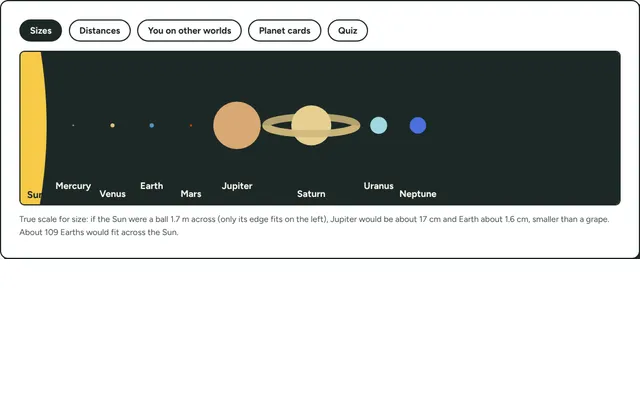
See the planets at true scale for size and distance, find your weight and age on each one, and work out how long light takes to reach them.
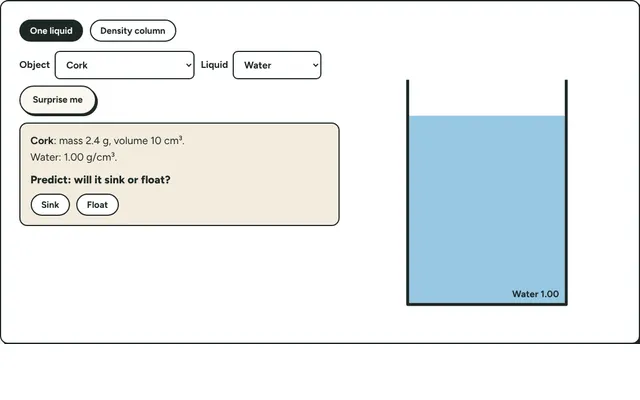
Sink or Float
Drop objects into water, oil, salt water or syrup. Predict first, then see what sinks and floats and why, using mass, volume and density.
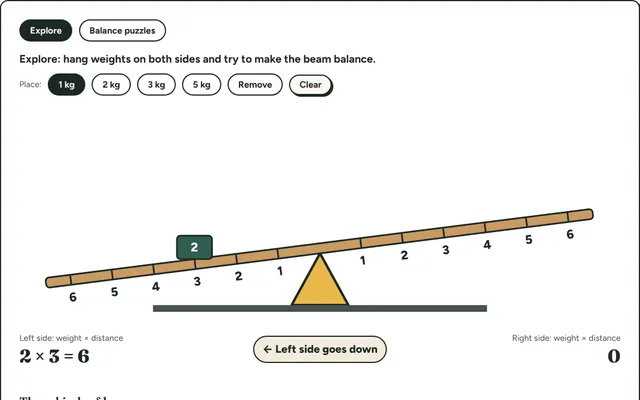
Lever Lab
Put weights on a seesaw and balance it. Discover the law of the lever (weight times distance) by experiment, then solve balance puzzles.
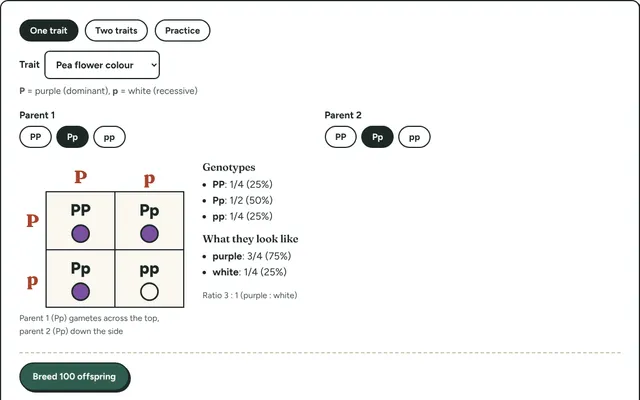
Punnett Squares
Cross two parents and see every possible offspring, with the ratios of genotypes and traits, plus a breeding simulator to test the prediction.
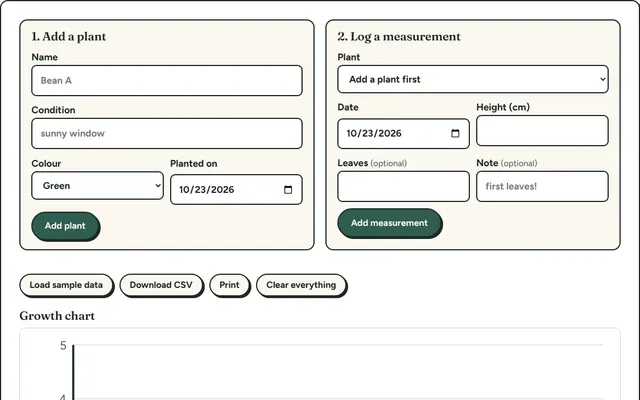
Plant Growth Journal
Log your class plants' height every few days and get a growth chart that compares plants or conditions. Saved on your device, ready to print.