Number Line Hops
Show addition, subtraction and skip counting as jumps along a number line, with whole numbers, negatives or decimals.
How to use it
Choose whole numbers or tenths and set the ends of the line (negatives are fine). Pick a start, an operation and a jump size, then press Hop! The hops are drawn one at a time and the matching equation is written above the line. Skip counting makes several equal hops, the way you count by 2s, 5s or 0.5s.
The two challenges use the line you set. In where does it land? you see the start and the jump and type the landing number. In what jump was made? you see where it started and stopped and type the jump with its direction, such as +6 or −3.
The math: adding moves right, subtracting moves left
A number line puts every number in order, evenly spaced. Adding a positive number is a hop to the right; subtracting is a hop to the left. The length of the hop is the same wherever it starts, so 3 + 4 and 13 + 4 are the same-sized jump. Skip counting is repeated addition: four hops of 5 from 0 lands on 20, which is also 4 × 5.
Below zero the same rules hold. Starting at 2 and subtracting 5 crosses zero and lands on −3, like a thermometer dropping 5 degrees from 2 °C. With tenths, each whole is cut into ten equal steps, so 1.7 + 0.5 lands on 2.2.
- Start at −4 and add 6. Where do you land? What temperature story could this be?
- Count down by 3 from 20. Do you land on 0? Why or why not?
- Which is further from 0: −7 or 5?
Free to use, no account needed. It runs in your browser: nothing you type, and no sound from your microphone, is sent to Fieldbook.
Hands-on lessons to pair with Number Line Hops
Ready-to-teach units, each lesson a printable teacher guide and student sheet. Your first three lessons are free.
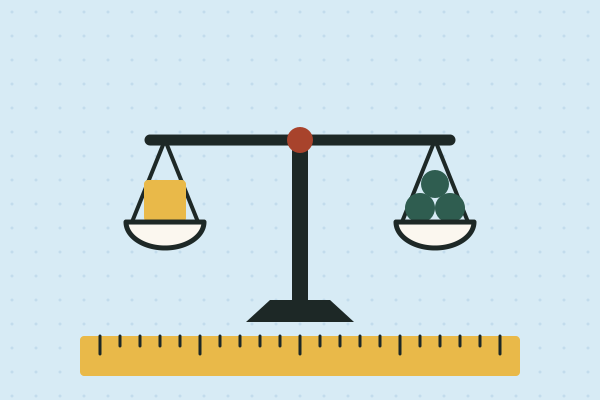
Measure It: Length, Time and Mass in the Real World
Whose foot is the right ruler? How long is a minute, really? Is a kilogram of feathers lighter than a kilogram of rocks? Four lessons where students measure length, time and mass with real tools, then use their own data to settle an argument.
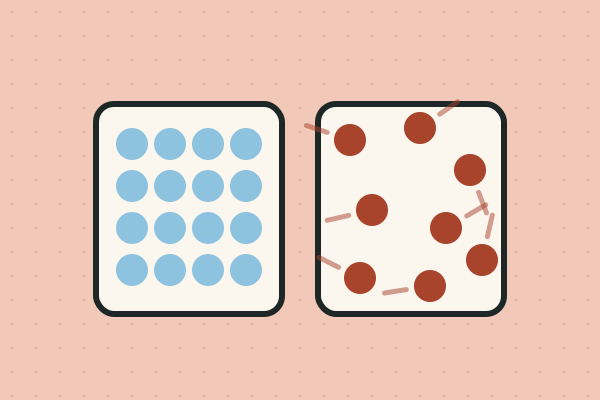
Hot and Cold: Particles on the Move
Why tires go soft in winter, why sidewalks have gaps, and how a thermometer knows. Five lessons on what heating and cooling do to the particles in everything around us.
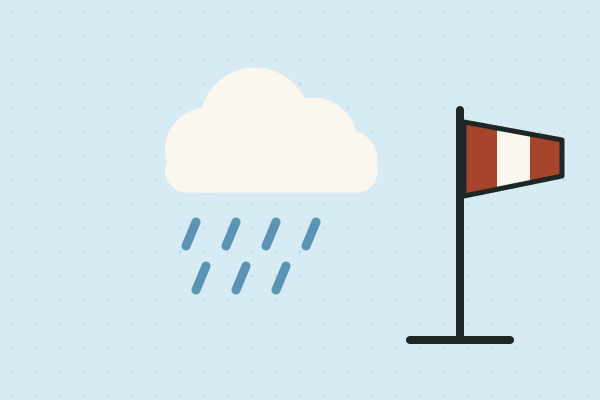
Weather Detectives
Warm winter winds, the hottest spot in the schoolyard and the last frost of spring. Students measure weather fairly and find out why farmers care so much about it.
Three full lessons, free
Make a free account and download any three Fieldbook lessons, from any grade or subject, as printable PDFs. No card needed.
More free classroom tools
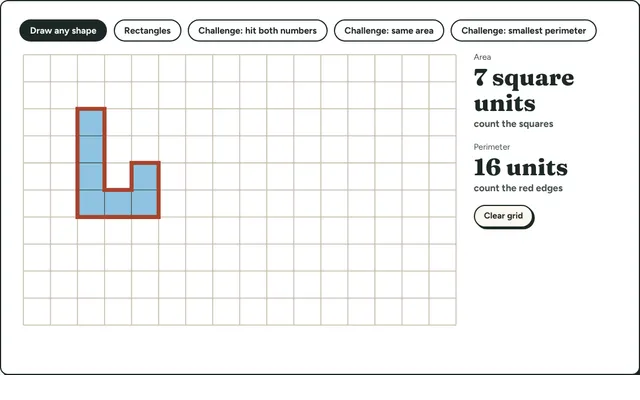
Area and Perimeter Builder
Draw shapes on a square grid and watch the area and perimeter count up. Challenges ask for shapes with the same area but different perimeters.
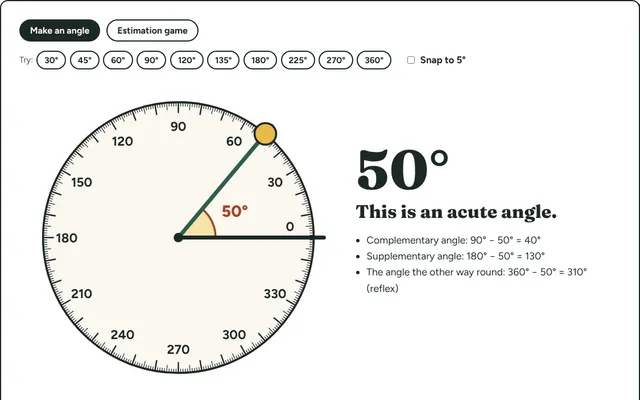
Angle Maker
Turn a ray around an on-screen protractor to make and measure angles, name them acute, right, obtuse or reflex, then estimate angles in a game.
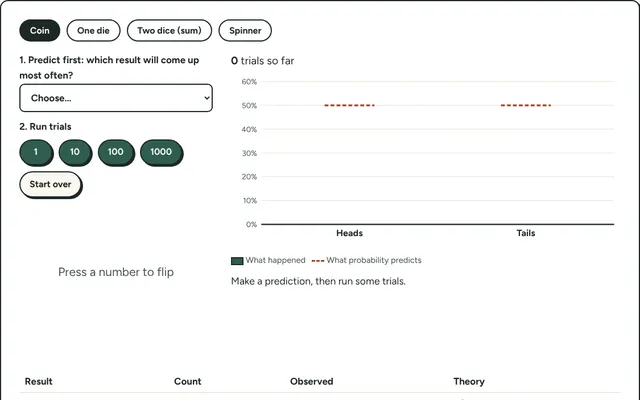
Probability Lab
Flip coins, roll dice or spin a spinner hundreds of times and compare what happened with what probability predicts.
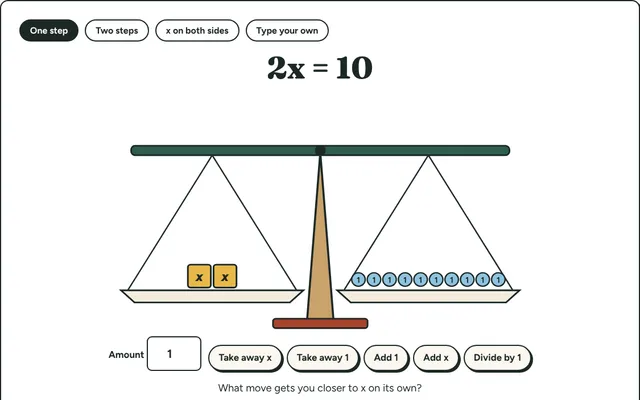
Equation Balance
Solve equations on a balance scale: do the same thing to both sides until x stands alone. Step-by-step algebra for grades 6 to 8.
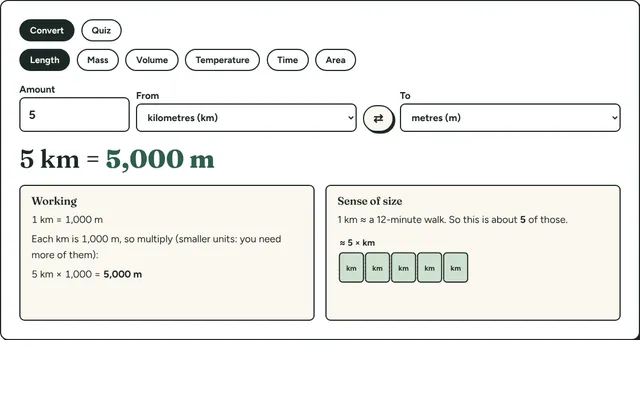
Measurement Converter
Convert length, mass, volume, temperature and time between metric and imperial units, with the working shown and a sense-of-size picture for each.
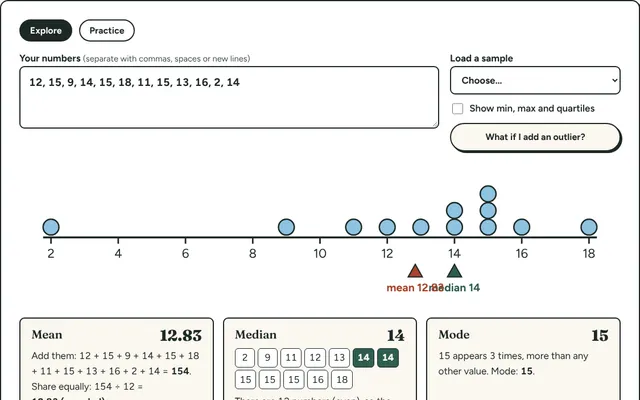
Mean, Median and Mode
Type in a set of numbers and see the mean, median, mode and range worked out step by step, with a dot plot that shows where each one sits.