Dice Roller
Roll up to six big dice for games and math centres: regular six-sided dice or 4, 8, 10, 12 and 20-sided ones, with the total and a tally of every roll.
Tally of totals
Dice Roller · free from Fieldbook Learning
How to use it
Choose how many dice to roll (one to six) and how many sides they have: regular six-sided dice, or 4, 8, 10, 12 and 20-sided ones. Press Roll or the spacebar. Six-sided dice show pips; the others show a big number on a simple shape (a triangle for 4 sides, a diamond for 8, a pentagon for 12 and so on) so the whole class can read them from the back of the room. The dice tumble briefly, unless your device is set to reduce motion.
Click a die to hold it: it keeps its number on the next roll. Turn on Give each die its own colour so students can say "the blue die" and "the yellow die". Under Show as, pick the plain total, the sum written out (3 + 5 = 8), or, with two dice, the difference or the product. The tally under the dice counts every total so far as a bar chart. Changing the number of dice or sides starts a new tally, and Clear tally starts one any time. Use the Full screen button for a projector.
Math centre games with virtual dice
- Race to 100: partners take turns rolling two dice and adding the total to their score. The first to reach 100 wins.
- Addition and multiplication facts: set Show as to Sum written out or Product and have students say the answer before you reveal it. Hold one die on 6 to practise just the 6 times table or "6 plus" facts.
- Difference: with two dice, students find how far apart the numbers are. Who can find two rolls with the same difference?
- Place-value dice: roll three ten-sided dice and arrange the digits to make the largest (or smallest) three-digit number you can. Ask students to read the number aloud and name the value of each digit.
Why 7 comes up most with two dice
Roll two six-sided dice a few dozen times and watch the tally. Each die has 6 faces, so there are 6 × 6 = 36 equally likely pairs. Six of those pairs add to 7 (1 + 6, 2 + 5, 3 + 4, 4 + 3, 5 + 2, 6 + 1), but only one pair makes 2 and only one makes 12. That is why the bars slowly build a hill with 7 in the middle. With one die every number is equally likely, so the bars stay roughly level. Short runs are bumpy; the more you roll, the clearer the shape.
- Before rolling, which total do you think will win with two dice? Why?
- Why can you never roll a total of 1 with two dice?
- What happens to the tally with one 20-sided die compared with two 10-sided dice?
Free to use, no account needed. It runs in your browser: nothing you type, and no sound from your microphone, is sent to Fieldbook.
Hands-on lessons to pair with Dice Roller
Ready-to-teach units, each lesson a printable teacher guide and student sheet. Your first three lessons are free.

Data Detectives
How fast are our reflexes? Which graph is telling the truth? Do taller people really have bigger hands? Three lessons where students collect their own measurements and find out what numbers can and can't tell you.

Evidence Lab
How do you know something is true? Students test a claim with their own measurements, find out why one result is never enough, and learn to tell strong evidence from weak.

Measure It: Length, Time and Mass in the Real World
Whose foot is the right ruler? How long is a minute, really? Is a kilogram of feathers lighter than a kilogram of rocks? Four lessons where students measure length, time and mass with real tools, then use their own data to settle an argument.
Three full lessons, free
Make a free account and download any three Fieldbook lessons, from any grade or subject, as printable PDFs. No card needed.
More free classroom tools
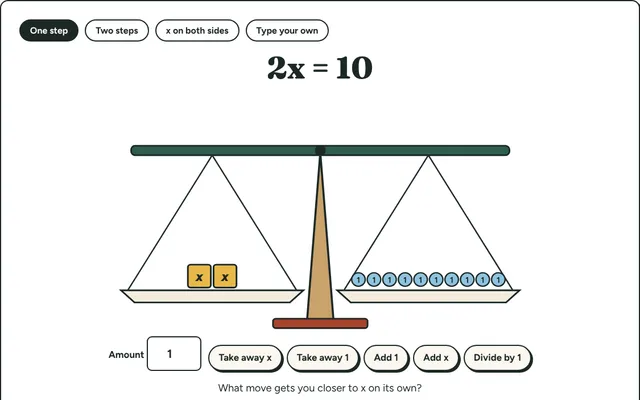
Equation Balance
Solve equations on a balance scale: do the same thing to both sides until x stands alone. Step-by-step algebra for grades 6 to 8.
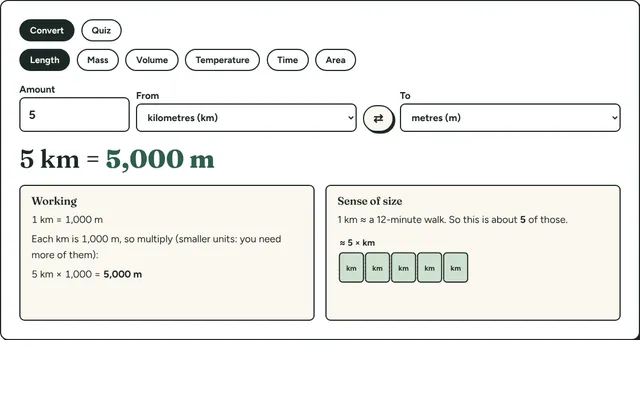
Measurement Converter
Convert length, mass, volume, temperature and time between metric and imperial units, with the working shown and a sense-of-size picture for each.
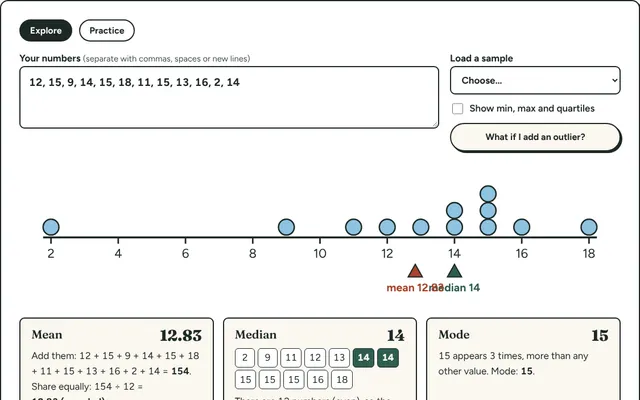
Mean, Median and Mode
Type in a set of numbers and see the mean, median, mode and range worked out step by step, with a dot plot that shows where each one sits.
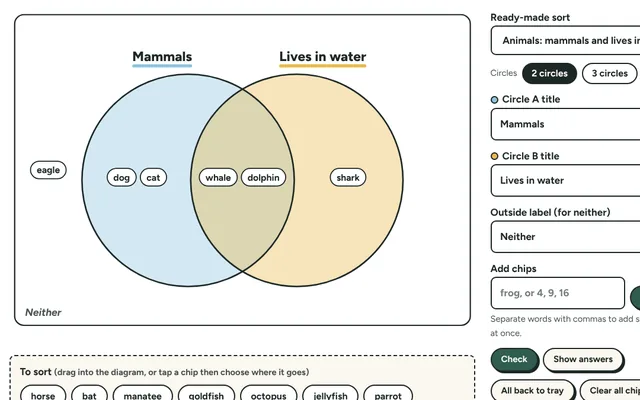
Venn Diagram Maker
Sort words, numbers or pictures into two or three overlapping circles. Start from a ready-made sort or type your own, then print the finished diagram.
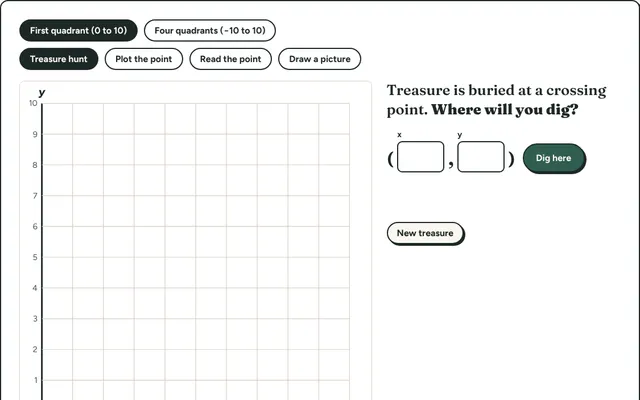
Coordinate Hunt
Find hidden treasure by plotting and reading points on a coordinate grid. First quadrant for beginners, all four quadrants for grade 6 and up.
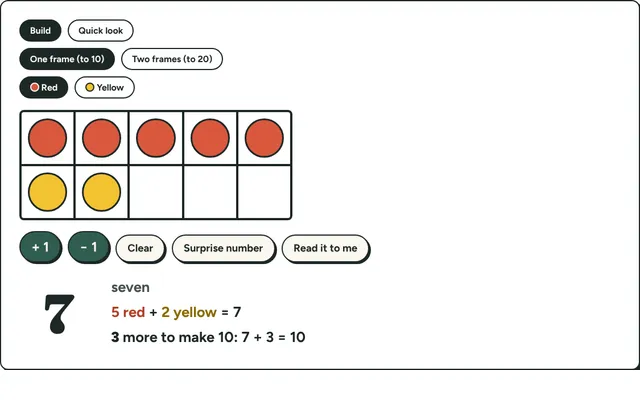
Ten Frames
Fill ten frames with counters to show numbers to 20, make ten and practise quick looks. Early number sense for kindergarten to grade 2.