Teaching Clock
A big analog clock with hands you can drag. The hour hand moves with the minute hand like a real clock, and the time shows in digital and in words.
The faded hands show the start. Move the hands forward to see how much time has passed.
Start
Now
Teaching Clock · free from Fieldbook Learning
How to use it
Drag the long red minute hand round the clock and the short hour hand moves with it, just like a real geared clock. Carry the minute hand past 12 and the hour moves on; wind it back past 12 and the hour goes back. Drag the short hand to jump by whole hours. Press Tab to reach a hand and use the arrow keys if you would rather not drag.
Choose how the minute hand snaps: to every minute, every 5 minutes or every quarter hour. Use the buttons to step the time, set the clock to Now, or pick a Random time at the snap you chose. Turn the digital time and the time in words on or off, so you can set a time, hide the answers and ask the class to read the analog clock. You can show am and pm, switch to the 24-hour clock, number the minutes round the edge, and shade the "past" and "to" halves of the face. Elapsed time marks a start time with faded hands, then counts the hours and minutes as you move the hands on. Use Full screen on the projector.
Teaching telling time on an analog clock
The hour hand never jumps from number to number. It creeps forward all hour, so at half past three it sits halfway between the 3 and the 4. Drag the minute hand slowly and let students watch: that is why we read the hour from the number the short hand has most recently passed. At twenty to four, the hour hand is close to 4, but it is still three-something.
Start with o'clock times, when the minute hand points straight up at 12. Then half past (the minute hand at 6, half way round) and quarter past and quarter to (a quarter of the way round, or a quarter still to go). Turn on the past and to shading: on the right side the minutes count up past the hour, on the left they count down to the next hour. Numbering the minutes round the edge helps students count in fives before they read the hand from the numbers alone.
For elapsed time, set a start, then count on: whole hours first, then the minutes that are left. Students can check their answer against the readout.
- Where is the hour hand at half past seven? Why is it not pointing at 7?
- The minute hand points at 9. Is it quarter past or quarter to? How do you know?
- What time will it be 45 minutes after 2:30?
- How long is it from twenty-five past ten to five past eleven?
- What is 3:40 pm on the 24-hour clock?
Free to use, no account needed. It runs in your browser: nothing you type, and no sound from your microphone, is sent to Fieldbook.
Hands-on lessons to pair with Teaching Clock
Ready-to-teach units, each lesson a printable teacher guide and student sheet. Your first three lessons are free.
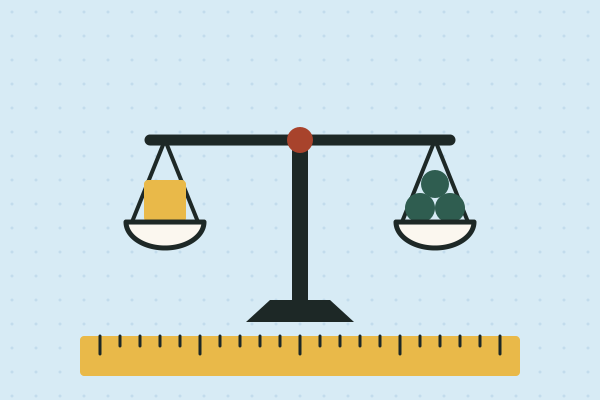
Measure It: Length, Time and Mass in the Real World
Whose foot is the right ruler? How long is a minute, really? Is a kilogram of feathers lighter than a kilogram of rocks? Four lessons where students measure length, time and mass with real tools, then use their own data to settle an argument.
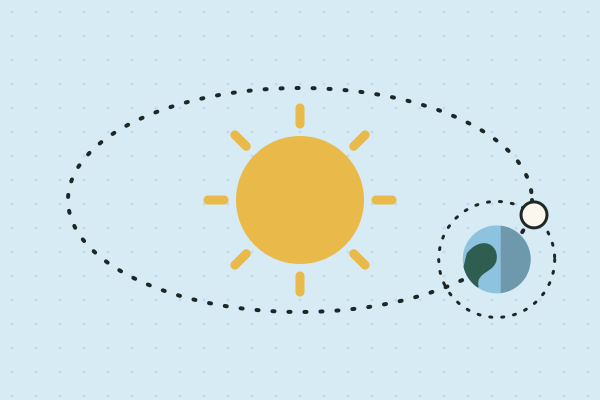
Sun, Earth and Moon
Why it's breakfast time in Calgary and bedtime in Singapore, why your shadow swings round the stick, why the Moon changes shape and why some places barely have seasons. Students build models with balls and lamps, track real shadows and read real sky data from cities around the world.
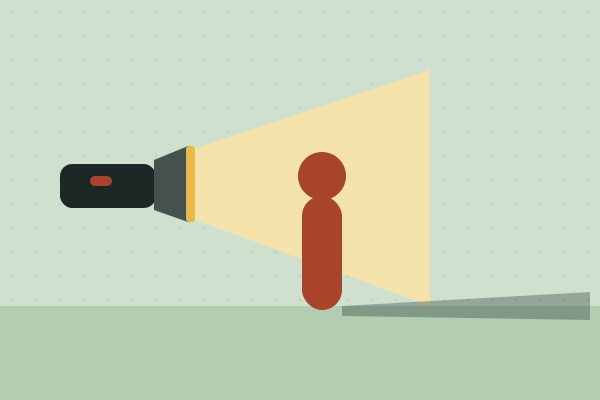
Light and Shadows
Why does my shadow follow me, and why is it so long in the morning? Young scientists chase their shadows, track the Sun across the day and test which things let light through.
Three full lessons, free
Make a free account and download any three Fieldbook lessons, from any grade or subject, as printable PDFs. No card needed.
More free classroom tools
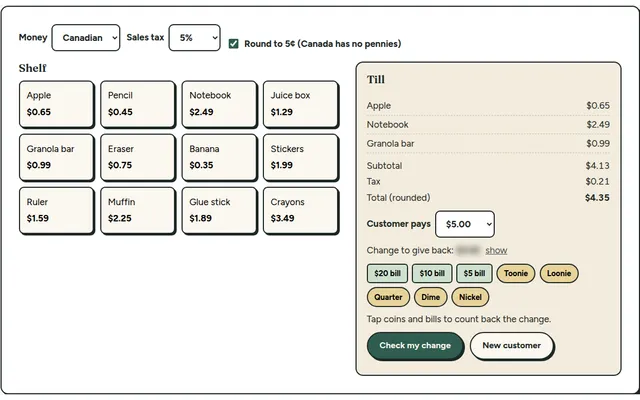
Corner Store
Ring up a pretend purchase, add sales tax and count back the change. Money practice with Canadian or US coins and bills.
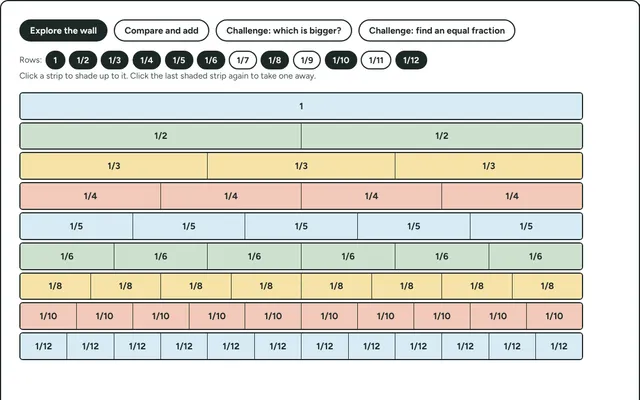
Fraction Wall
Stack fraction strips to see which fractions are equal, which is bigger, and how they add up. Then test yourself with compare-and-match challenges.
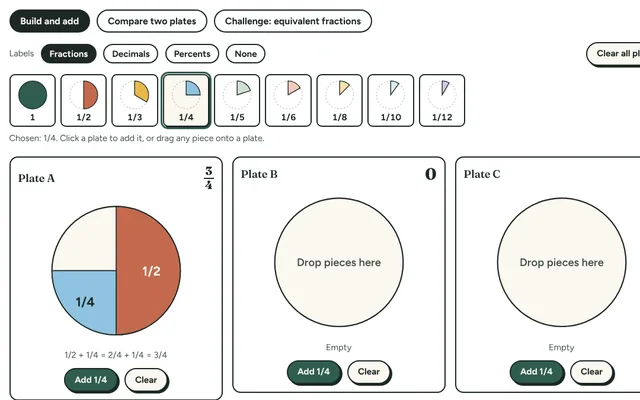
Fraction Circles
Drag fraction pie pieces onto a whole circle to build, compare and add fractions. See when pieces make a whole, and when they spill into a mixed number.
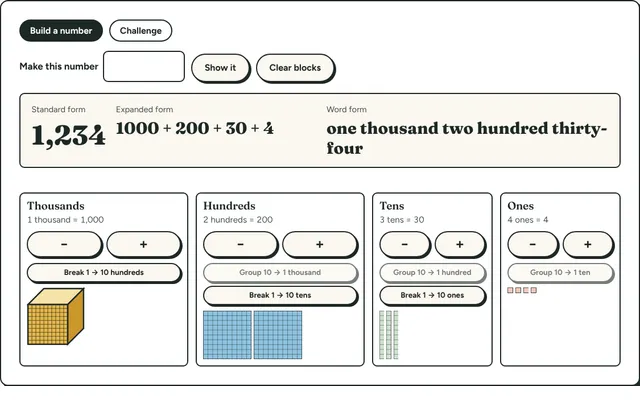
Place Value Blocks
Build any number from ones, tens, hundreds and thousands blocks, trade ten for one, and see it written in standard, expanded and word form.
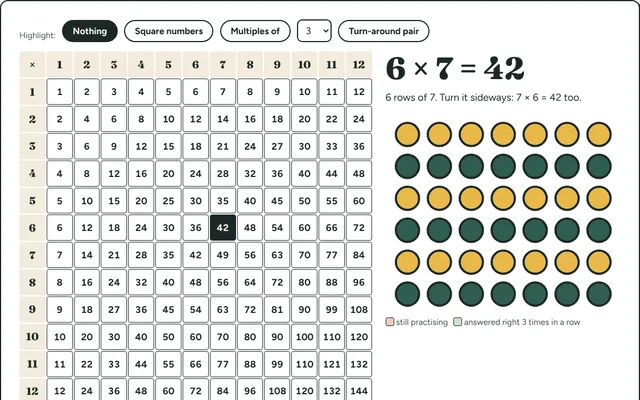
Times Table Trainer
Explore the multiplication grid as arrays and patterns, then practise the facts you pick with a quick quiz that tracks which ones still need work.
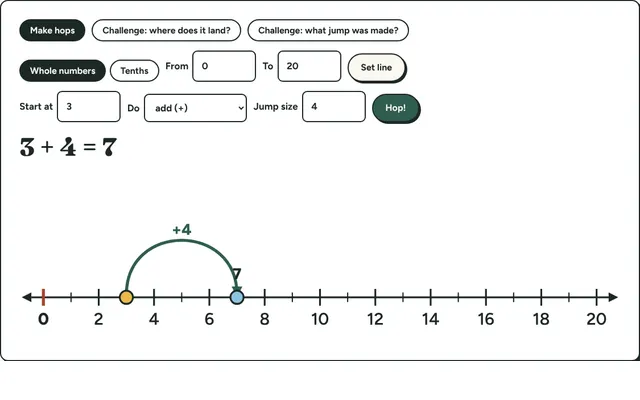
Number Line Hops
Show addition, subtraction and skip counting as jumps along a number line, with whole numbers, negatives or decimals.