Periodic Table Explorer
All 118 elements, coloured by family. Click one for its atomic number, mass, state, discovery and an everyday use, or highlight metals, gases and more.
How to use it
Click any element to see its card: atomic number, average atomic mass, family, state at room temperature (about 25 °C), when it was discovered and one place you meet it in everyday life. The highlight buttons dim everything that doesn't match, so you can ask "where are the metals?" and let the table answer. On a phone, swipe the table sideways.
Quiz asks for names from symbols (or the other way round) with four choices. Start with the first 36 elements, then try all 118. The right answer lights up on the table after each guess.
How the table is organized
Elements are lined up by atomic number, the number of protons in each atom. Each row (period) starts a new outer shell of electrons, and elements in the same column (group) have the same number of outer electrons, so they behave alike: the alkali metals in column 1 all react with water, and the noble gases in column 18 hardly react with anything. The two rows at the bottom, the lanthanides and actinides, belong in periods 6 and 7 but are pulled out so the table fits on a page.
About three-quarters of the elements are metals (shiny, bendable, good conductors), found on the left and middle. Nonmetals sit at the top right, with the stair-step of metalloids between them. Masses in square brackets are for radioactive elements with no stable form: the number is the mass of their longest-lived version (isotope). Elements past uranium (92) are made in labs or reactors, and the heaviest have only ever existed a few atoms at a time.
- Which two elements are liquid at room temperature? (Gallium and cesium melt just above it, so they would melt in your hand.)
- Find the gases. Where are most of them on the table?
- Pick an element from your kitchen and trace where it comes from.
Free to use, no account needed. It runs in your browser: nothing you type, and no sound from your microphone, is sent to Fieldbook.
Hands-on lessons to pair with Periodic Table Explorer
Ready-to-teach units, each lesson a printable teacher guide and student sheet. Your first three lessons are free.
Kitchen Chemistry
Fizzing, curdling and colour changes with things from the grocery store. Students gather evidence of new substances, weigh a reaction in a sealed bottle, and turn red cabbage into an acid detector.
Solids, Liquids and Gases
Where does a puddle go? Why does ice float? A first look at the tiny particles that explain the stuff around us.
Kitchen Chemistry for Families
Four famous kitchen experiments, done properly: a homemade lava lamp, oobleck, a baking soda volcano and invisible ink. Each one starts with a real question, works with things from your cupboard, and leaves your child able to explain what happened.
Three full lessons, free
Make a free account and download any three Fieldbook lessons, from any grade or subject, as printable PDFs. No card needed.
More free classroom tools
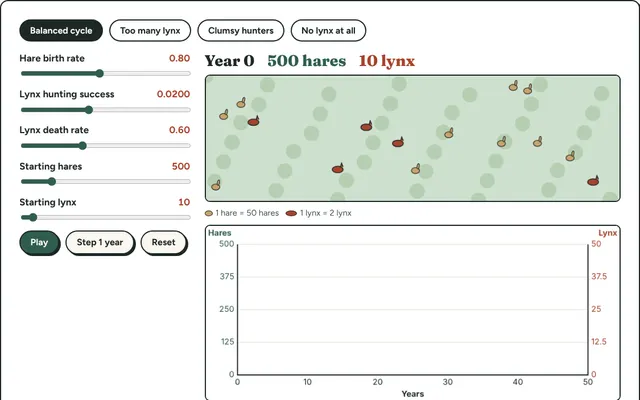
Predator and Prey
Run a simulated meadow of hares and lynx. Change birth and hunting rates and watch the two populations rise and fall on a live graph.
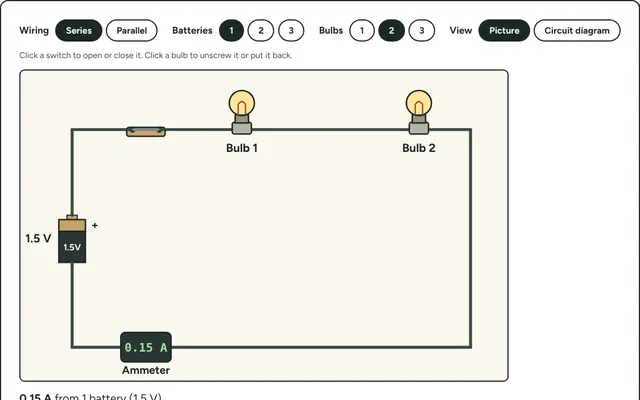
Circuit Lab
Wire batteries and bulbs in series or parallel, flip switches and see which bulbs light, how bright, and how much current flows.
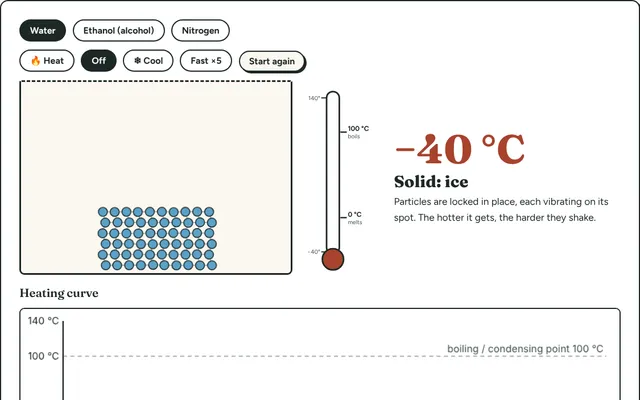
States of Matter
Heat and cool a box of particles and watch them pack into a solid, slide as a liquid and fly apart as a gas, with a live thermometer.
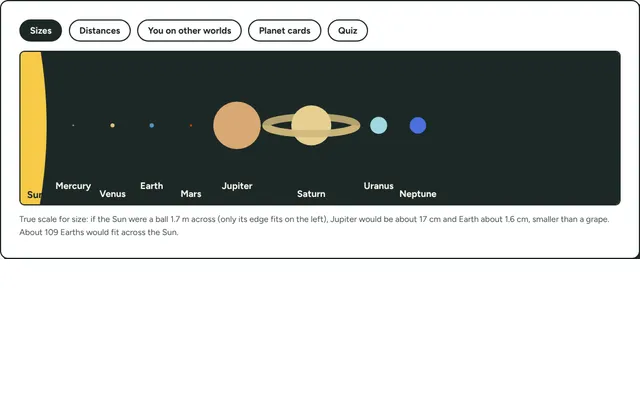
Solar System Scale
See the planets at true scale for size and distance, find your weight and age on each one, and work out how long light takes to reach them.
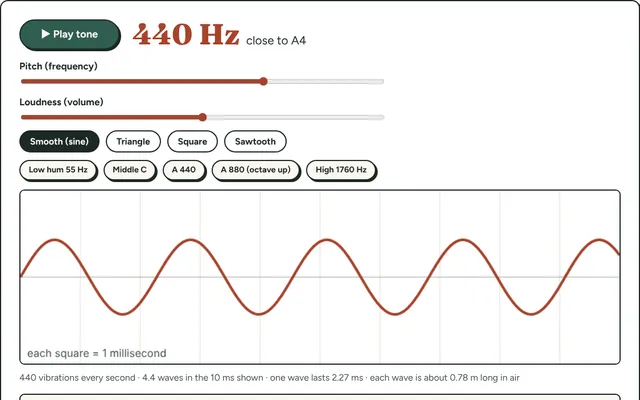
Sound Wave Lab
Play a tone, change its pitch and loudness, and watch the wave change shape. Includes a live microphone wave view to see your own voice.
Sun and Shadow
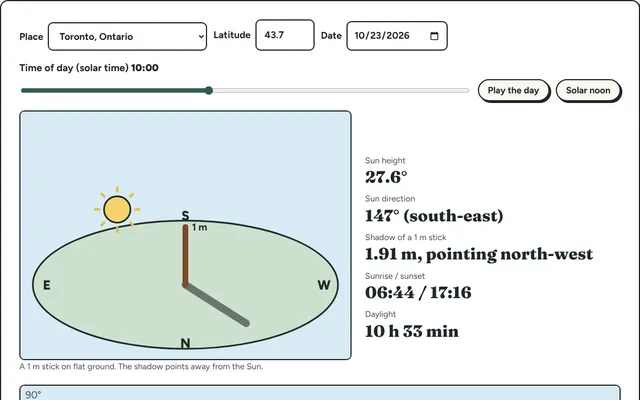
Move through the day and the year to see where the Sun is in the sky, how long a stick's shadow is, and how many hours of daylight any latitude gets.