Moon Phase Finder
Pick any date and see the Moon's phase, how much of it is lit and when the next full and new moons are. Pairs with our Sun, Earth and Moon unit.
This month
How to use it
Pick a date to see the Moon as it looks from the Northern Hemisphere. Step day by day with the arrow buttons to watch it wax (grow) toward full and wane (shrink) back to new. The strip below shows the whole month, which makes a good moon-journal check.
The Moon is always half lit by the Sun. The phase is how much of that lit half faces us, which changes as the Moon orbits Earth about every 29.5 days. Phases here are calculated, so they can be off by several hours.
Free to use, no account needed. It runs in your browser: nothing you type, and no sound from your microphone, is sent to Fieldbook.
Hands-on lessons to pair with Moon Phase Finder
Ready-to-teach units, each lesson a printable teacher guide and student sheet. Your first three lessons are free.
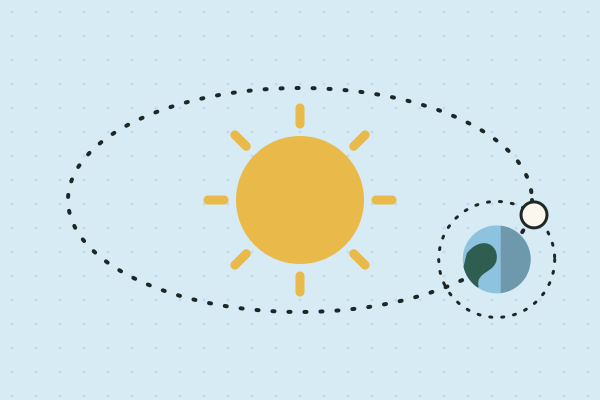
Sun, Earth and Moon
Why it's breakfast time in Calgary and bedtime in Singapore, why your shadow swings round the stick, why the Moon changes shape and why some places barely have seasons. Students build models with balls and lamps, track real shadows and read real sky data from cities around the world.

Light and Shadows
Why does my shadow follow me, and why is it so long in the morning? Young scientists chase their shadows, track the Sun across the day and test which things let light through.

Earth and Sky at Home
Make a rainbow on the kitchen floor, grow crystals on a windowsill and build a cloud in a jar. Three classic home experiments that actually work, with the real science explained for grown-ups.
Three full lessons, free
Make a free account and download any three Fieldbook lessons, from any grade or subject, as printable PDFs. No card needed.
More free classroom tools
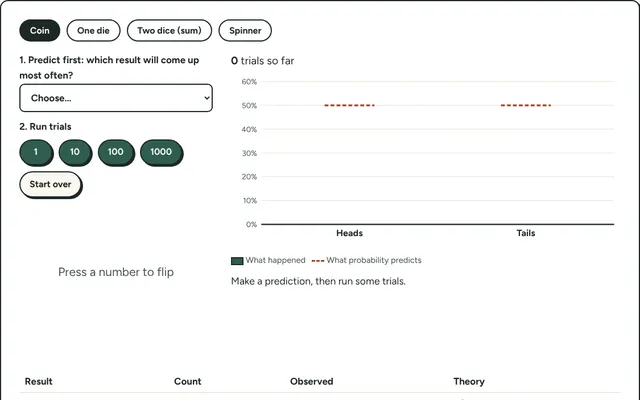
Probability Lab
Flip coins, roll dice or spin a spinner hundreds of times and compare what happened with what probability predicts.
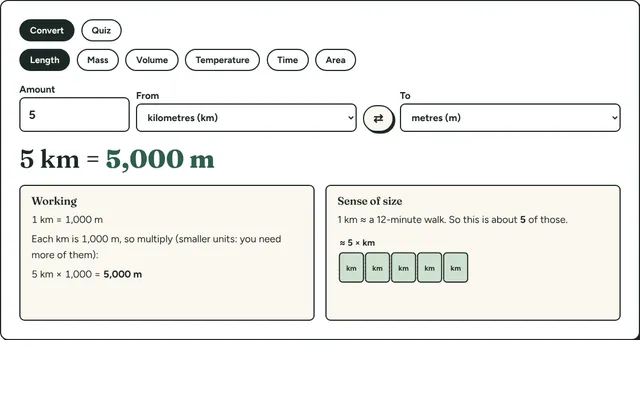
Measurement Converter
Convert length, mass, volume, temperature and time between metric and imperial units, with the working shown and a sense-of-size picture for each.
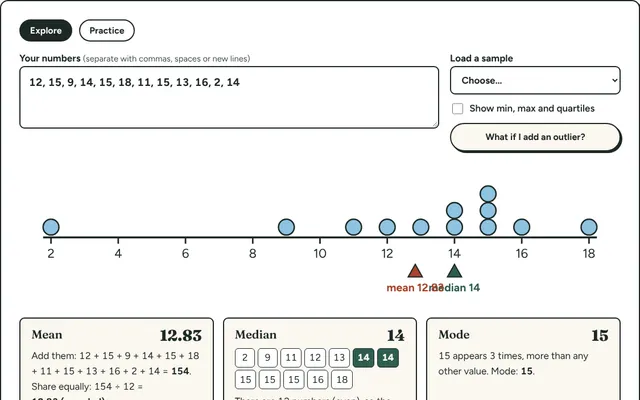
Mean, Median and Mode
Type in a set of numbers and see the mean, median, mode and range worked out step by step, with a dot plot that shows where each one sits.
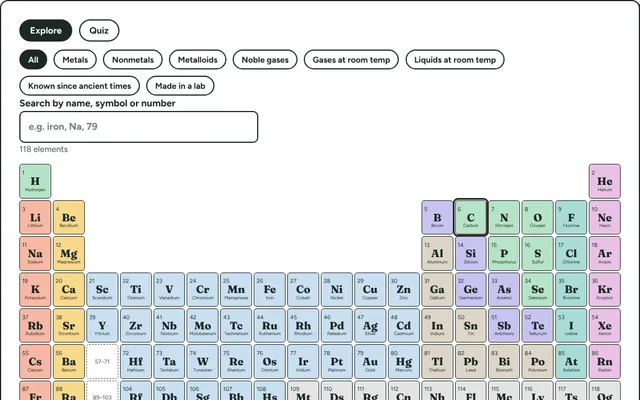
Periodic Table Explorer
All 118 elements, coloured by family. Click one for its atomic number, mass, state, discovery and an everyday use, or highlight metals, gases and more.
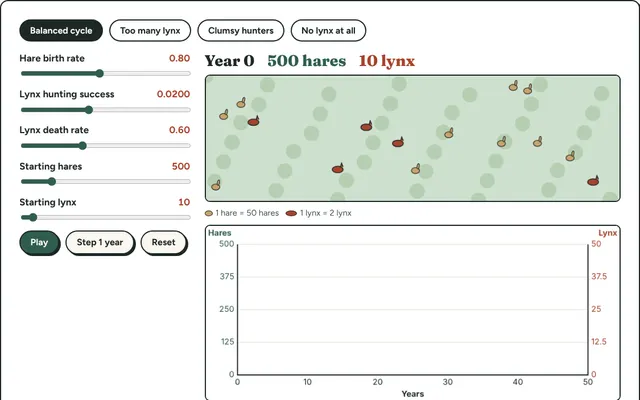
Predator and Prey
Run a simulated meadow of hares and lynx. Change birth and hunting rates and watch the two populations rise and fall on a live graph.
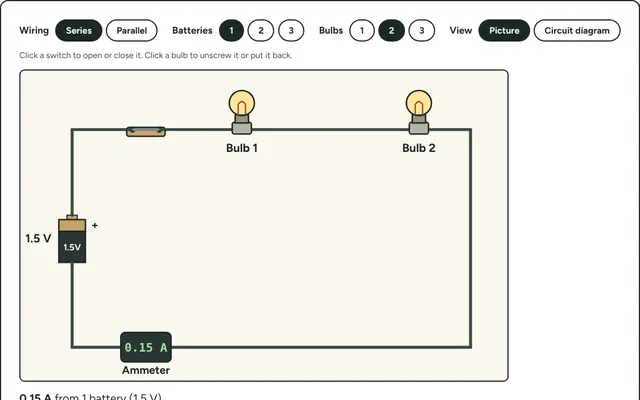
Circuit Lab
Wire batteries and bulbs in series or parallel, flip switches and see which bulbs light, how bright, and how much current flows.