Rock Cycle
Melt, cool, weather, squeeze and heat rocks to see how igneous, sedimentary and metamorphic rock turn into each other, with real examples of each.
Swipe sideways to see the whole diagram.
You are holding
Your journey
Which type of rock is it?
Rock Cycle · free from Fieldbook Learning
How to use it
In Be the rock you start out holding a piece of granite. Choose what happens to it next: melt it, cool the magma slowly underground or fast at the surface, weather and erode it, deposit and bury the sediment, squeeze and heat it, or uplift it. Only the processes that could really happen to your rock right now are switched on. Each step turns your rock into a real example, draws its texture, adds a line to your journey and traces your path on the rock cycle diagram. Try to visit all three rock types. Tap any station on the diagram to read about it.
Rock collection has cards for 13 common rocks, each with how it forms, a texture clue, a use and a Canadian place to see it. Filter by type, or press Hold this rock to start a journey from that rock. The Sorting quiz shows one rock at a time: decide whether it is igneous, sedimentary or metamorphic, then read why.
Igneous, sedimentary and metamorphic rock
Geologists sort rocks into three types by how they formed. Igneous rock forms when melted rock cools and hardens. Magma that cools slowly deep underground grows large crystals, like granite. Lava that cools quickly at the surface makes tiny crystals (basalt) or glass (obsidian). Sedimentary rock forms from sediment: weathering breaks rock into gravel, sand and mud, erosion carries the pieces away, and they settle in layers. Buried under more layers, they are pressed together (compaction) and glued by minerals (cementation). Limestone often forms from shells. Metamorphic rock forms when any rock is heated and squeezed deep underground until its minerals change, without melting. Shale becomes slate, limestone becomes marble, sandstone becomes quartzite and granite becomes gneiss.
The rock cycle has no fixed order. Any rock can be weathered into sediment once it is uplifted to the surface, any rock can melt, and a metamorphic rock can be changed again by more heat and pressure. Most steps take thousands to millions of years, which is why the rocks under our feet look so permanent. Lava is the big exception: it can harden in hours or days.
- Can a rock go from igneous to metamorphic without ever becoming sediment? Find the shortest path.
- Why does granite have big crystals but basalt has tiny ones?
- Collect rocks from the schoolyard and use the texture clues to sort them, then test for fizzing with a drop of vinegar.
Free to use, no account needed. It runs in your browser: nothing you type, and no sound from your microphone, is sent to Fieldbook.
Hands-on lessons to pair with Rock Cycle
Ready-to-teach units, each lesson a printable teacher guide and student sheet. Your first three lessons are free.
Rocks and Erosion: How Land Changes Shape
Why some rocks scratch and some fizz, how a trickle of water carves a canyon, what keeps a hillside in place, and how a boulder ends up as sand. Four hands-on lessons on rocks, weathering and erosion.

Earth and Sky at Home
Make a rainbow on the kitchen floor, grow crystals on a windowsill and build a cloud in a jar. Three classic home experiments that actually work, with the real science explained for grown-ups.
Our Living Planet
Air, water, land and living things, and how each one depends on the others. Students build a sealed jar ecosystem to keep for a month and catch the water cycle in a bag on the window.
Three full lessons, free
Make a free account and download any three Fieldbook lessons, from any grade or subject, as printable PDFs. No card needed.
More free classroom tools
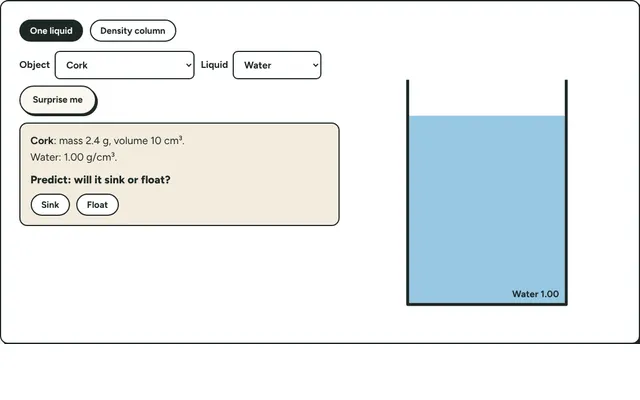
Sink or Float
Drop objects into water, oil, salt water or syrup. Predict first, then see what sinks and floats and why, using mass, volume and density.
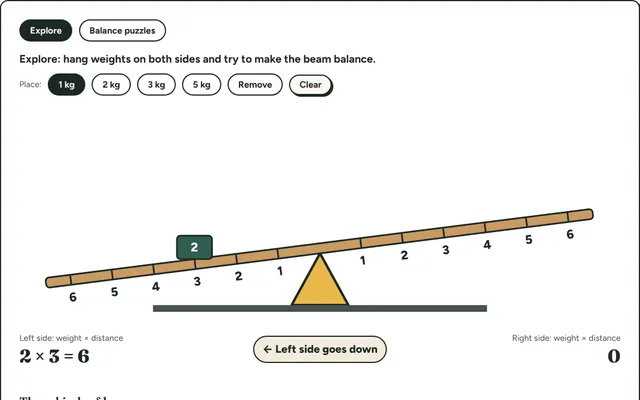
Lever Lab
Put weights on a seesaw and balance it. Discover the law of the lever (weight times distance) by experiment, then solve balance puzzles.
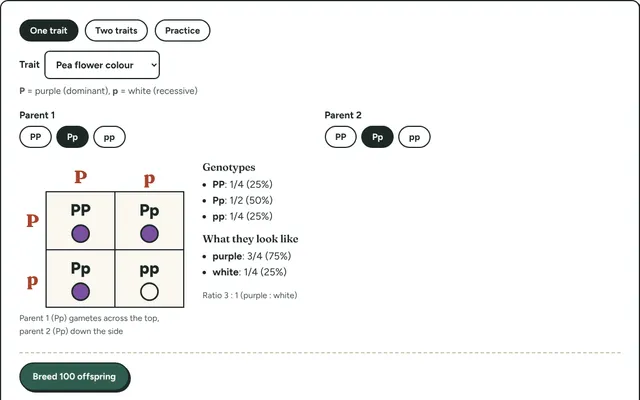
Punnett Squares
Cross two parents and see every possible offspring, with the ratios of genotypes and traits, plus a breeding simulator to test the prediction.
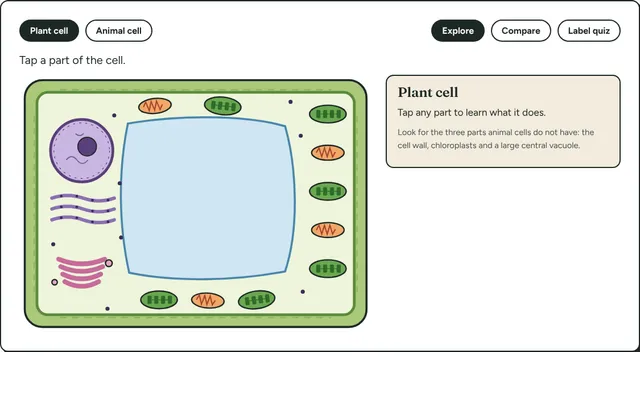
Cell Explorer
Tap the parts of a plant cell and an animal cell to learn what each one does, then compare the two and quiz yourself.
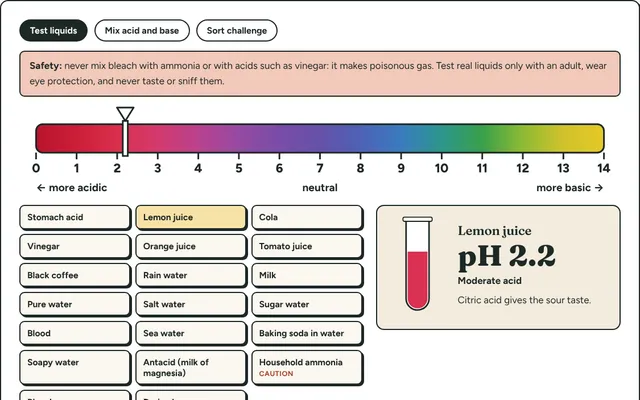
pH Scale Explorer
Test household liquids on a pH scale with a cabbage-juice indicator colour, from lemon juice to bleach, and mix acids and bases to see neutralisation.
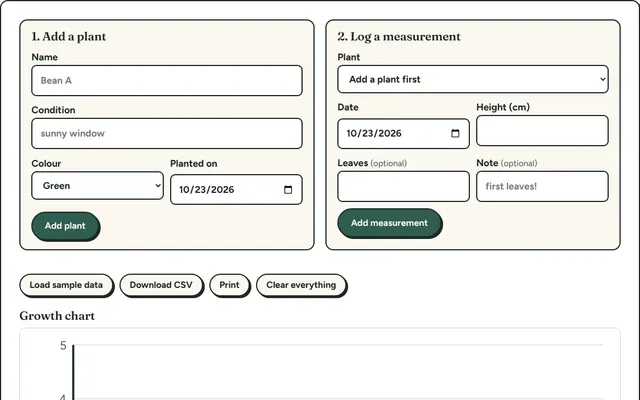
Plant Growth Journal
Log your class plants' height every few days and get a growth chart that compares plants or conditions. Saved on your device, ready to print.