Food Web Builder
Build a food web for a forest, pond or ocean by drawing arrows from food to eater. Then remove one species and see which others are affected.
Scroll sideways inside the box to see the whole web.
Food Web Builder · free from Fieldbook Learning
How to use it
Choose a boreal forest, a pond or an ocean (a kelp forest off the coast of British Columbia). In Build mode, tap a species that is eaten, then tap the species that eats it, to draw an arrow from food to eater. With a mouse you can also drag from the food to the eater. Tap an arrow to remove it, or open the list of arrows under the web. With a keyboard, Tab to a species, press Enter, then Tab to its eater and press Enter. Press Escape to cancel.
Check my web marks correct arrows in green and wrong ones in red, explains each mistake and counts how many are missing. Show the answer adds the missing arrows in blue. In Explore mode, tap a species to see what it eats and what eats it, then remove it to see who loses food, who could starve, and who might increase. The toggles add role colours, role labels and the 10% energy rule.
Food chains and food webs
A food chain is one path of energy, such as willow, snowshoe hare, lynx. A food web joins many chains, because most animals eat more than one thing and are eaten by more than one thing. Producers (plants, algae and phytoplankton) make their own food from sunlight. Primary consumers eat producers, secondary consumers eat primary consumers, and tertiary consumers eat secondary consumers. Decomposers such as fungi and bacteria break down dead remains and wastes from every level, returning nutrients to the soil or water.
The arrows point from the food to the eater because they show which way energy flows. Only about 10% of the energy at one level passes up to the next, so there are always far fewer predators than plants. Many animals eat at more than one level, so the rows here are a simplification.
When a species disappears, its predators lose food. If it was their only food, they starve or move away, and that knocks on to whatever ate them. Its prey can increase, and then eat more of their own food. Remove the sea otter in the ocean web to see a famous example: more urchins, less kelp.
- Follow one food chain from a producer to the top. How many links does it have?
- Which species, if removed, affects the most others? Why?
- Why are there fewer wolves than snowshoe hares in a forest?
- What would happen to a pond with no decomposers?
Free to use, no account needed. It runs in your browser: nothing you type, and no sound from your microphone, is sent to Fieldbook.
Hands-on lessons to pair with Food Web Builder
Ready-to-teach units, each lesson a printable teacher guide and student sheet. Your first three lessons are free.
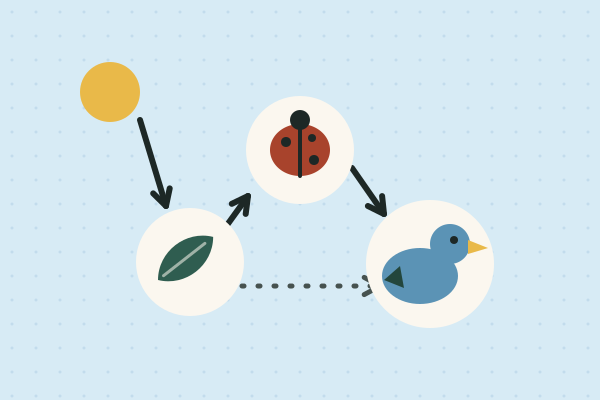
Food Webs: Who Eats Whom?
Where a plant's food comes from, what happens when the wolves disappear, who cleans up, and how much life hides under a log. Four lessons on how energy and matter move through living things.
Our Living Planet
Air, water, land and living things, and how each one depends on the others. Students build a sealed jar ecosystem to keep for a month and catch the water cycle in a bag on the window.
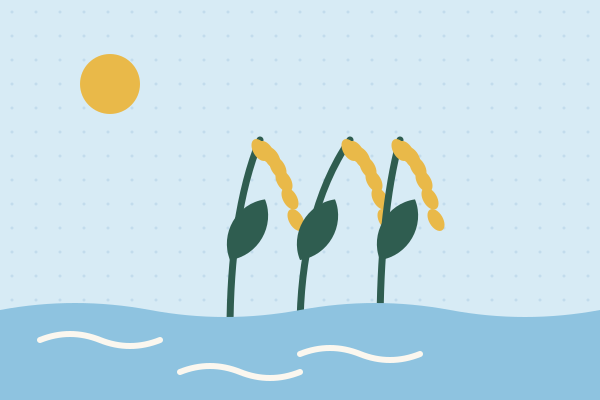
Living with Water: Salt, Rice and the Mekong
Science and English together, for English learners (CEFR A2–B1). Three investigations from Vietnam: how salt farmers turn the sea into salt, how rice terraces stop a mountain washing away, and how a house in the Mekong Delta stays dry in the flood season.
Three full lessons, free
Make a free account and download any three Fieldbook lessons, from any grade or subject, as printable PDFs. No card needed.
More free classroom tools
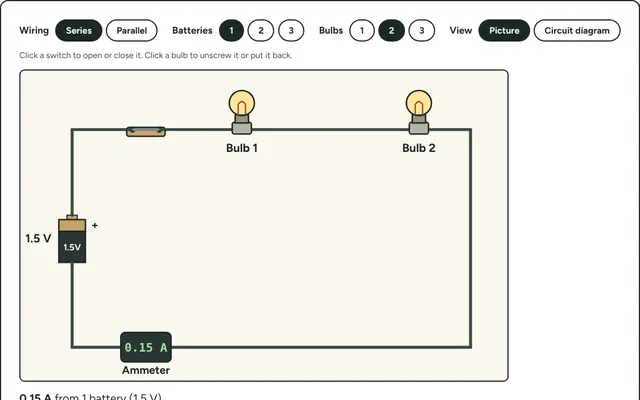
Circuit Lab
Wire batteries and bulbs in series or parallel, flip switches and see which bulbs light, how bright, and how much current flows.
States of Matter
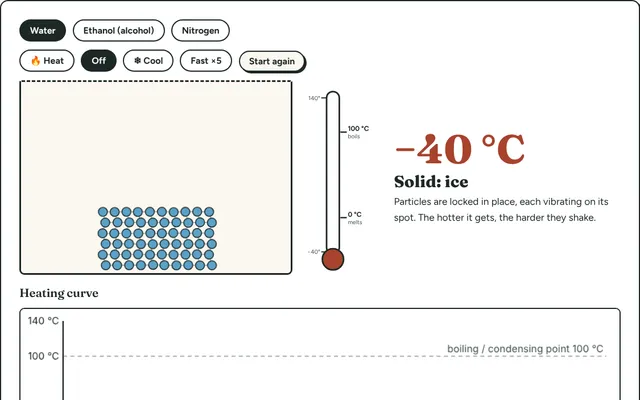
Heat and cool a box of particles and watch them pack into a solid, slide as a liquid and fly apart as a gas, with a live thermometer.
Solar System Scale
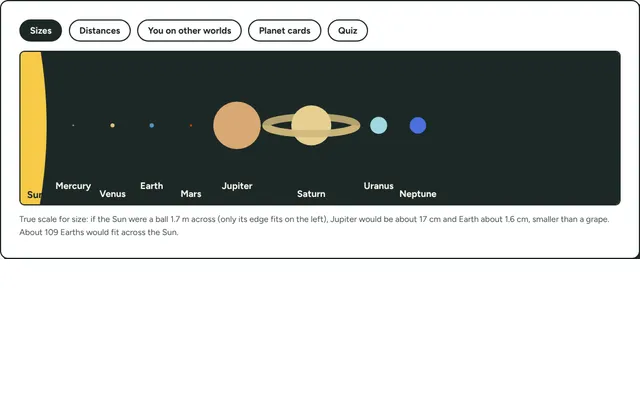
See the planets at true scale for size and distance, find your weight and age on each one, and work out how long light takes to reach them.
Sound Wave Lab
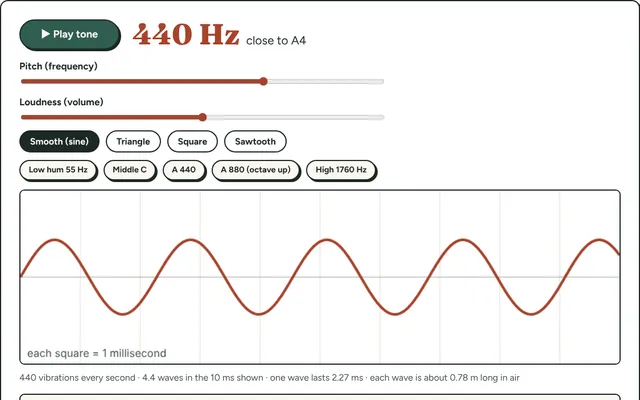
Play a tone, change its pitch and loudness, and watch the wave change shape. Includes a live microphone wave view to see your own voice.
Sun and Shadow
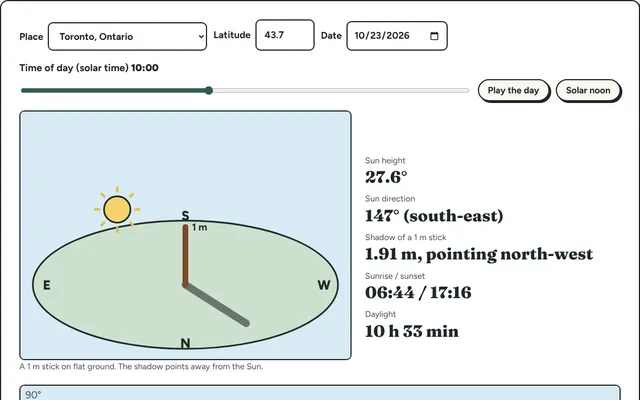
Move through the day and the year to see where the Sun is in the sky, how long a stick's shadow is, and how many hours of daylight any latitude gets.
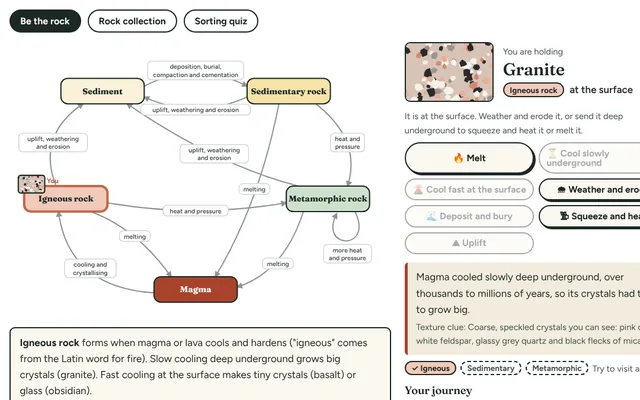
Rock Cycle
Melt, cool, weather, squeeze and heat rocks to see how igneous, sedimentary and metamorphic rock turn into each other, with real examples of each.